
This essay was originally two threads posted to Twitter in October 2024, featuring my conversations with Boss Liu about Sichuan Tibetan food and culture and a tour of his beautiful home. The two threads have been combined and edited for long-essay format here. If you missed it, here is my first essay from Jiuzhaigou.
Part 1: Meeting Boss Liu Over Yak Hotpot
On our last night in Sichuan Province’s Jiuzhaigou scenic area, we decided to try the restaurant at our local guesthouse. Actually, it wasn’t a restaurant…more like a common room with wooden tables, benches, and a huge Tibetan cookstove that was used for warmth, meal-prep, and warming butter tea.
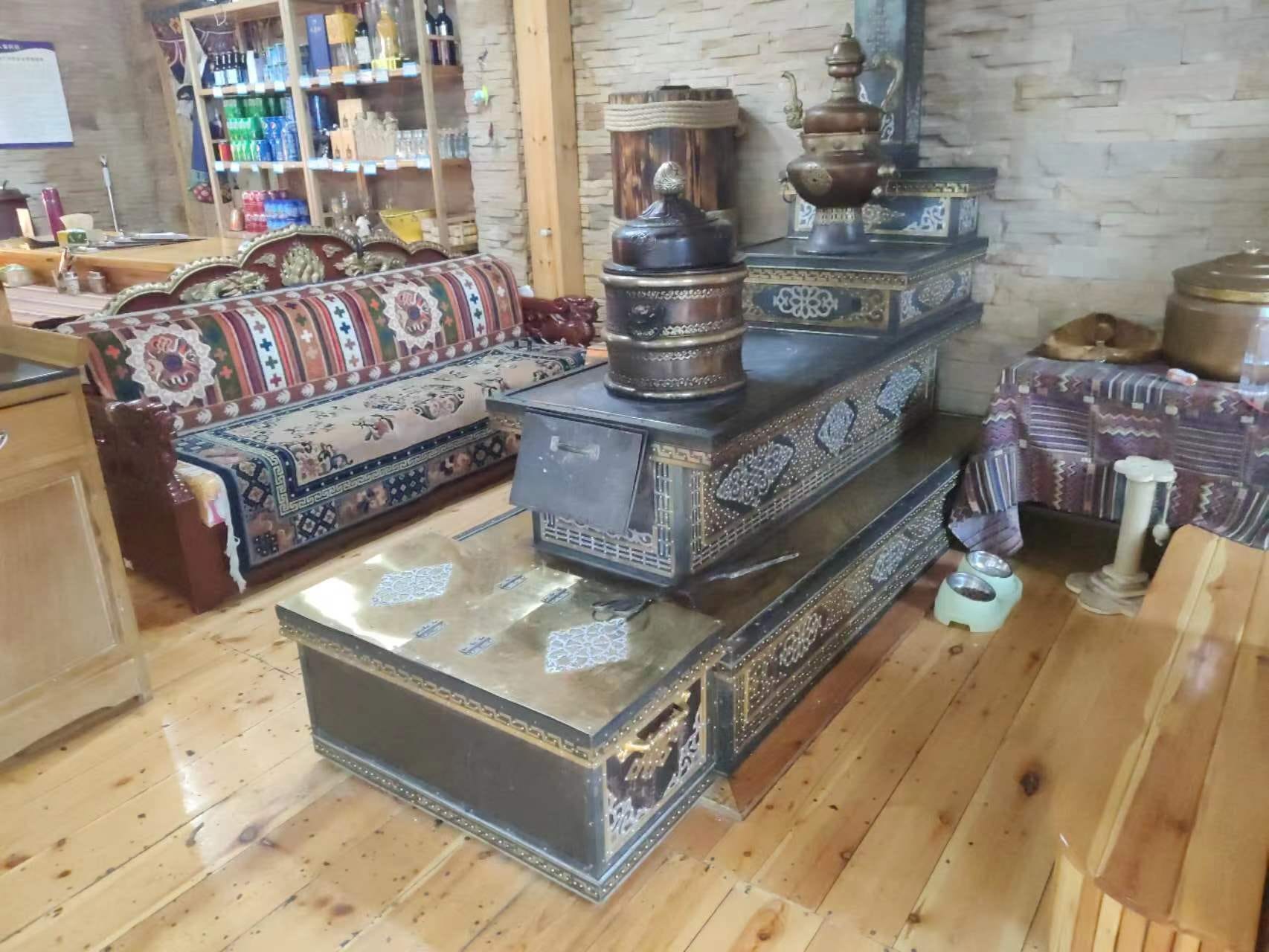
That night, the guesthouse boss was finally back from his trip to Chengdu. The front desk attendant with whom I had I previously chatted is his nephew. His surname was Liu (that is, his adopted Han surname).
Boss Liu had one of those personalities that fills up the entire room. He had a short buzzcut and was loud, boisterous, and infectiously good-natured. He was an uncle’s uncle, ever cheerful and full of tall tales the wise listener knows to enjoy but never take at face value...
We told him it’s our last night in town, and that we’ve been wanting to try Tibetan hot pot here, but we’ve been put off by the touristy restaurants in the town, so we decided to eat at the guesthouse tonight.
“Well then, you came to the right place! We are an authentic Tibetan family and we make authentic Tibetan food! You need to order the yak hot pot! This one, here!”
His finger stabs at the menu, indicating a massive copper pot mixed with fresh meat, cured meat, and vegetables.
“Will it be too much?” I ask with concern. “It says it serves 2-3 people. Recently in Xiahe County we ordered too much at a Tibetan restaurant. The waitress didn’t stop us…we even asked if it was too much and she said it was ok. As a result, we over-ordered, and we wasted a lot."
Boss Liu is aghast. "They let you order too much and waste food?! That’s not right!! You are traveling, it’s not convenient for you to take leftovers home"
"Yes, that’s right. I felt very bad about wasting food. I guess they only care if we order a lot…not if we eat it all."
"Well, they definitely weren’t Tibetan!” He’s bubbling with indignation now.
"If they let you waste food, they’re not true Tibetans! Don’t worry, this is the right amount of food. Order just this and a barley flatbread (青稞饼) and it’s enough! Are you drinking?"
“If they let you waste food, they’re not true Tibetans!”
"Yes, I’ll have a beer. The highland barley one."
"Okay. Do you want your hot pot to be spicy?"
"Uhm…is it normally spicy? I want authentic flavor. Not spicy for the sake of it."
"Then it can be a little spicy, but not so spicy like in Chongqing. Actually, Tibetan hotpot is usually made with clear broth, but since this is Sichuan, we have the habit of making it a little spicy here. Come make your dipping sauce for the hot pot.”
He motions to a sidebar that’s set up with condiments.
"How would you prepare the dipping sauce?" I asked. "I think this is what shows the local characteristics in China. Many places have hot pot, and the preparation is largely similar with small variations…but the key lies in how you prepare your dipping sauces."
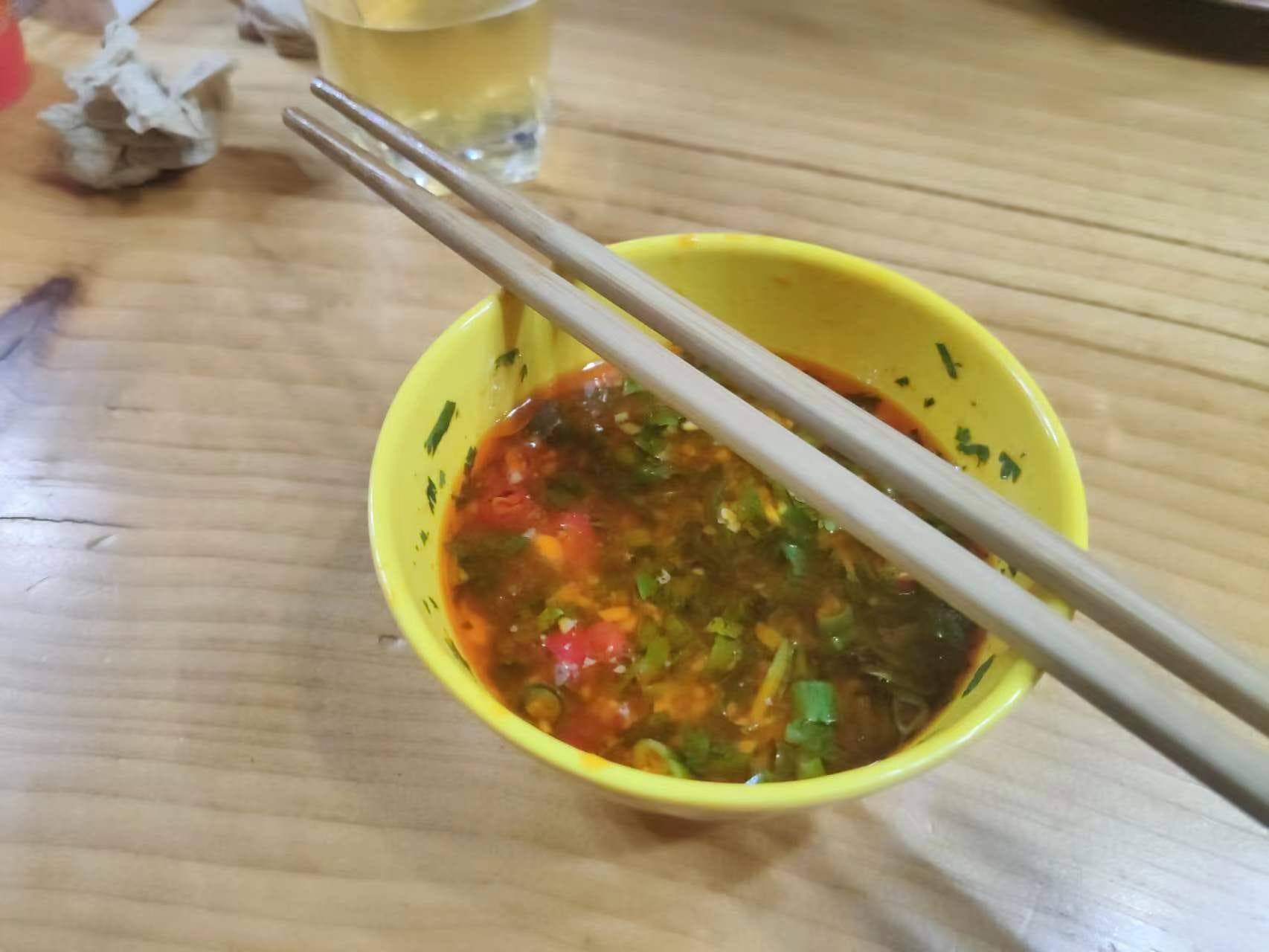
"Ah, you understand!" he roared with approval. "You are a true food lover, like me! You’re right…I’ll make one for you that is perfect for Tibetan yak hot pot. Some chillies…some cilantro…also some sauce…and then some of the liquid from the pot." He ladled the simmering broth into my bowl.
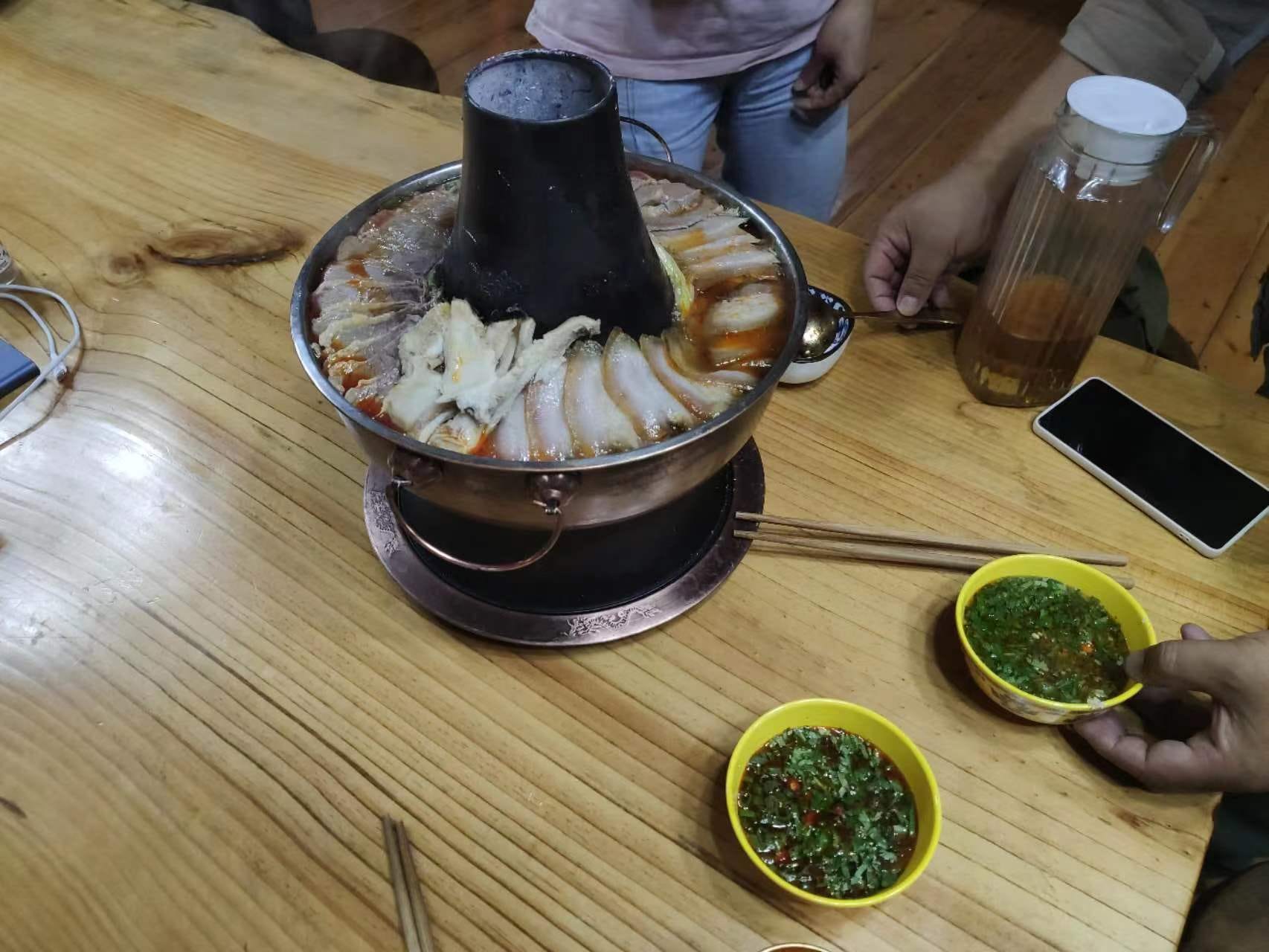
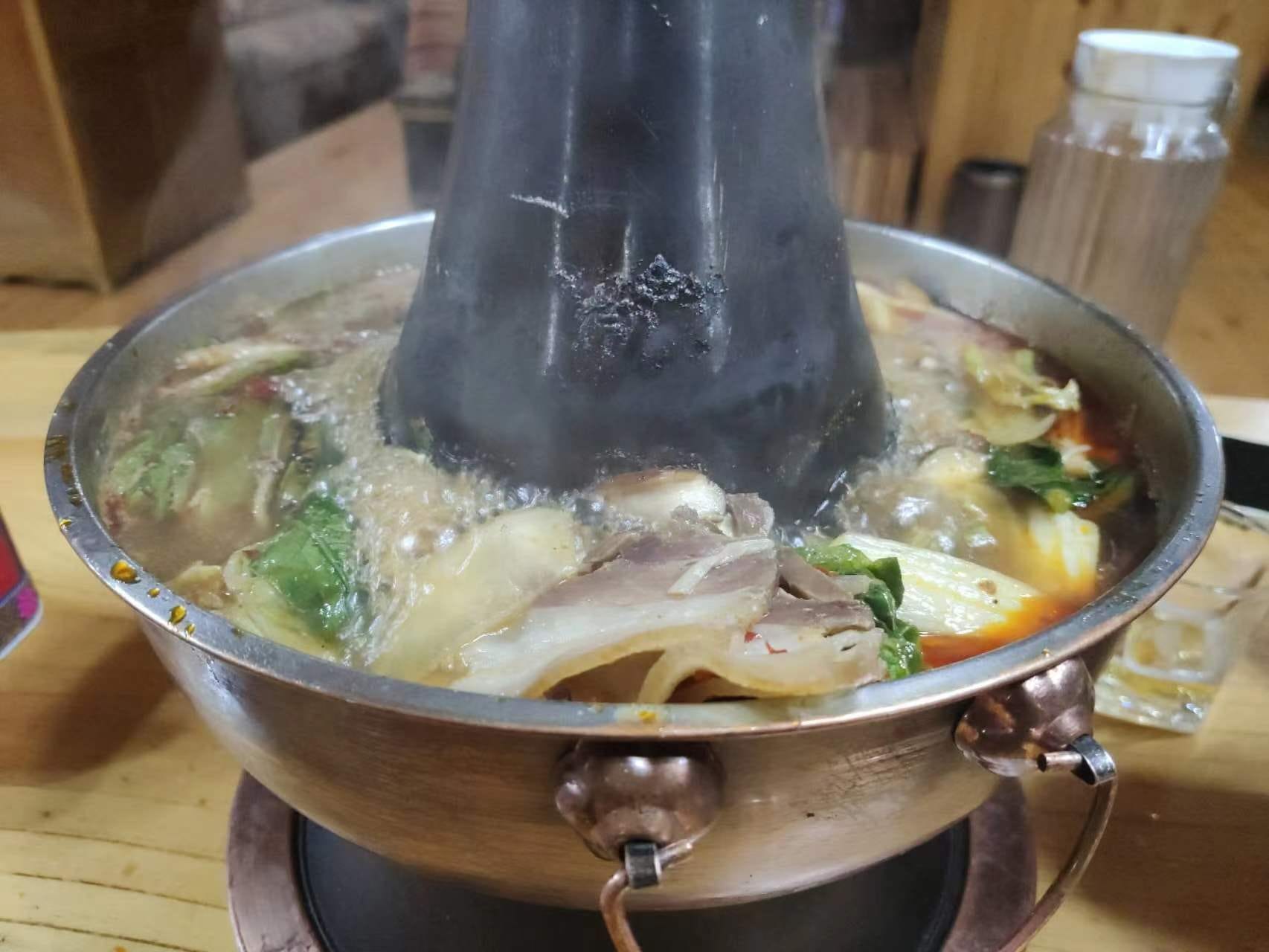
"Eat it like this. Eat the beef first while it’s tender…it will overcook if you leave it until the end."
We tucked into our food (which was delicious, of course) while he joined us at the table and peppered me with questions, full of energy and apparently delighted to chat.
"Hey, your Chinese is great! If I close my eyes, I can’t tell you’re not Chinese!"
"That’s just because China has so many different accents already.“ I responded. “If I use the wrong word or tone, people might just think I am from a place in China with non-proper Mandarin, like…Sichuan!” I tease him.
“No, no, your Chinese is really very standard, with a Beijing accent. At first I didn’t want to talk to you, because I was afraid you wouldn’t understand. But it's very easy to communicate with you. Last time I had foreigners staying here. Two girls from Germany. I had to use the translation app for everything. It was so tiring! When they arrived, I told them I needed their passports for the public security registration and they didn’t understand why. They were so suspicious, ‘why do the police need my passport??’ and I couldn’t explain clearly. The more I explained, the more confused they were."
"Haha, I guess you were the first place they visited in China.” I replied. “If they had been anywhere else, they'd expect it. Actually, in the places I just visited in Gansu, several hotels didn’t know how to register me, because I was their first foreign guest, but they took me anyway."
"Yes, Gansu has fewer tourists compared to here. But it’s a good place to go. Their Tibetan culture is very pure there. You can go to see the horses. You know this is Amdo…you know Amdo right?"
"Yes, I read about Amdo online"
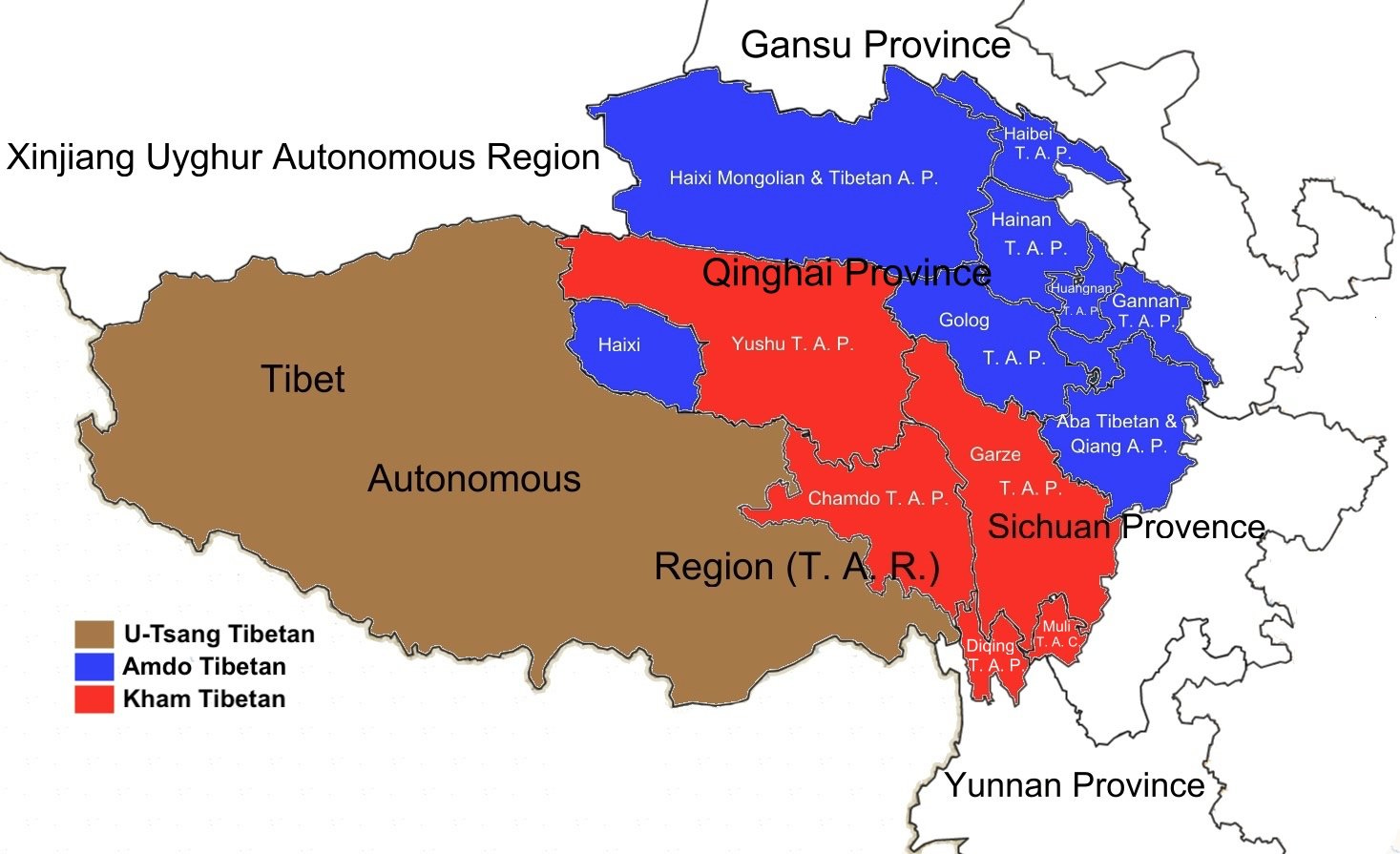
"Right, there are three Tibetan regions, each with their own of three treasures. The treasure of U-Tsang is religion…the religion is very deep there. The treasure of Kham is the people…they are very strong and hardworking. And the treasure of Amdo is the horses…we have the best horses."
As a side note, I can’t find any evidence of this particular breakdown of “three Tibetan treasures” in my online research. There are “three jewels” in Tibetan Buddhism but they refer to something else entirely. This might have been Boss Liu riffing a bit…an entertaining but perhaps not fully reliable narrator.
“Yes, we saw horses in Gansu. I haven’t seen many here. I guess there are no grasslands...”
“The herders ride horses. But there are not many herders here. You have to go to Ruoergai County to find grasslands.”
“That’s where we came from…we took a dangerous mountain road."
"Oh, I know that road. Many rockfalls! We can’t have a highway coming through this area, because this is a UNESCO site. One of the conditions for its inclusion in the UNESCO registry is that we must protect the natural environment, so it’s not possible to build a highway. Now, you can drive an hour through the mountains to the new highway being built in Jiuzhaigou County, but we’ll never have a highway here."
I didn't know it at the time, but I would end up taking this highway the next day, after I missed my train and had to drive to Chengdu!
I’d been stuffing my face all this time, but it seemed the volume of food in the pot had barely budged. I was getting a bit worried about whether we could finish, and I told him I was worried about waste.
"No problem, take your time! Eat as much as you can. Hey, after dinner, do you want to see my house?"
"Your house? Oh no…we couldn’t. I don’t want to intrude."
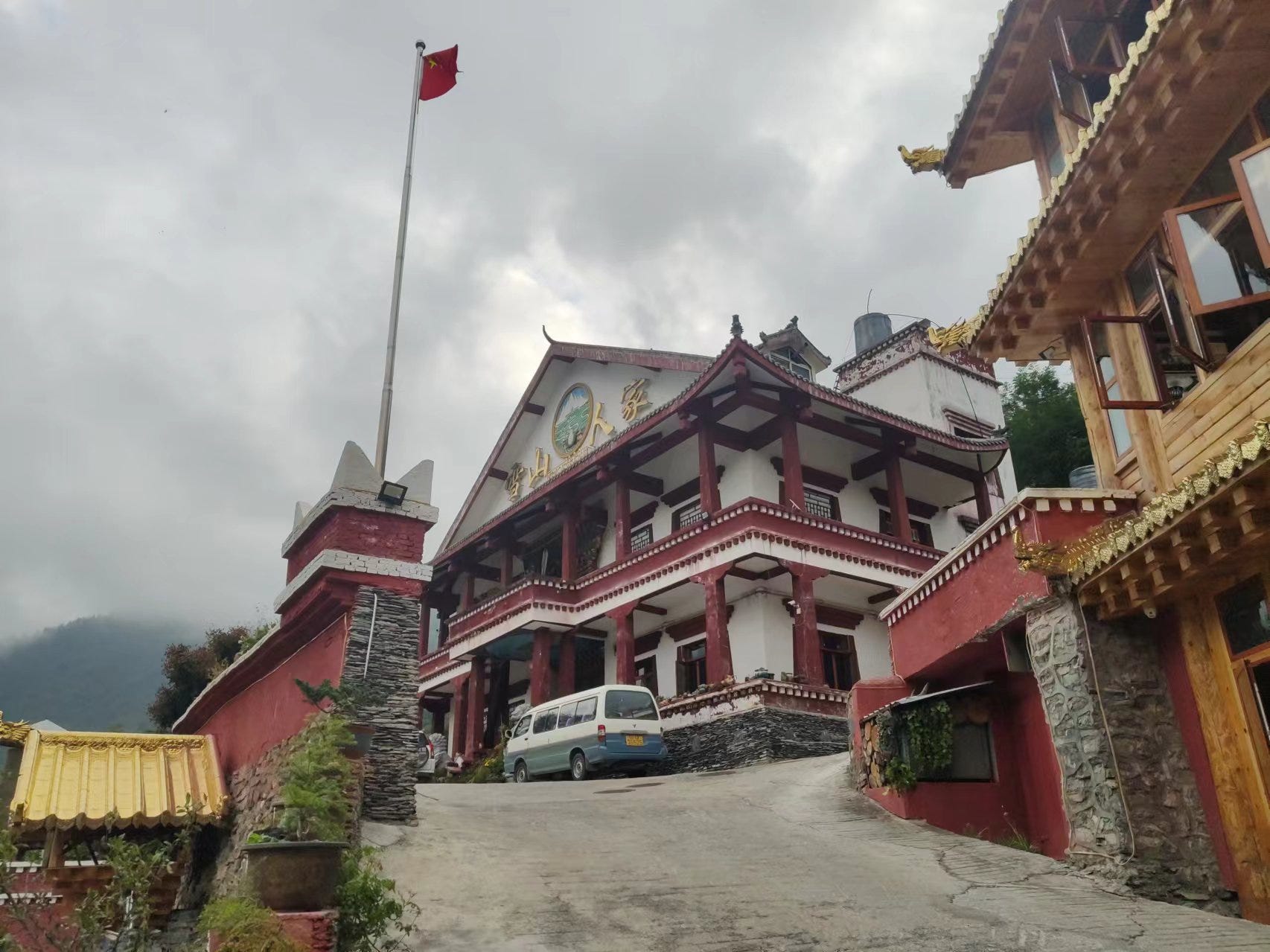
"No problem, I take anyone who wants to see Tibetan culture to visit my house. All the tourists like to see my house. I built it in the traditional Tibetan style to show them. It's very beautiful!"
"Okay, sure then..."
Part 2: The Secret Tibetan Culture Museum
And so...after dinner (I ate all the meat, but I'm sad to report I couldn't finish some of the vegetables) we took the short walk over to Boss Liu's house, the stately mansion next to the guesthouse, full of anticipation, hoping to be impressed and amazed.
..and boy did it deliver! Entering the front door, this was the first thing we saw:
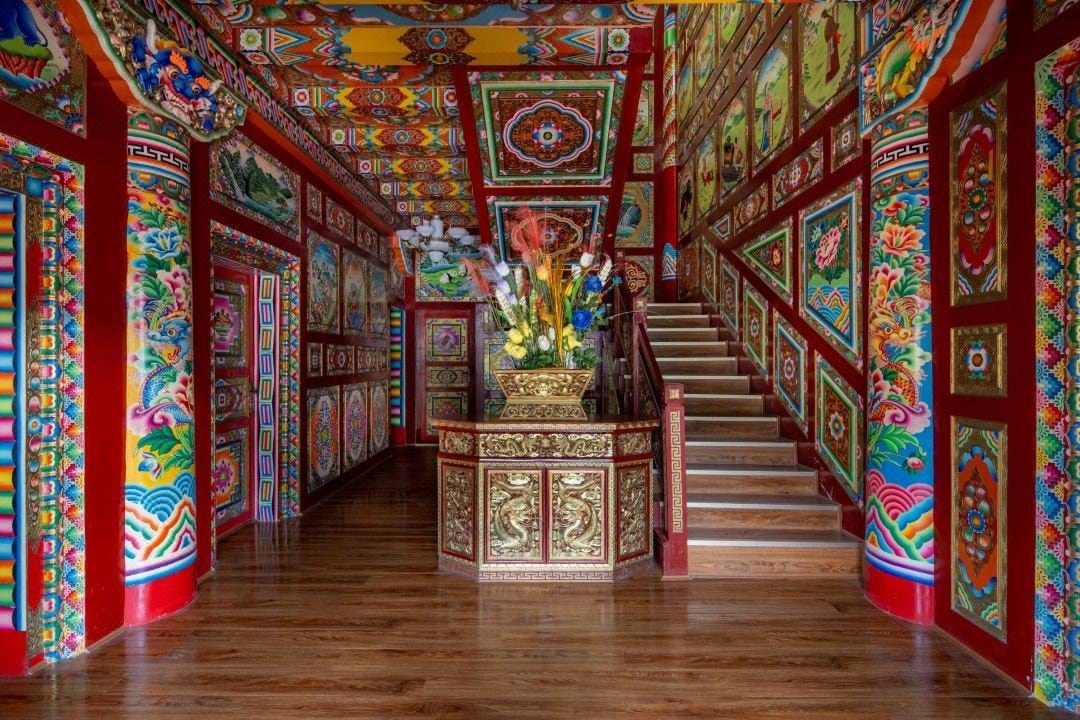
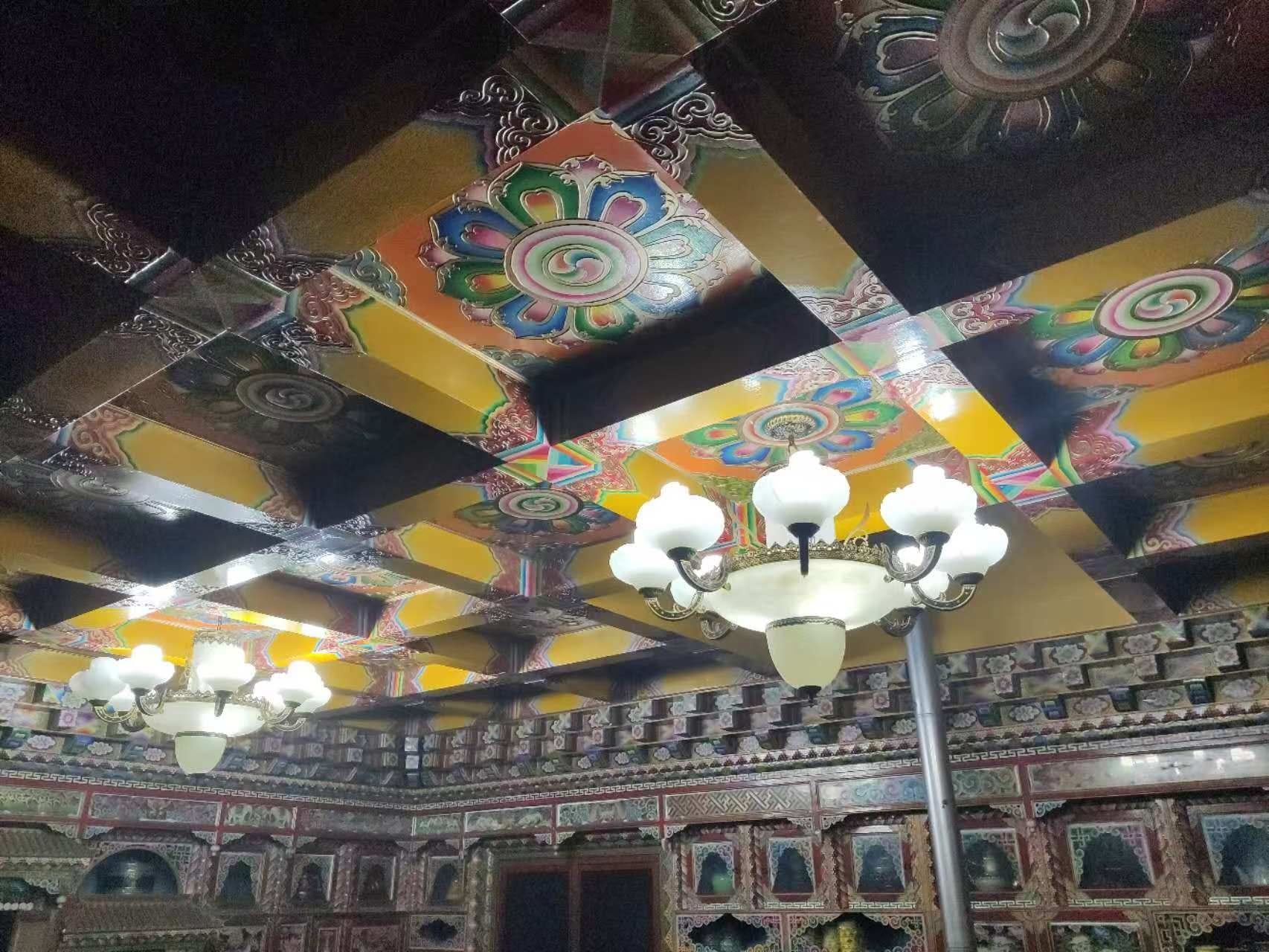
It turned out, Boss Liu had turned his huge personal home into a museum, a veritable monument to Tibetan art, culture, and craftmanship.
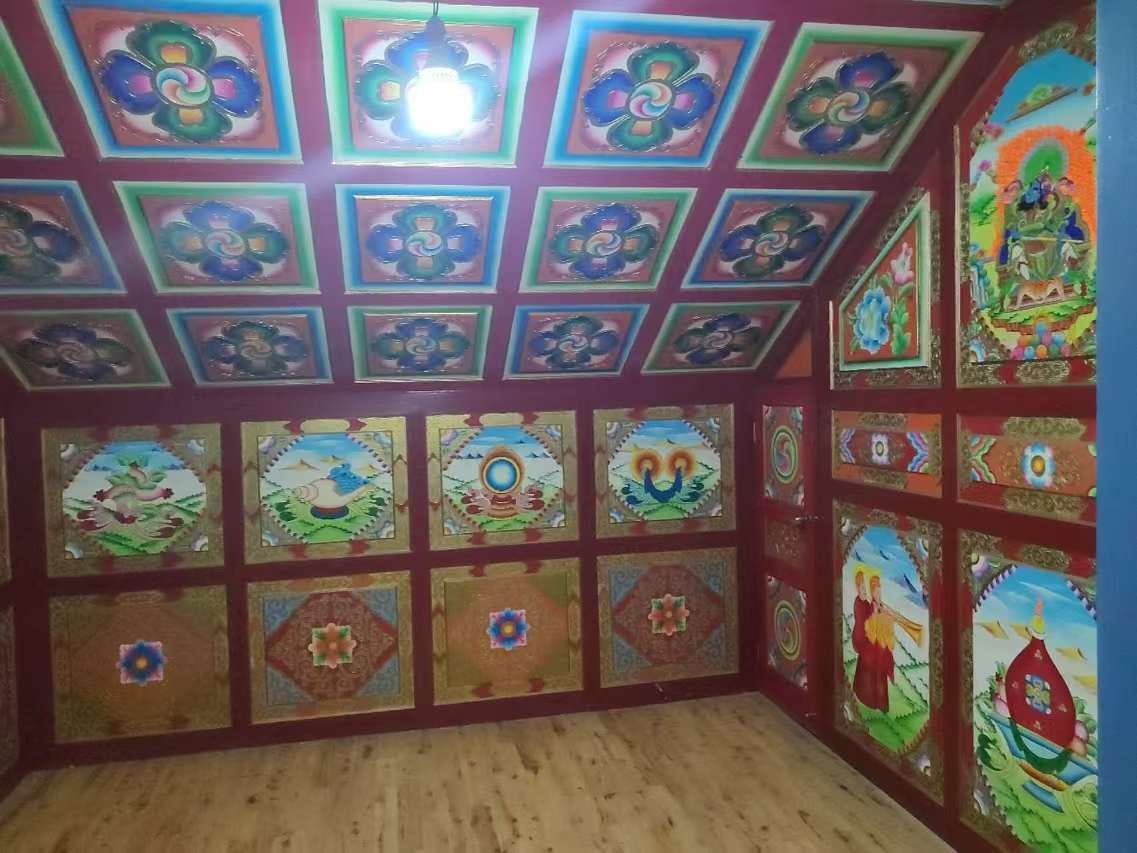
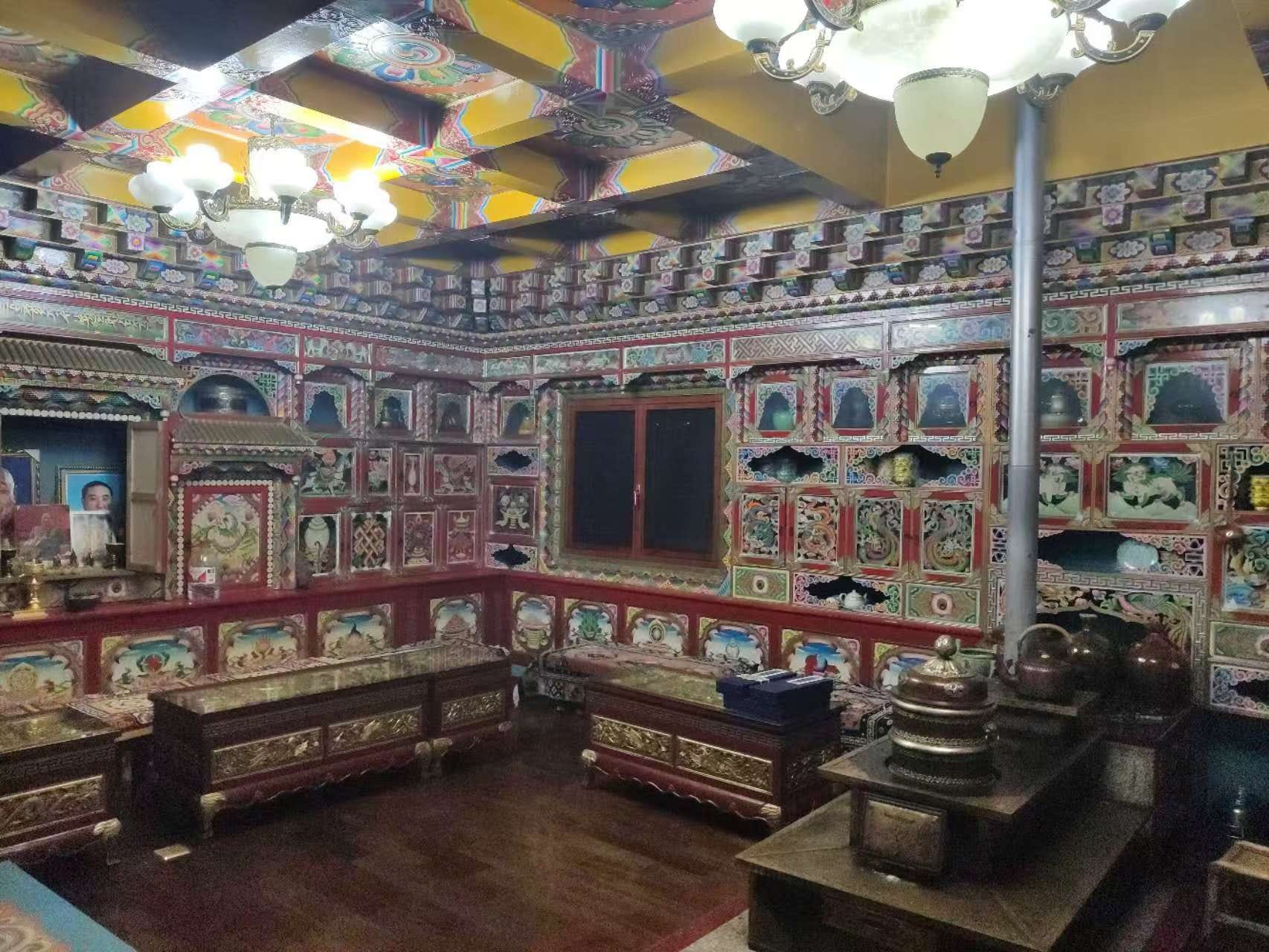
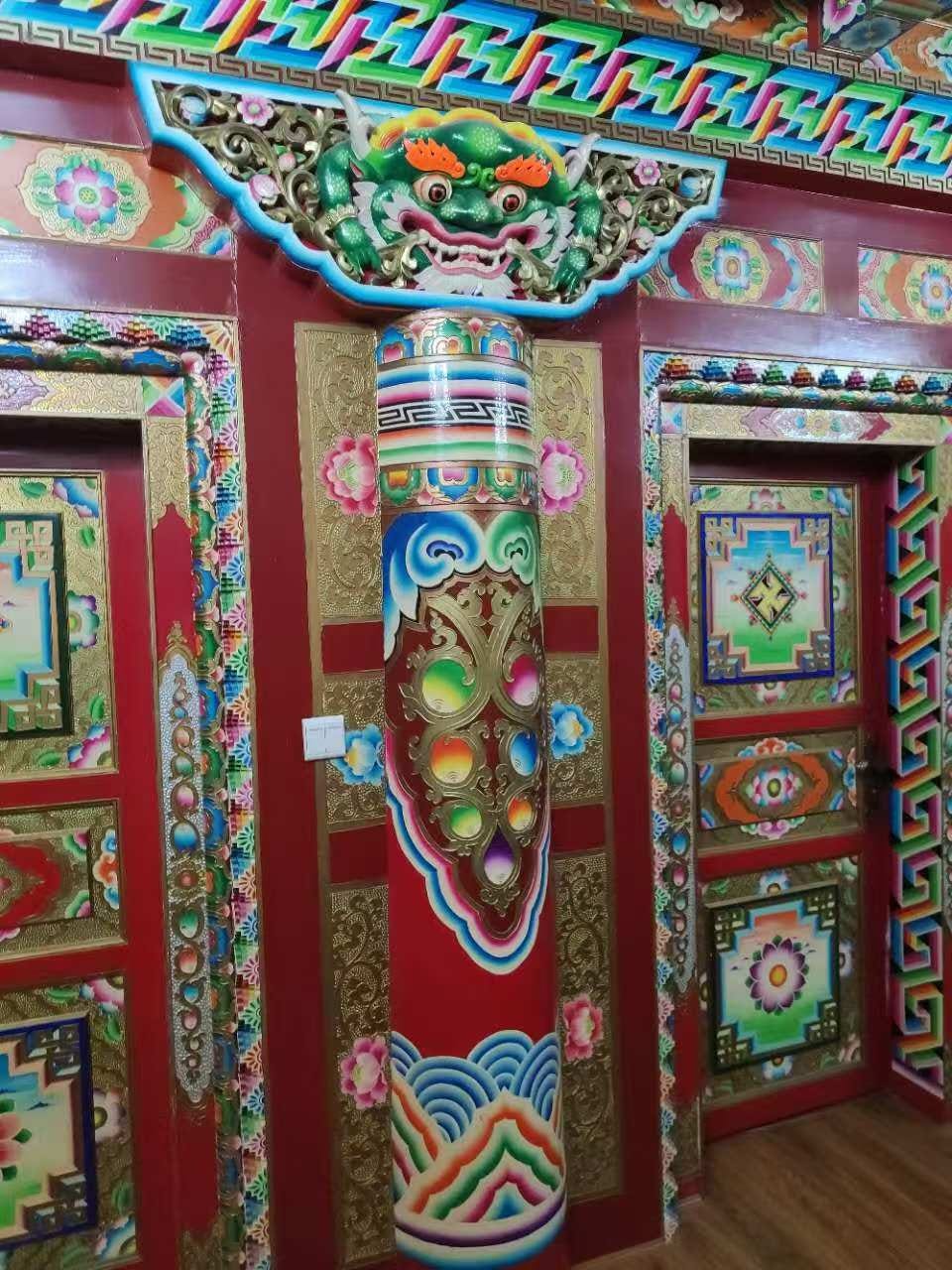
Not a single square inch of wall or ceiling space had been wasted. I hardly knew where to look, because everything was so interesting. His main living space on the first floor featured another huge stove like the one in the guesthouse, with dozens of small niches around the walls to hold dishes and ornaments.
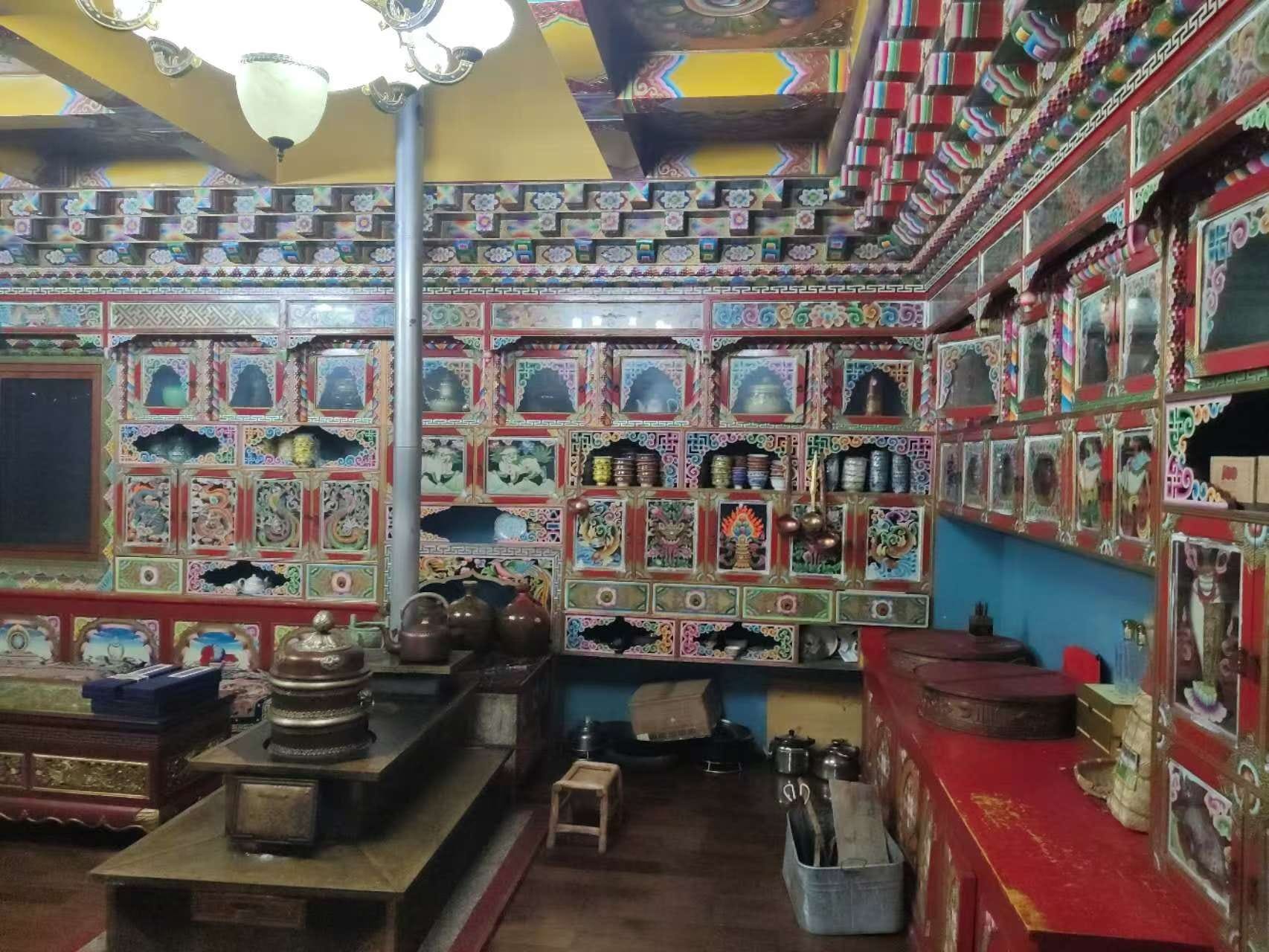
“Come here, to the traditional living room. This is where the family gathers for holidays, when we’re all back at home. Men sit in this corner, women, sit in that corner, and children sit on that side. But we also have another, more modern living room on the second floor.”
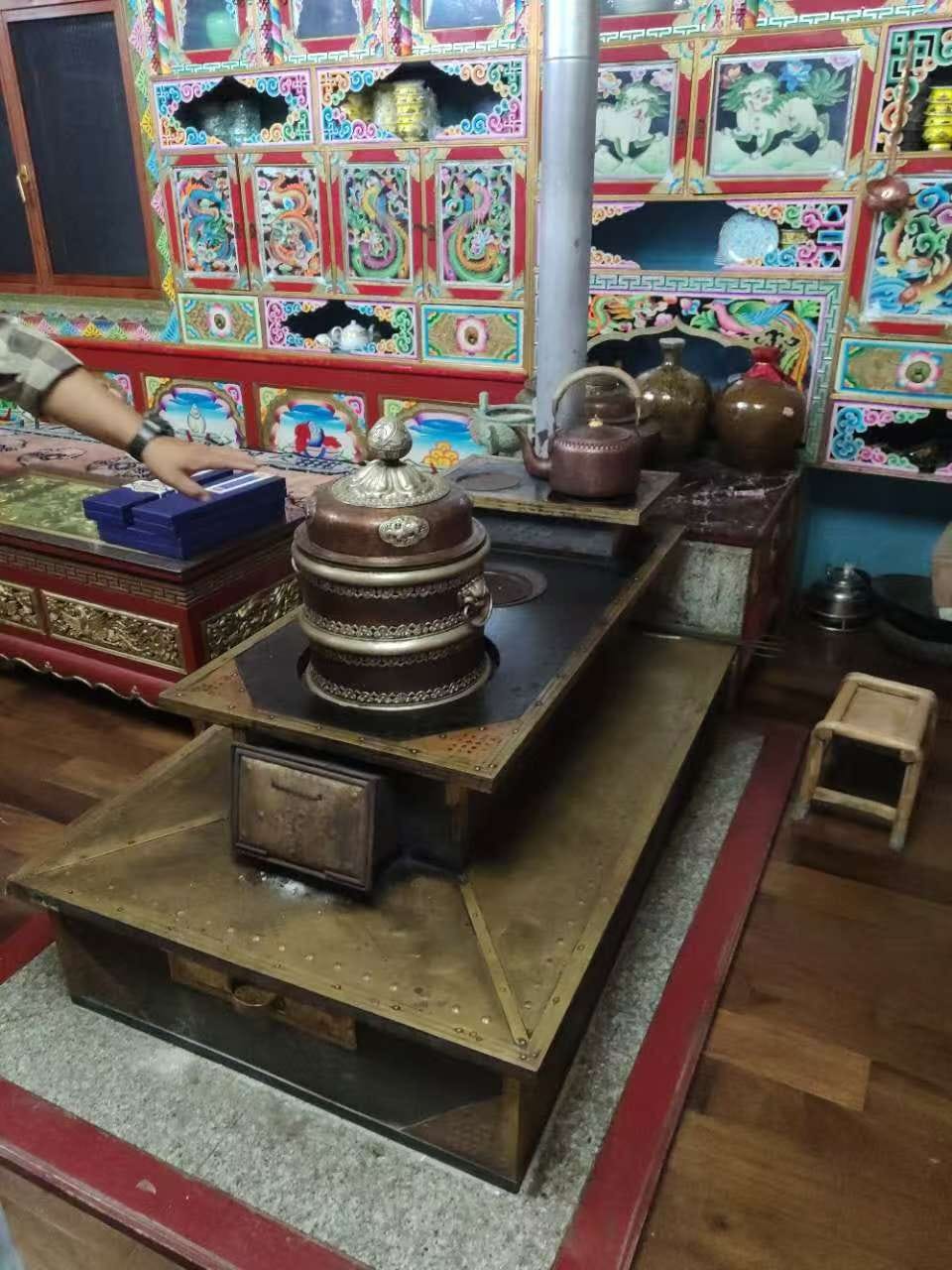
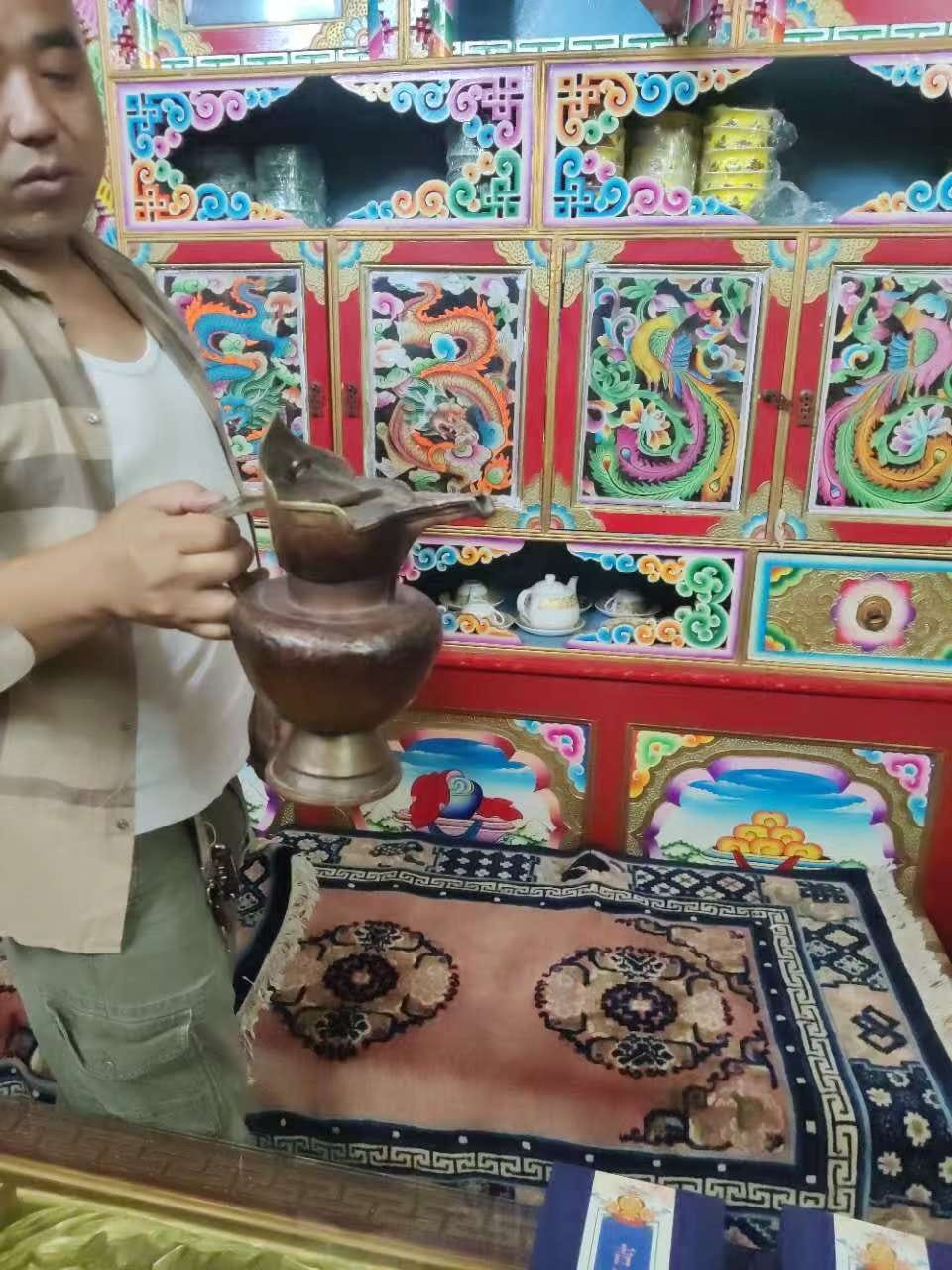
"When we're sitting together, we can all have tea and chat. See this traditional teapot…that’s green bronze. It’s handmade…all of the decorations in my home are handmade. I am still decorating it…it’s not done yet, even after 20 years."
"When did you build this house?"
"It was relatively early... in 1998. I've been decorating it slowly, for 20 years. All these murals are hand-painted…
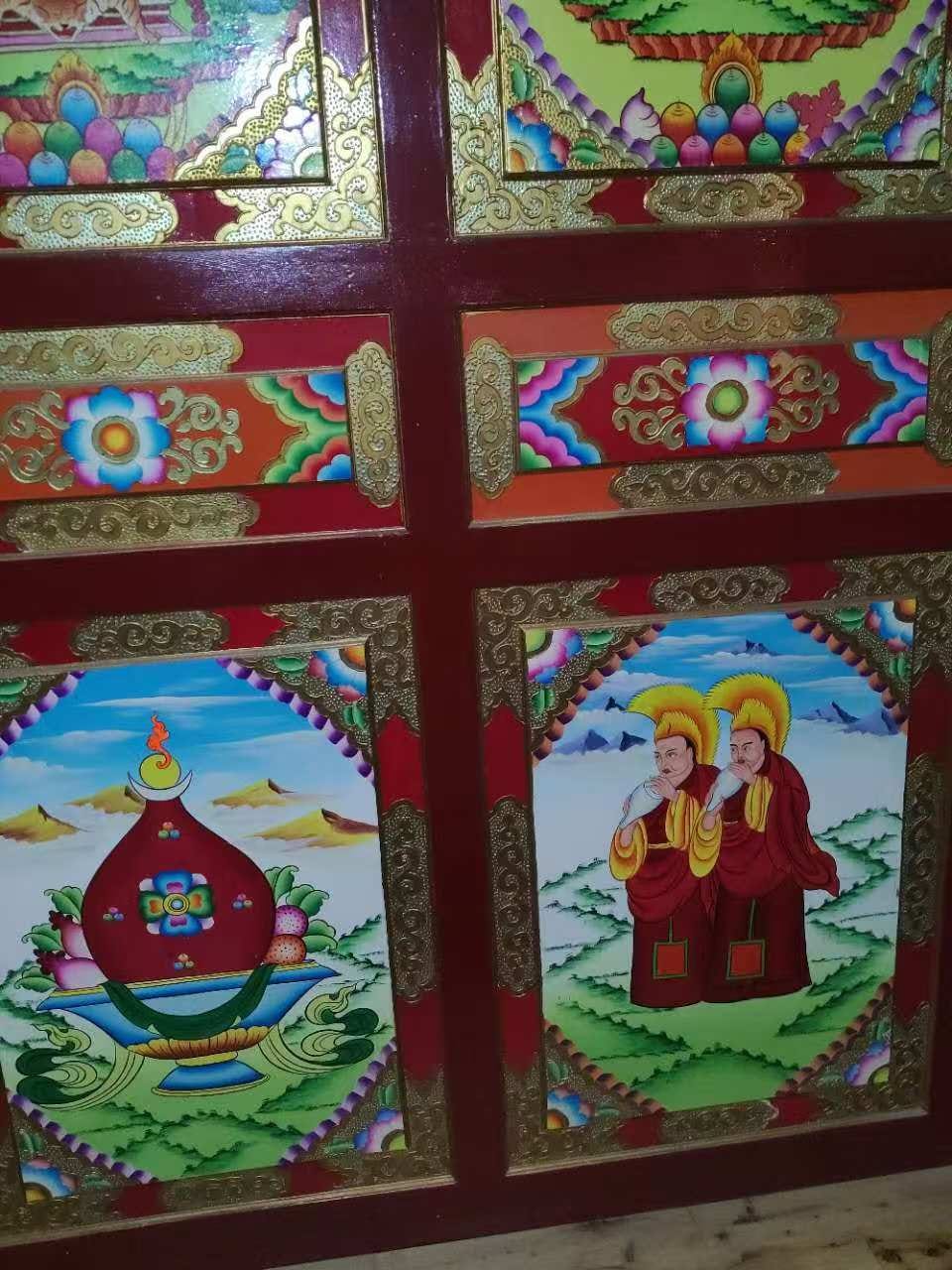
..and all the wood carvings are done by our master woodworkers. I called the best masters from everywhere to make art for my home."
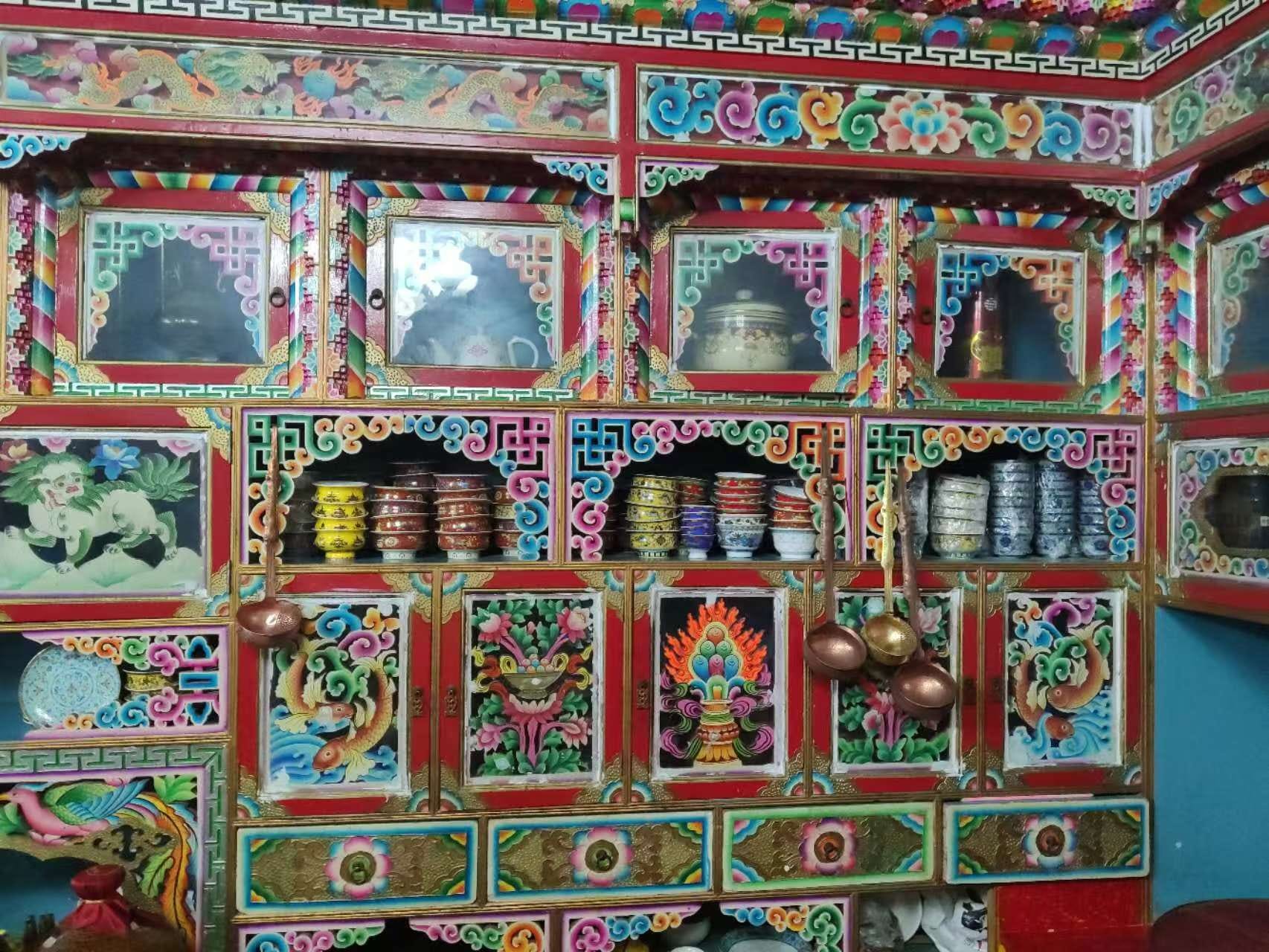
I started to suspect Boss Liu might be a little more than a regular village guy. This house is a little too ornate. I decided to try to find out…tactfully…
“So…this was a very big house that you built, all the way back in 1998. And these decorations are not cheap either. Even at that time, you had a lot of resources..?”
Liu answered carefully. “Well...I have some background. My father was an old soldier. And I am retired from the PLA too. So…our family has some resources….”
Ah. This makes more sense now. Judging from the ornateness of this house, and his uncharacteristically cagey response about his family background, I’m going to guess dad wasn’t just regular PLA…he probably had some rank. I’d bet Boss Liu did as well…
It also makes more sense now why his guesthouse lobby is filled with an impressive collection of old political posters like Mao shaking hands with Tibetan leaders and a framed declaration of the anniversary of the establishment of the Tibet Autonomous Region. Boss Liu appeared to come from old “red” stock.
In the main living area, I noticed a shrine with an eclectic mix of photographs: Mao speaking at the 9th National Congress in 1969, an image of an unfamiliar man on a light blue background I assume was Liu’s father, and a curious photo on a dark blue background of a religious leader unfamiliar to me.
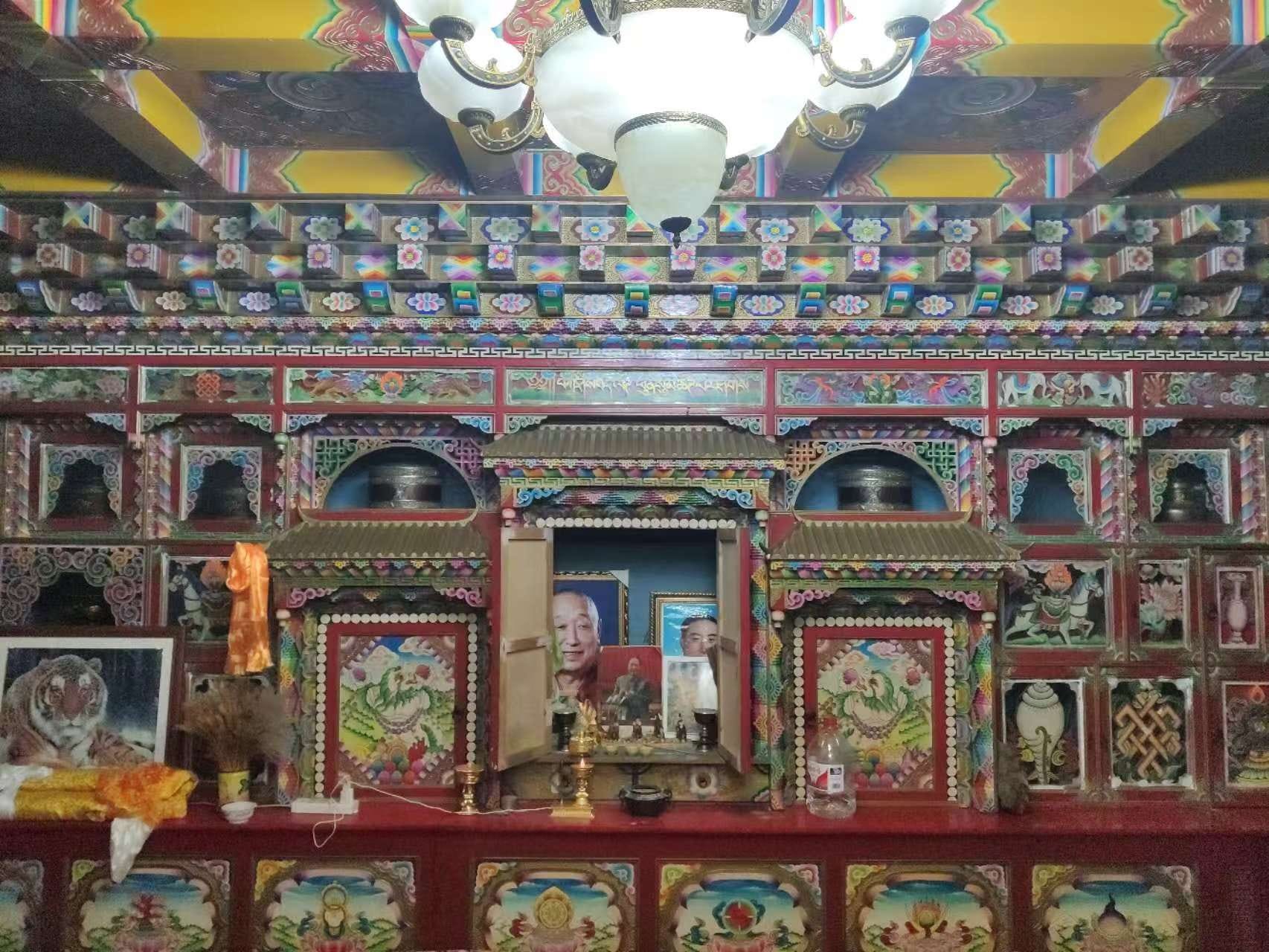
After some sleuthing, I found this person is Lungtok Tenpai Nyima, former spiritual leader of the Bön (苯教) Tibetan folk religion who died in 2017. On Wikipedia, it says Bön is “the indigenous animist and shamanic belief system of Tibet...revolves around the worship of nature and claims to predate Buddhism.”
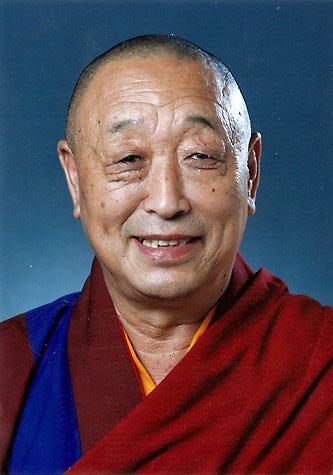
I went down a rabbit hole on Bön while writing this essay, and I’m not going to lay it all out here, but you are free to do your own research. According to official materials from the Tibetan Autonomous Region, there are around 130,000 practitioners of Bön in the TAR. I couldn’t find any details confirming whether these numbers include other Tibetan regions like Amdo, where they are supposedly more concentrated. But any way you look at it, it’s definitely a very small minority religion, and quite the surprise, to discover my guesthouse owner is apparently a practitioner of a minority Tibetan folk religion. Apparently, there are considerable overlaps between Tibetan Buddhism and Bön, but they ARE distinct belief systems. Supposedly the religious belief systems of China’s Naxi and Pumi ethnic minorities are closely related to Bön. I guess the reason it was surprising to me is Tibet and Tibetan Buddhism are so closely linked in my mind that I never really considered the possibility of a Tibetan folk religion that predates Buddhism still having adherents today.
Back to the tour. Standing in a corner of the living room, Boss Liu adopted the air of a stage performer. “Now, are you ready for the surprise?” he asked theatrically.
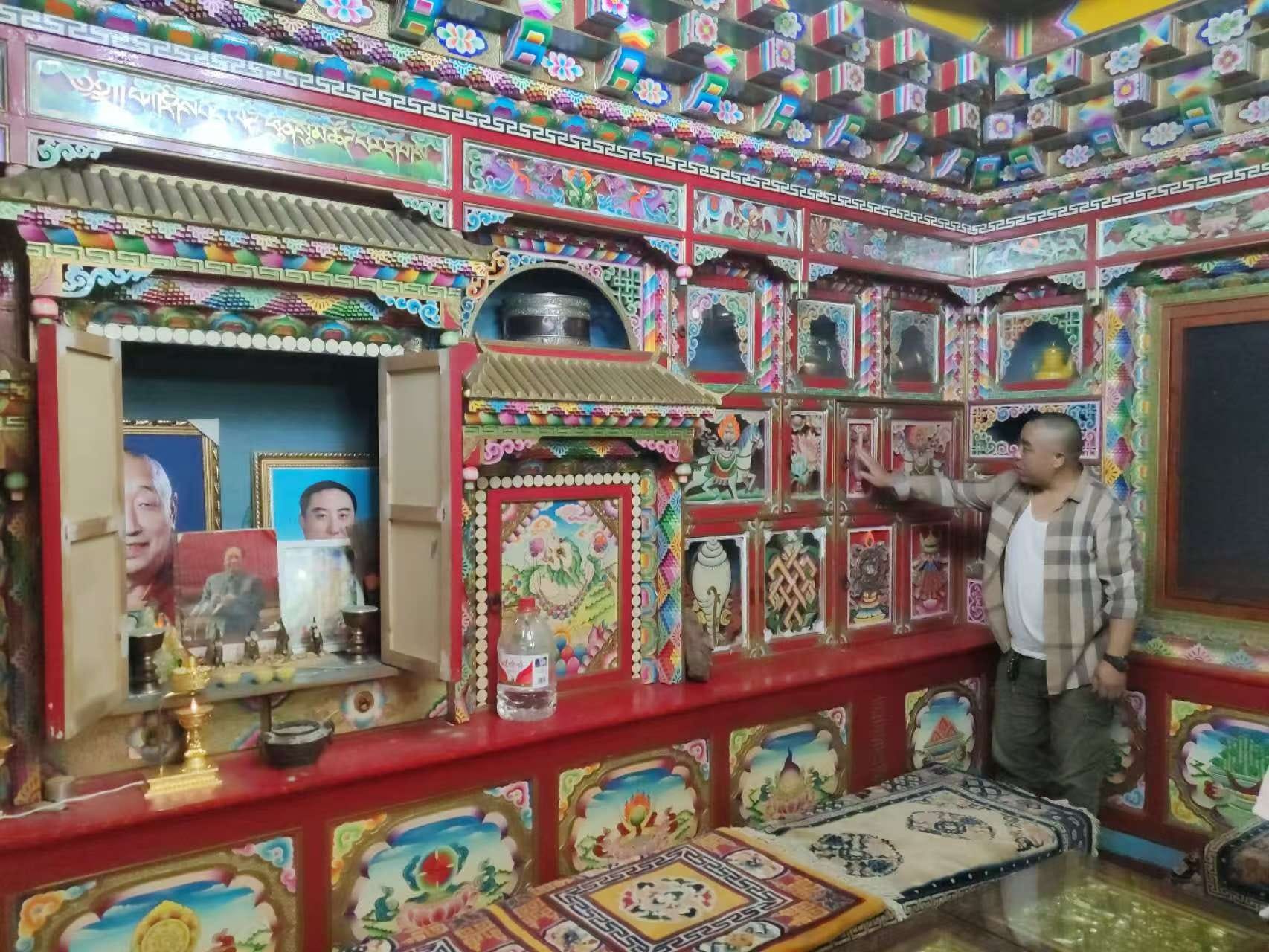
He pushed on the wall and suddenly a secret passageway appeared!
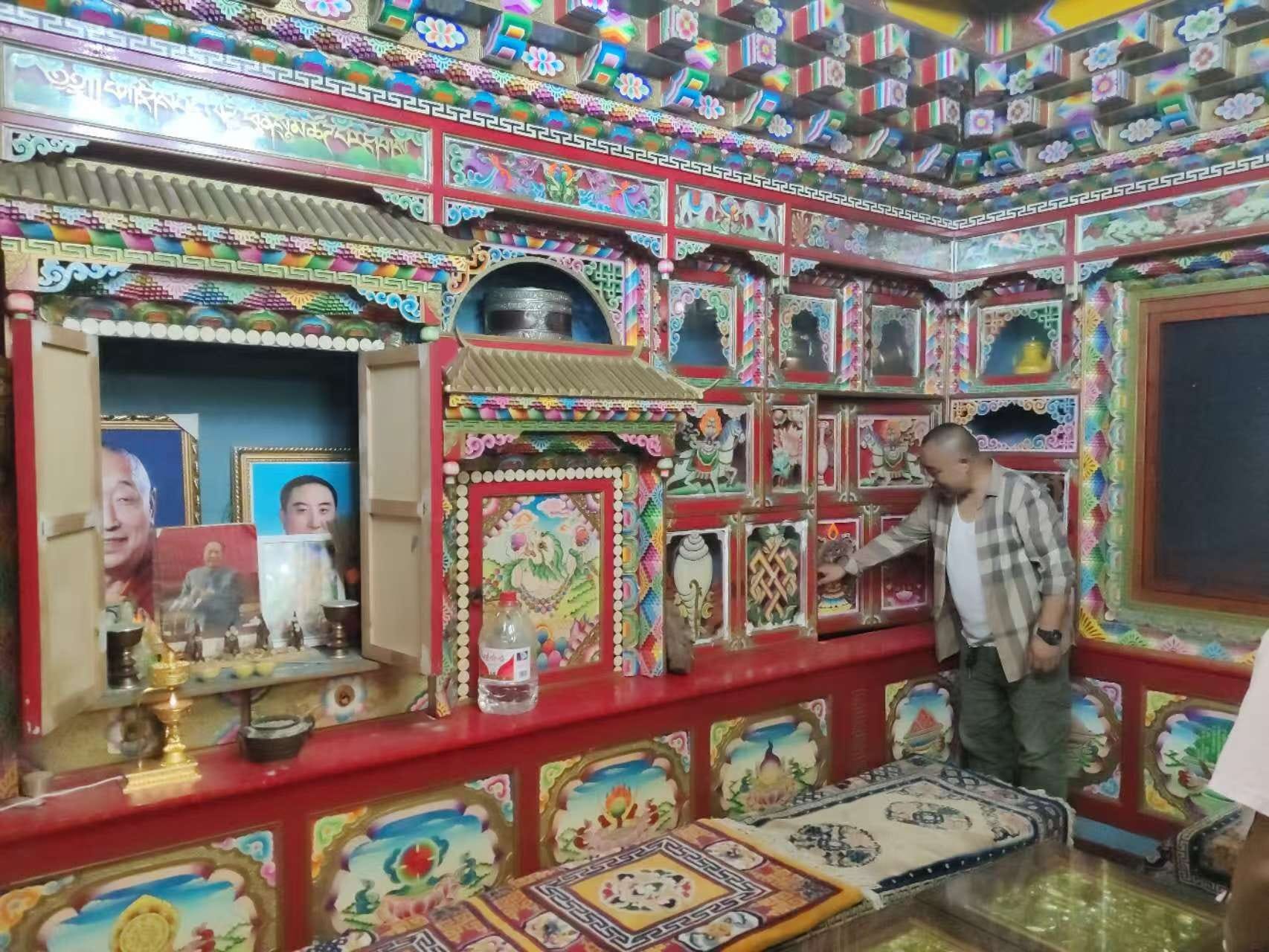
"This is the way to the third floor, where the shrine is. Come upstairs. Get your camera ready to take pictures...and videos! You must put these online and show Americans our Tibetan culture!"
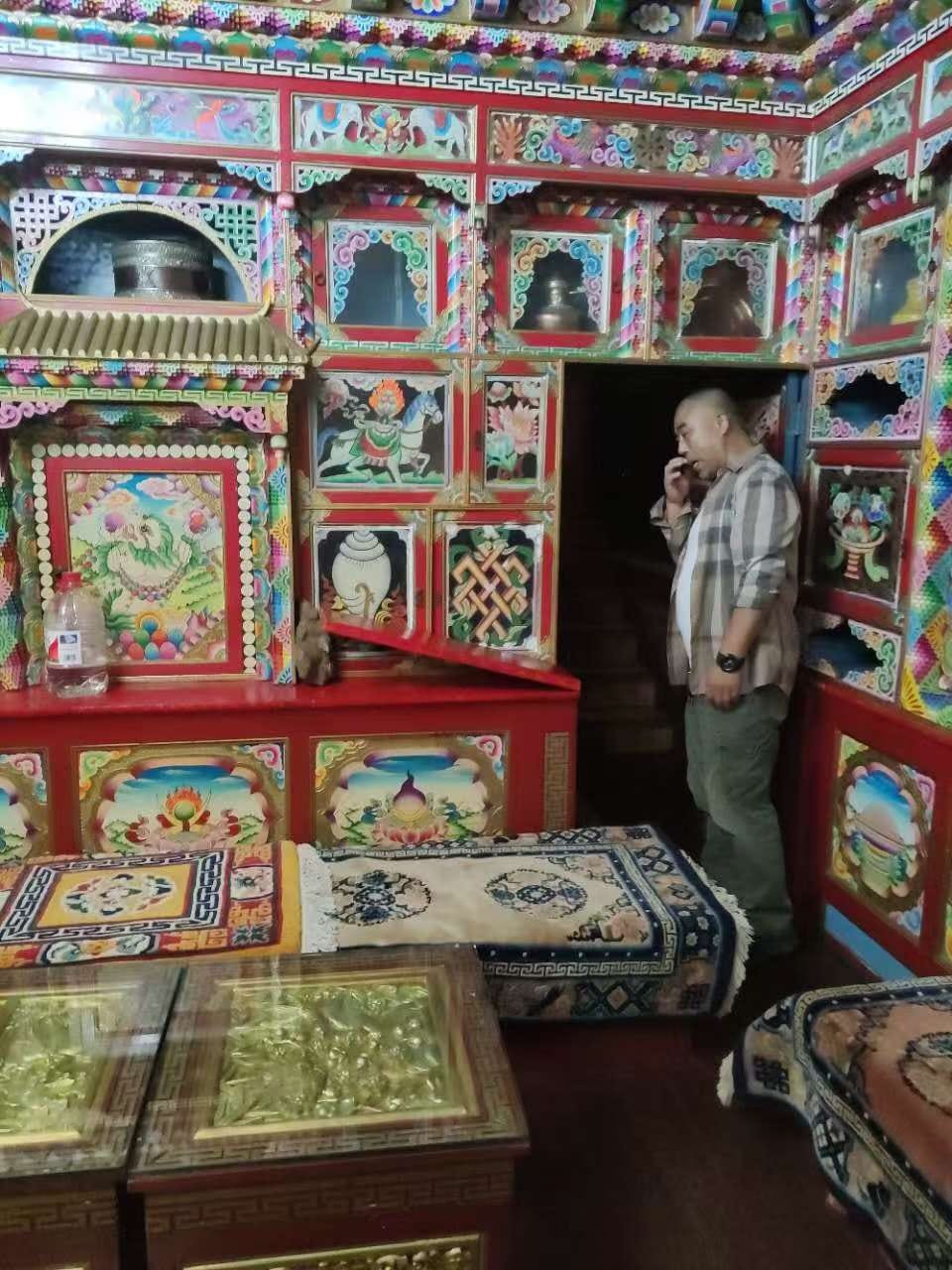
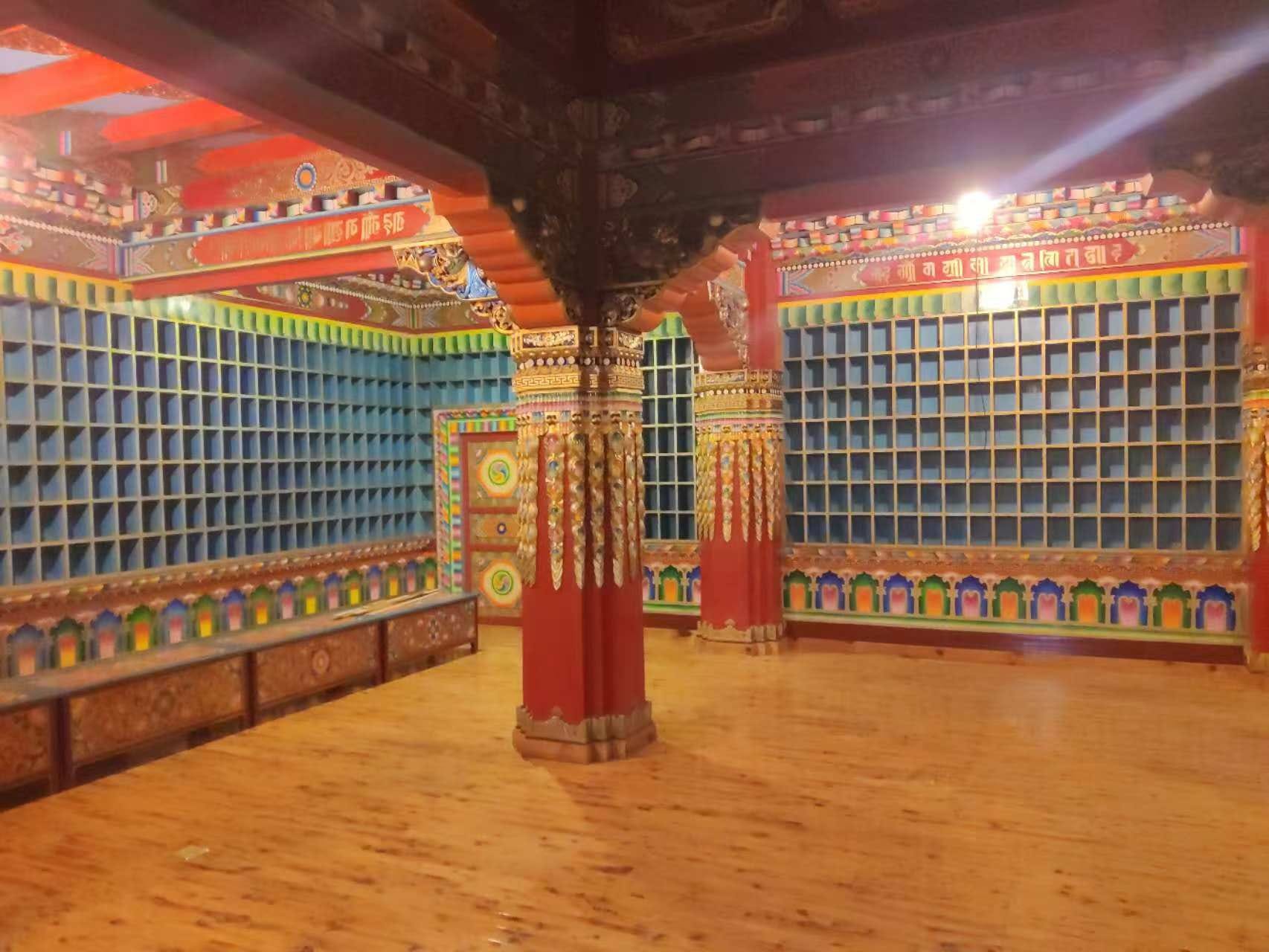
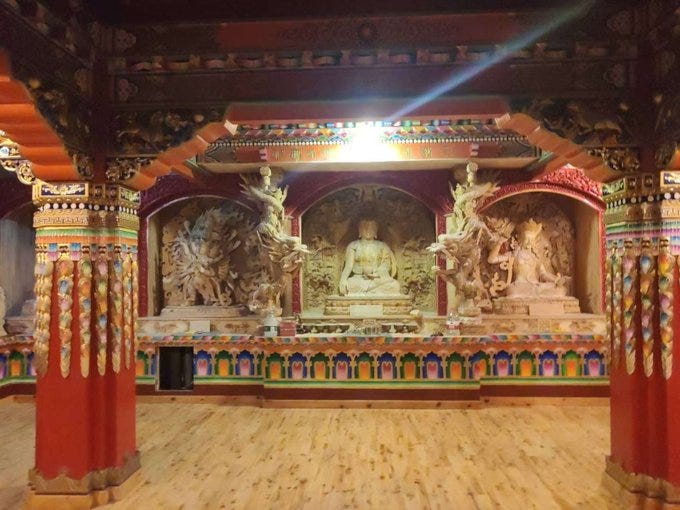
The third floor turned out to be a elaborately decorated (but unfinished) shrine, with luxurious carvings, murals, and hardwood floors.
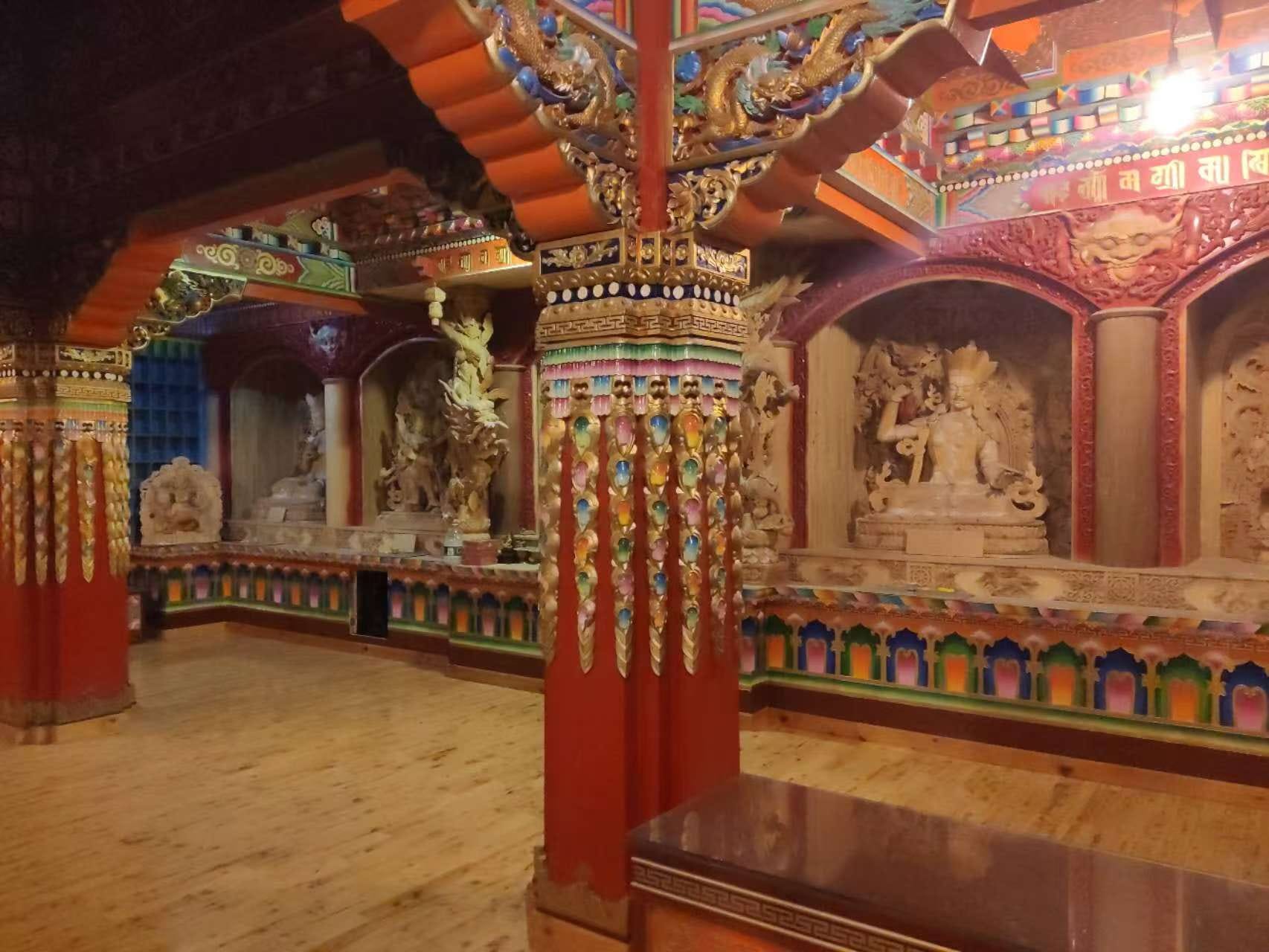
Boss Liu scampered proudly around the room, instructing me where to take pictures, and giving me the backstory of each feature and its details.
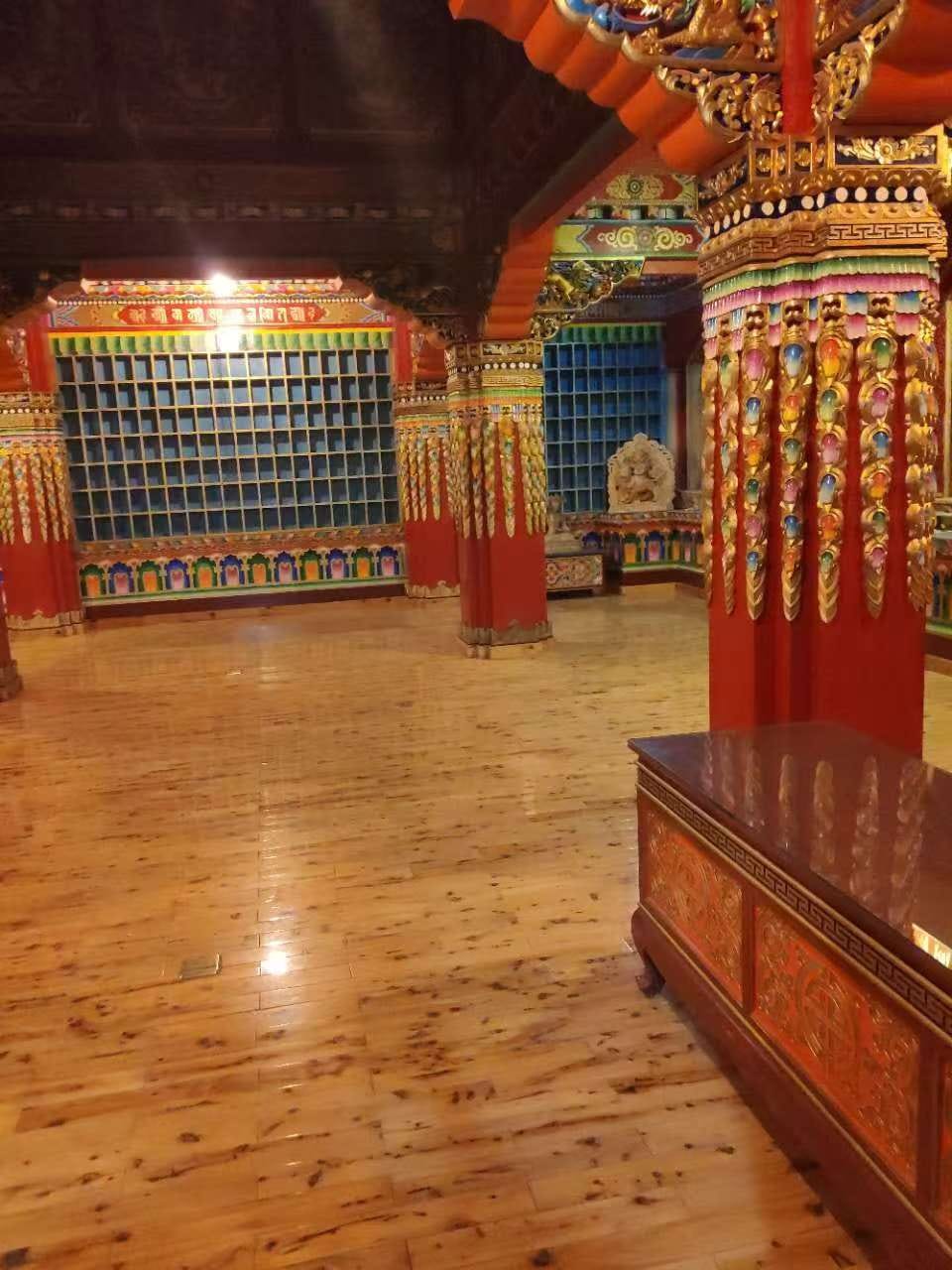
This carving was done by a master woodworker from Lhasa...
That painting was done by a master painter from Qinghai...
These alcoves in the wall will eventually hold 1000 images of Buddha...
This wood carving is still unpainted, but he has invited the master to return soon to finish the work…
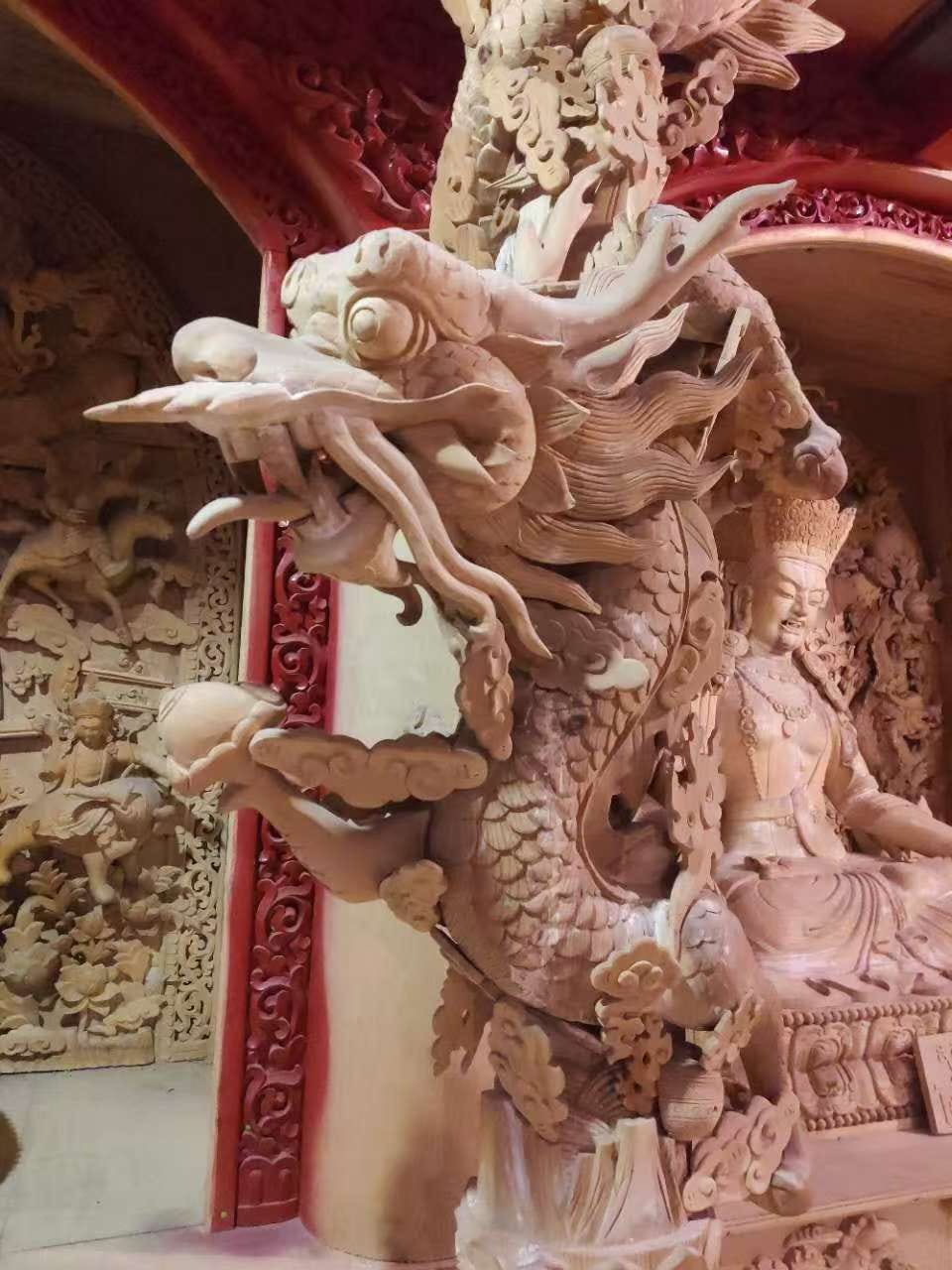
On and on, a thousand small details to be admired and appreciated. Even the curtains on the balcony were special and noteworthy, hand-braided from yak’s hair. (“let me tell you, the yak is a treasure! Every part of its body is a treasure!”)
His house is truly a museum. Boss Liu even insisted I return to the entrance of the room and film a slow walk-though to capture the space. I was narrating, but unfortunately my phone's mic messed up, so it's silent. But you can get the vibes anyway...
Our tour ended, and Boss Liu brought us back to the entrance, where he demanded we admire one last thing: his wife’s plants.
"Look how special these are! My wife specializes in succulents. Ask anyone who knows about succulents and they’ll tell you these are amazing!"
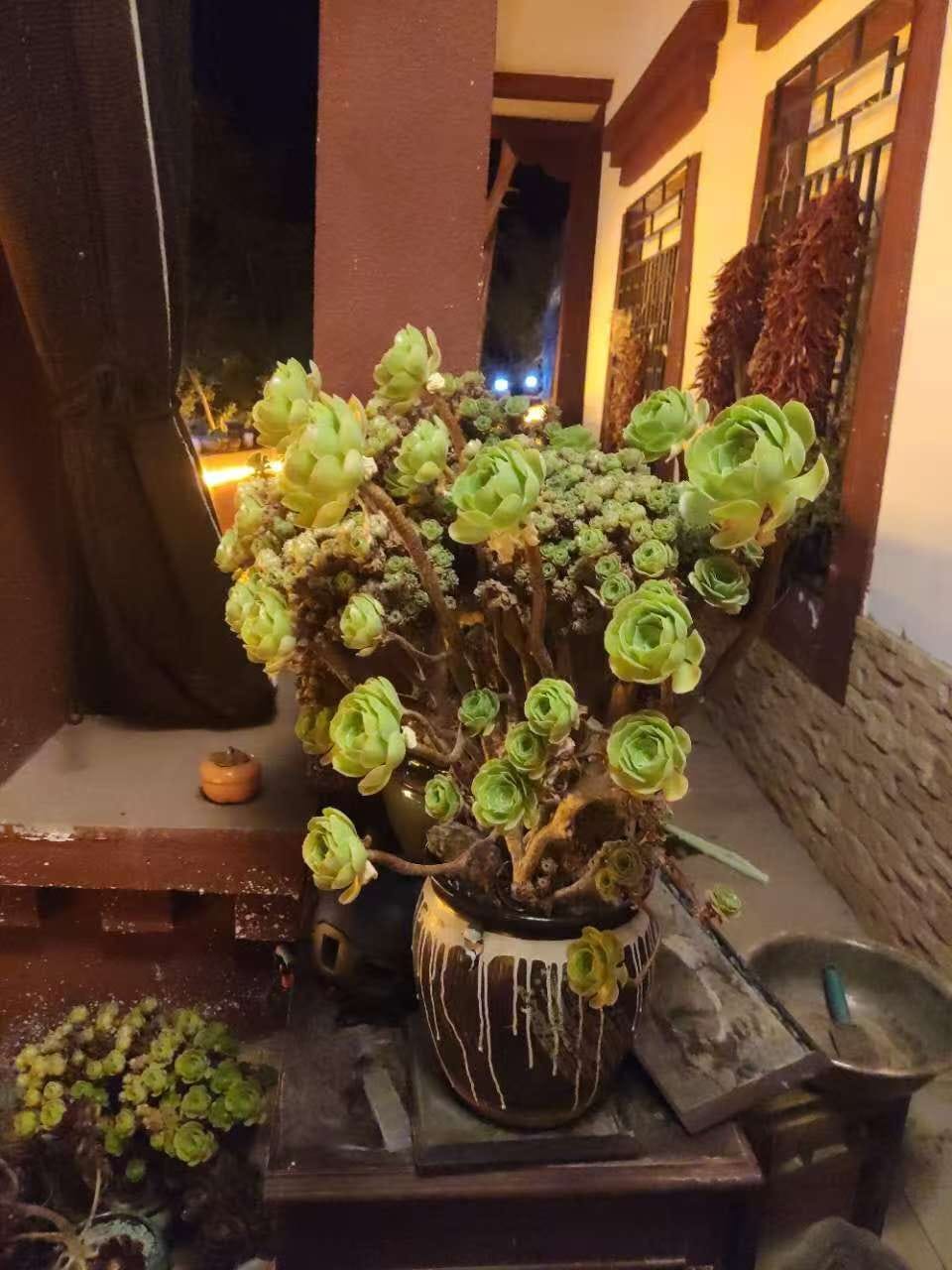
“She’s been raising some of these for 20 years! Just ask anyone….they’ll tell you these are very impressive! We even had some professors from the agricultural university come here to study her succulents!”
I don’t know anything about succulents, but I’ll take his word for it.
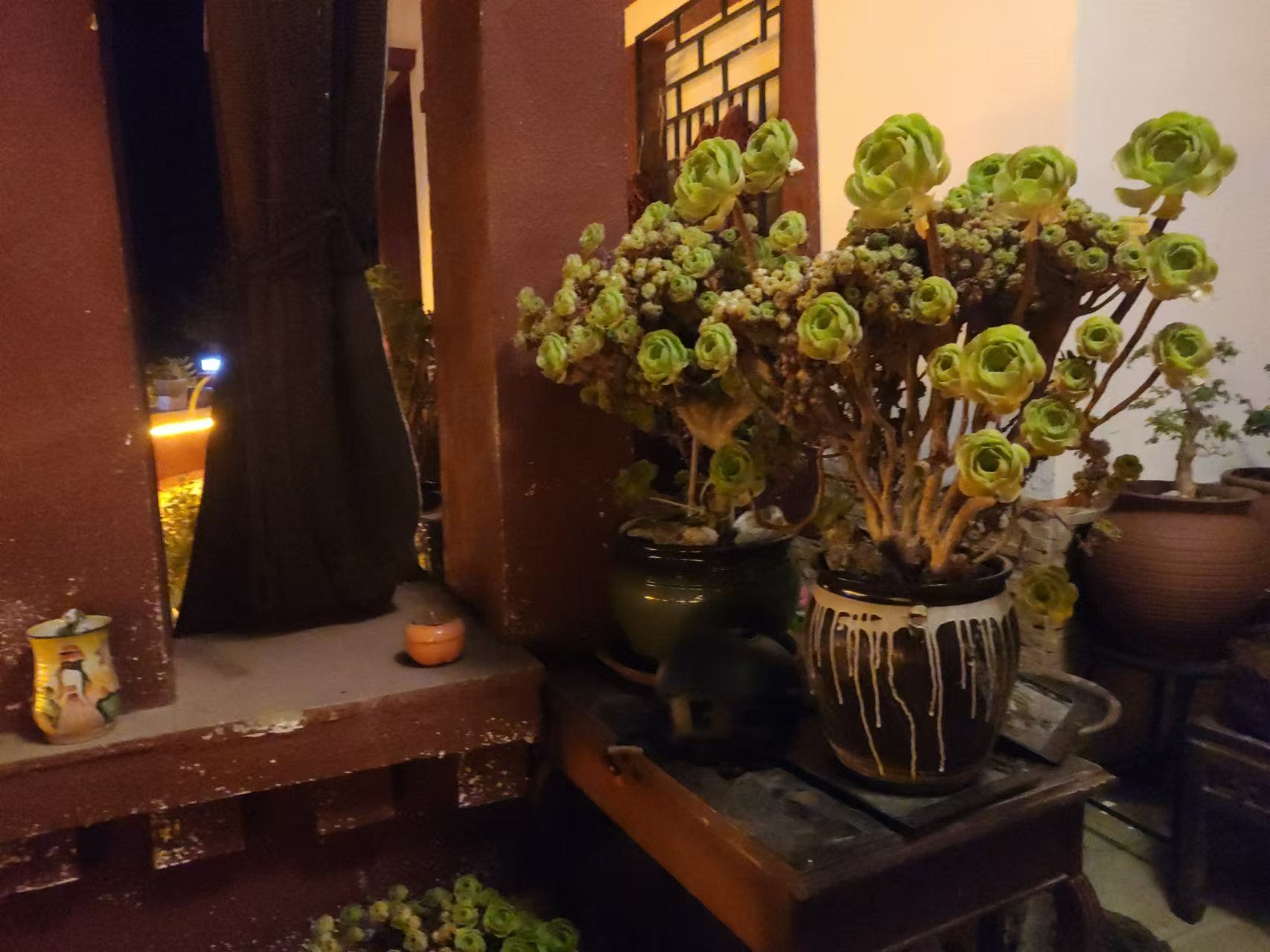
Anyway…what a guy. Big Boss Uncle Liu, living his best life.
An aggressively proud Chinese (retired PLA with a lobby full of red paraphernalia) AND an aggressively proud Tibetan (has a literal museum of Tibetan culture in his house) with seemingly no identity dissonance between the two, not that I detected anyhow.
I also thought it was cute how proud he was of his wife's plants. I've never seen a man so excited about succulents before. I wish I had gotten to meet her
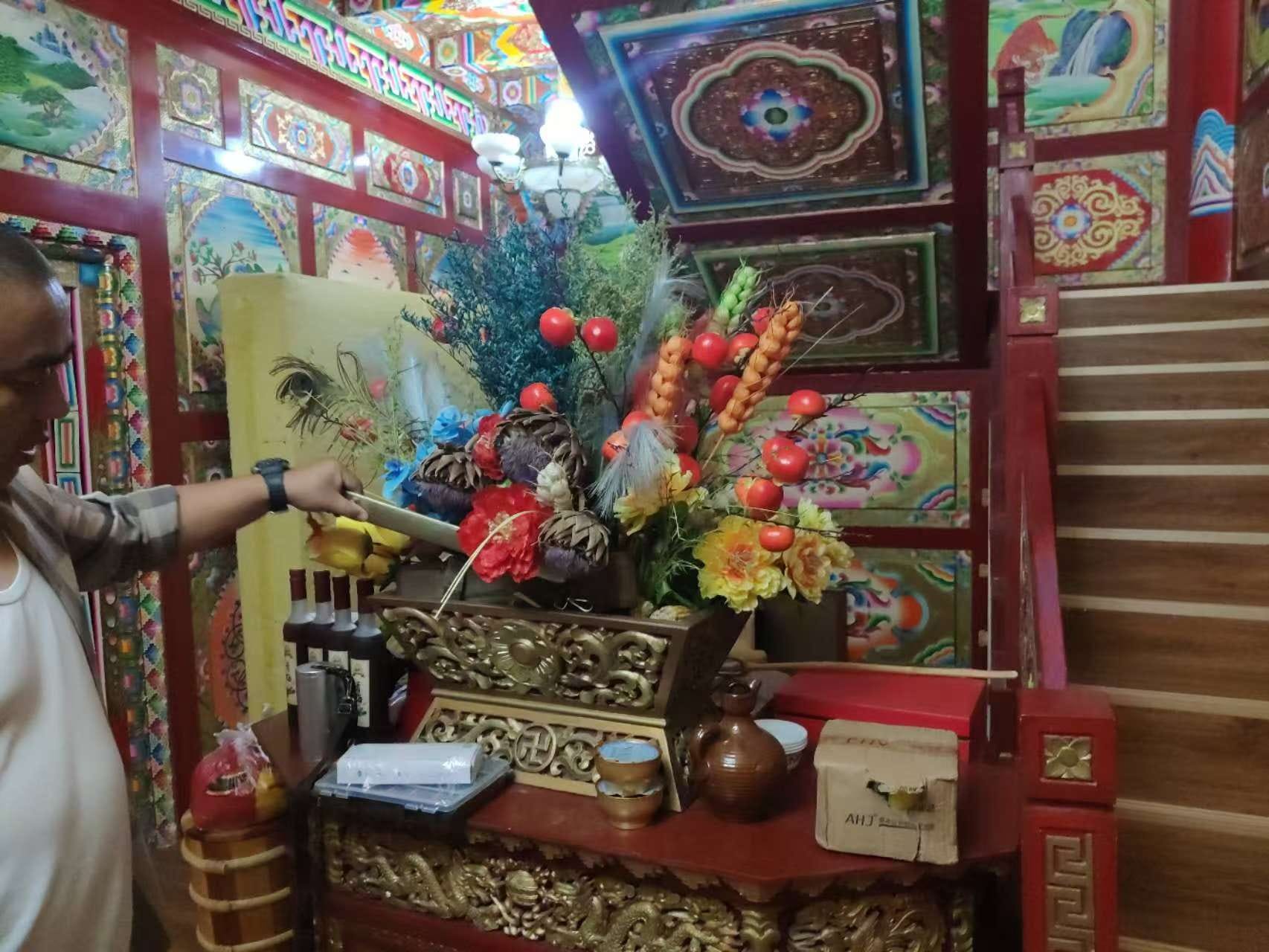
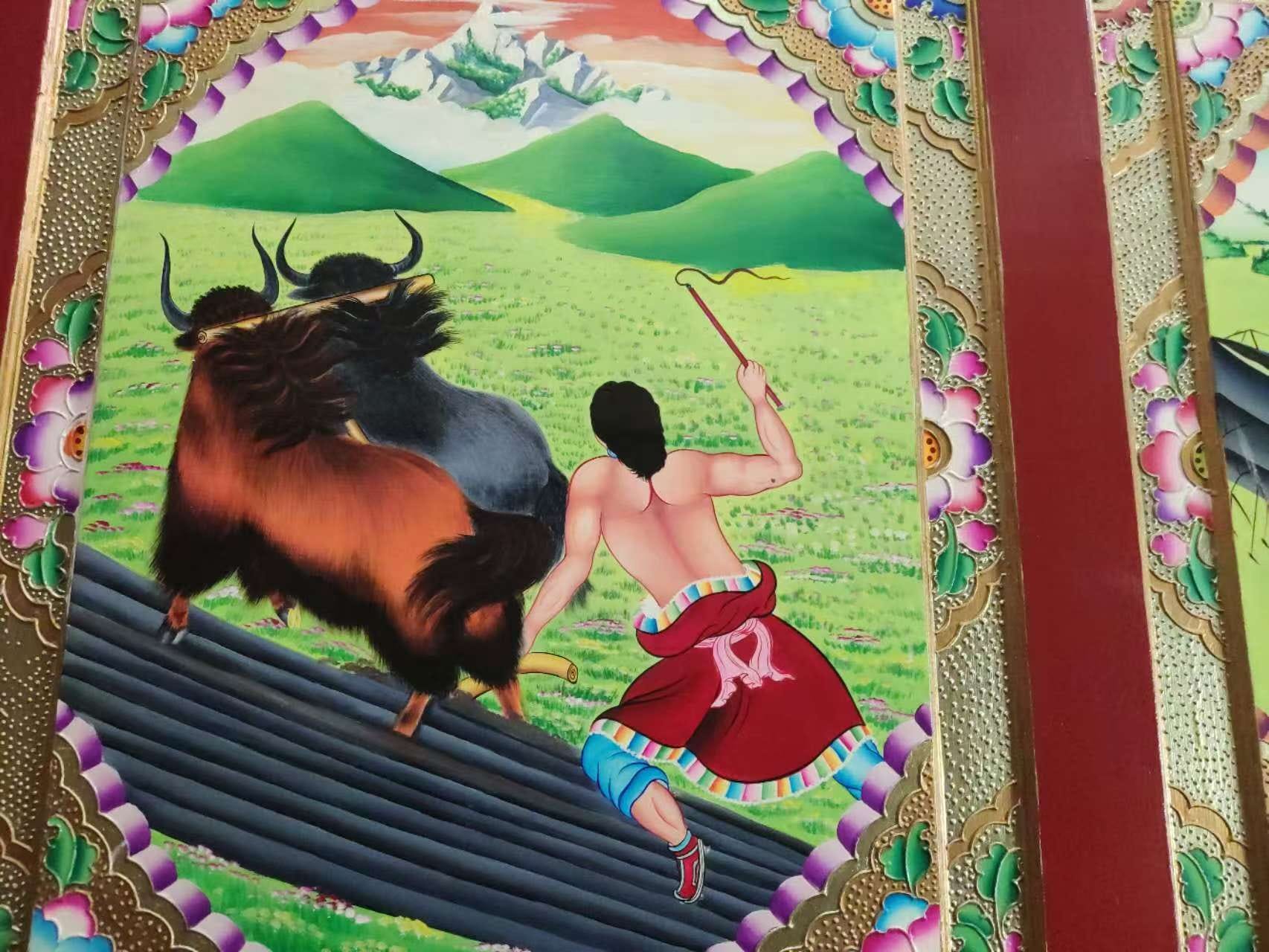
I’m not qualified to comment how common this view is across places I haven’t visited, but you have to imagine this is Beijing’s ideal vision for a Chinese cultural identity that is both unified and diverse at the same time - without clashes or contradictions. Oxen of two colors, plowing the same earth, so to speak (Liu used this metaphor on the tour while pointing out this mural below).
So if YOU go to Jiuzhaigou, I say...skip the hotels and stay in a village house. Chat with the locals. Hike to the old mountain hamlet. Eat the yak hot pot. Drink the butter tea. Ask what they think, ask how they’re living, and then listen. It’ll always be worth it.
That’s it for this one! Thanks for reading. I’m trying to quickly get caught up posting all these old essays from the last 12 months so I can start the year with a clean slate, so to speak. So…expect a lot of content coming in the next week or two!
I always enjoy your travelogues, but this one was particularly fun! We're heading over to Tibet to visit, would you mind sharing the guesthouse contact? Thank you!
Extraordinary photos!