
This essay is a repost of a thread originally posted to Twitter on 25 June 2026. It has been edited lightly for long essay format.
I've visited central China’s Hubei Province many times. I am, after all, a “Hubei son-in-law” (湖北女婿), as locals would say. Until recently, however my experience with Hubei had been limited almost exclusively to eastern Hubei, in the greater “Wu-E-Huang-Huang” region (referring to the capital city Wuhan and the nearby cities of Ezhou, Huanggang, and Huangshi).
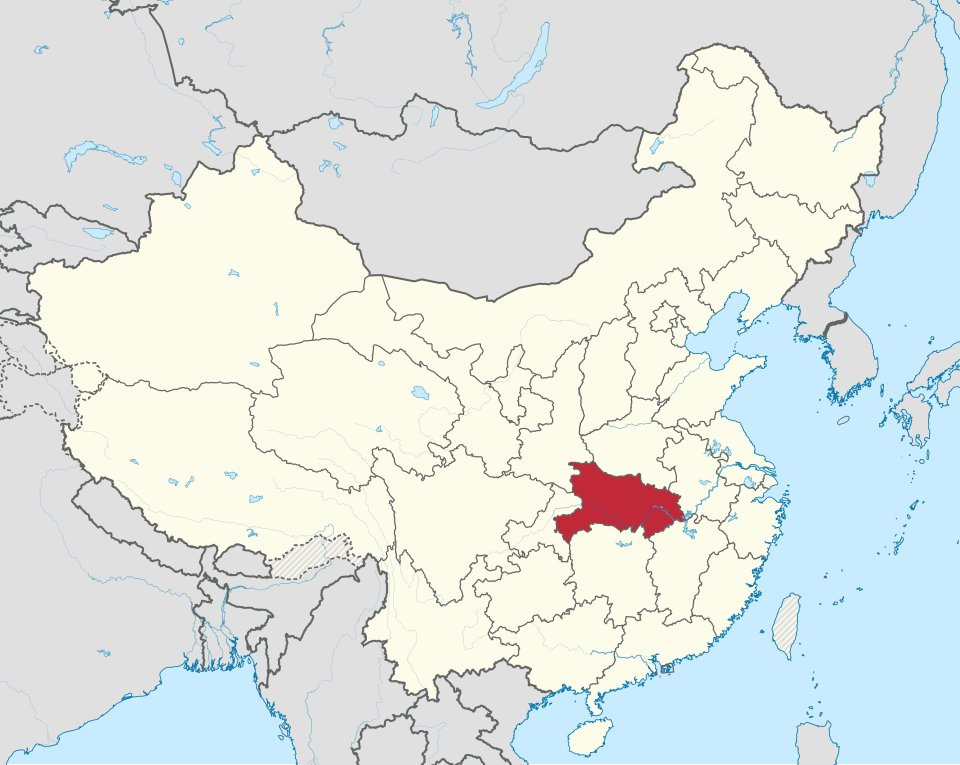
My prior writing has featured Ezhou quite a lot in particular, as I am most specifically an “Ezhou son-in-law”. But as you can see from the map below, the area that I was most familiar with was really just a small corner of a much larger province that was much more mysterious to me.
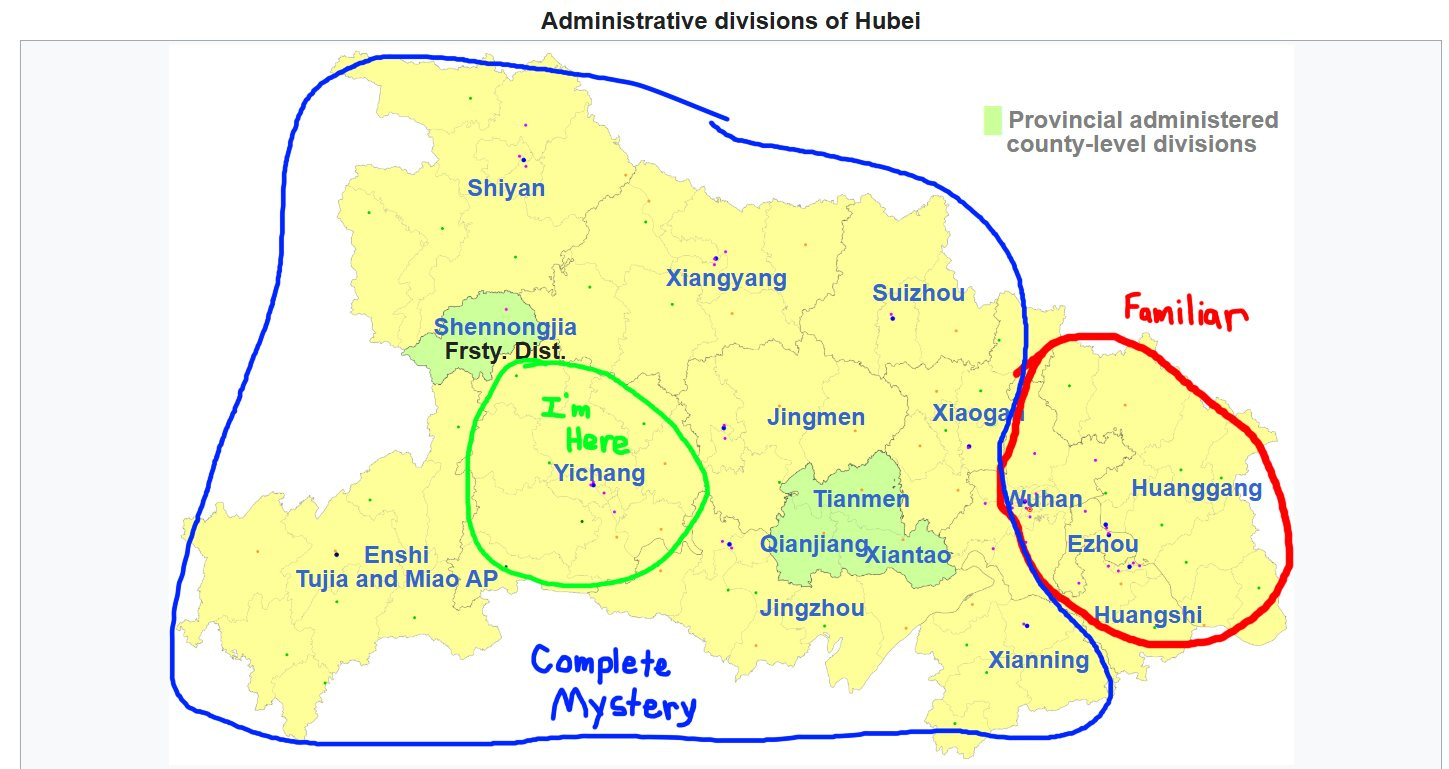
But on my most recent trip to visit the Three Gorges Dam, I finally made it further west to the city of Yichang (宜昌) which has been on my target list for a long time.
To reach Yichang from Wuhan, you must cross the Jianghan Plain, which lies directly directly west of Wuhan. It’s a massive stretch of farming flatlands - like Kansas with more rice paddies. It has been one of China's key breadbasket regions for thousands of years. In June, the fields were bursting with luxuriant green crops, dripping in the plum rains, a lush contrast to the modest grey concrete village houses squatting in small clusters across the landscape. Of course, the high-speed rail makes short work of the traverse, covering it in under an hour.
The Han River winds east-west across this plain, moving roughly parallel with the Yangtze 90km to its south before they finally converge in Wuhan proper. The train route crosses it several times as we head west. The Jianghan Plain is a floodplain, and before the Three Gorges Dam was built, the Yangtze River basin's most destructive floods were often associated with this region. When rivers here burst their banks, they can submerge fields for hundreds of square kilometers.
Yichang itself isn’t so famous as a tourism destination, but I’d long wanted to come to visit what is undoubtedly the most famous modern megaproject in China: the Three Gorges Dam. The 3GD is not in Yichang proper, but in Zigui County, 50km further west up the Yangtze into mountain country. I would visit the next day, but first I would spend a night in Yichang.
Yichang City lies along the Yangtze on the very western edge of the Jianghan Plain, the last flatland outpost of central Hubei as you head west, before the terrain starts to rise into the dramatic river gorges and cliffs that define Hubei’s real mountain regions like Enshi and Shiyan.
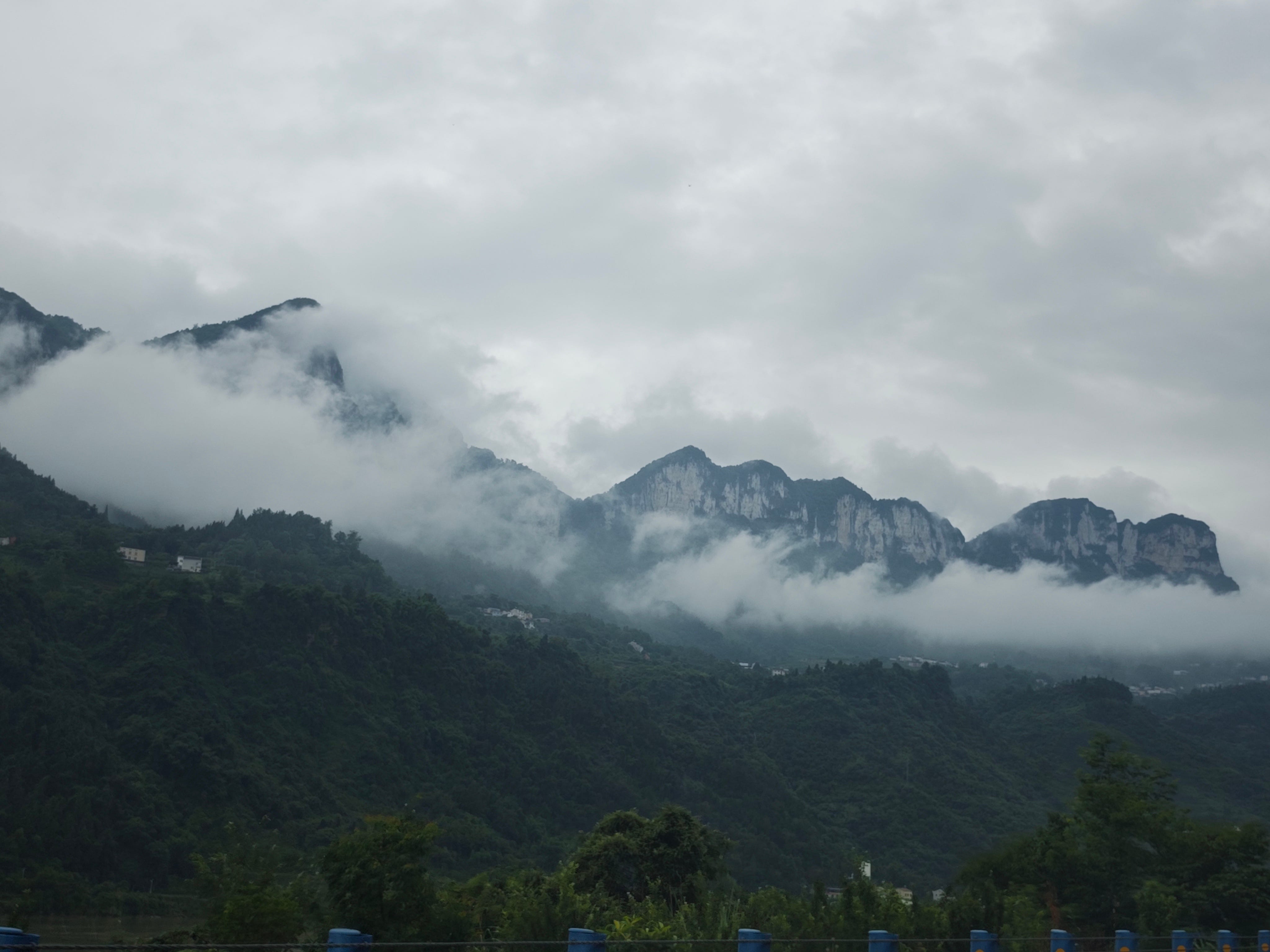
The scenic areas of western Hubei aren't as well-known as those of western Hunan (like the world-famous Zhangjiajie and its “Avatar Mountains”) but are no less stunning. They’re just a few hundred km apart too, so they also share the same geology, climate, and ethnic minority cultures.
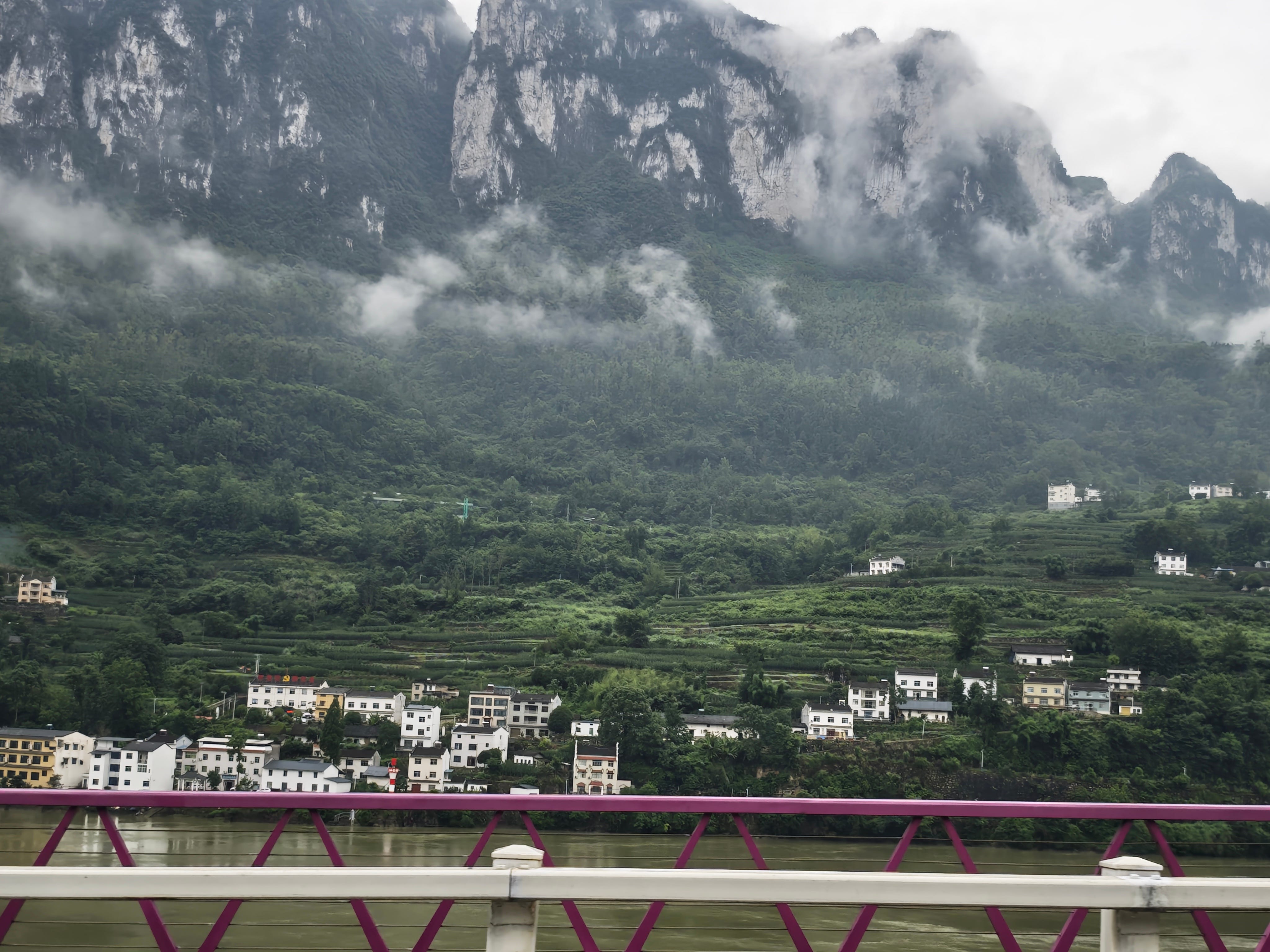
And as I’ve mentioned before, I’m a sucker for Chinese mountain vistas, so my camera was having a good time…
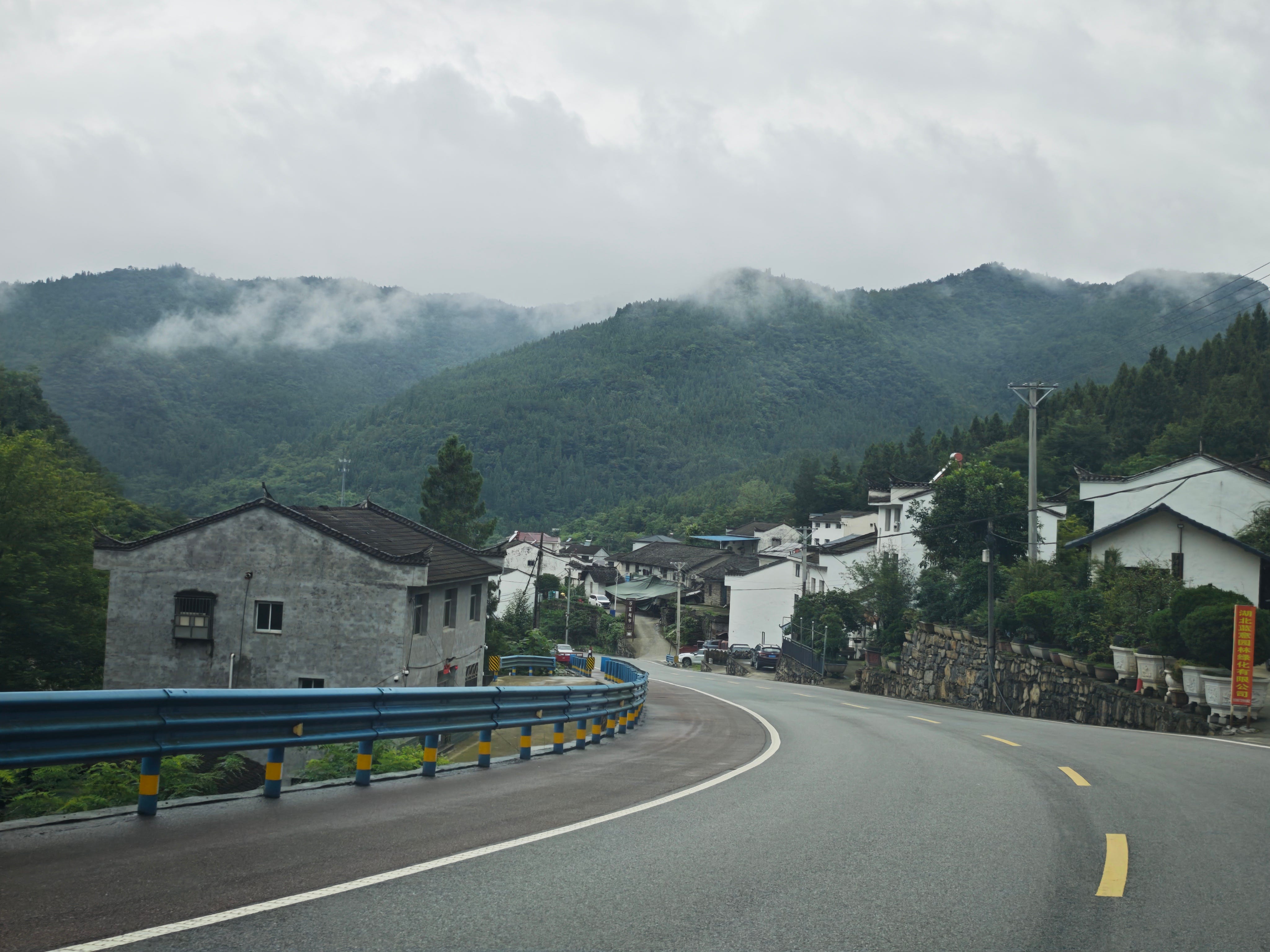
Hubei is a classic archetype of a central Chinese province, economically and culturally dominated by its capital, with broadly weaker secondary cities. This model applies to province like Hubei, Hunan, Henan, Shaanxi, Shanxi, and Jiangxi, to name a few.
But if Hubei had a second economic pole beyond Wuhan, Yichang would certainly be in the conversation. In 2025, Yicai classified Yichang as a 3rd Tier city (ranking #88 out of 337 cities tracked across China). [What’s a Tier? What is this Yicai system anyway? I break it all down in this post.]
With a total administrative population of 4m and an urban core of ~2.5m, Yichang is not massive, but it still has the key characteristics that make it a Real City - and not just an administrative region. I think this is a key characteristic of all the T3 cities in Yicai’s ranking - that they are “Real Cities” (tm).
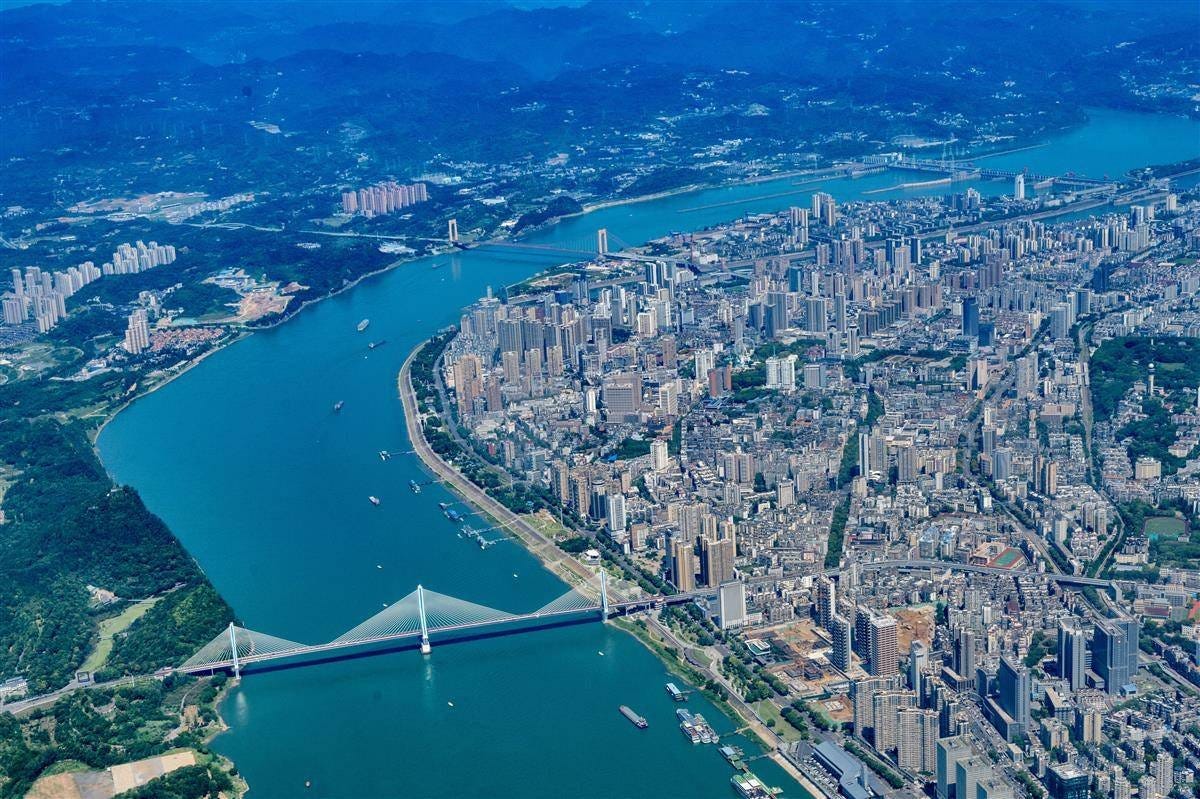
So what do I mean by “Real City”? Let's talk about the T3 designation for a second.
China's T3 cities are a bit tricky to define for me, perhaps because I don't visit them very often. But they ARE different from Tier 2 or Tier 4 cities. You can feel why T2 cities are T2 cities when you visit, because they typically have some built-up downtown areas indistinguishable from T1 cities, substantial skylines, multiple large anchor industries, concert halls, museums, universities, hospitals, etc.
I’m talking about places like Fuzhou, Dalian, Nanchang, or Xuzhou. If you’re in the right part of town in a T2 city and squint a bit, you might say: “hmm okay, this could be somewhere in urban Beijing”.
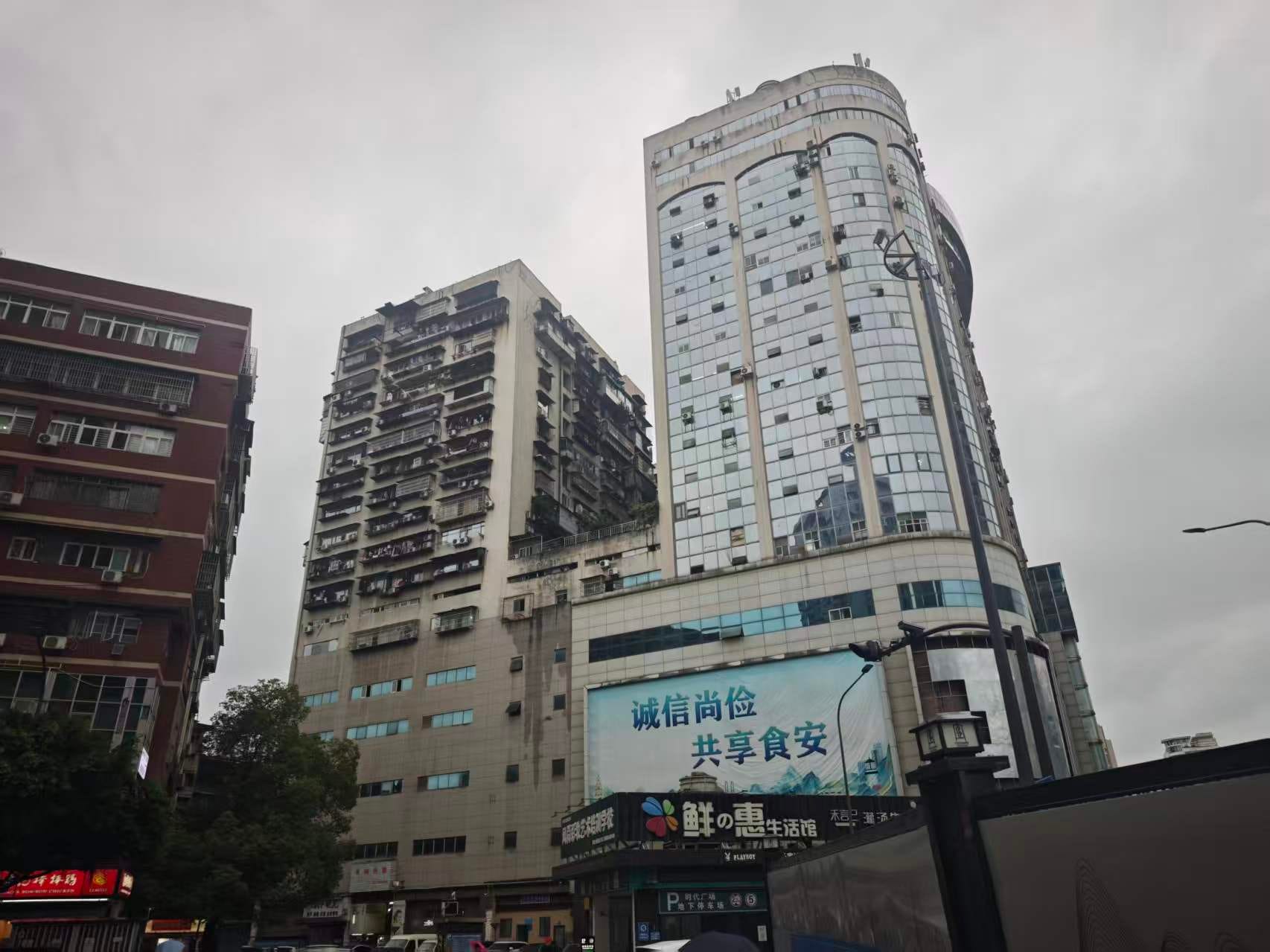
By contrast, Tier 4 cities are mostly just huge population sinks. Half their population resides in remote counties spread out over a huge prefectural area. They usually don't have much of a skyline in the “city proper” because they don't have the type of industries that would fill out a high rise skyline (like finance, insurance, real estate). They have schools, but more often they’re just teacher-training schools and vocational institutes. They'll have a few good hospitals and an economic development zone with a handful of pillar industries, but most employment will be in service industries, traditional manufacturing, or the public sector. Everyone you meet there is basically from there, or one city over. And you’d hardly ever find a part of town that you could confuse for a Tier 1 city when you squint. Linfen, which I visited last year, is a good example of this.
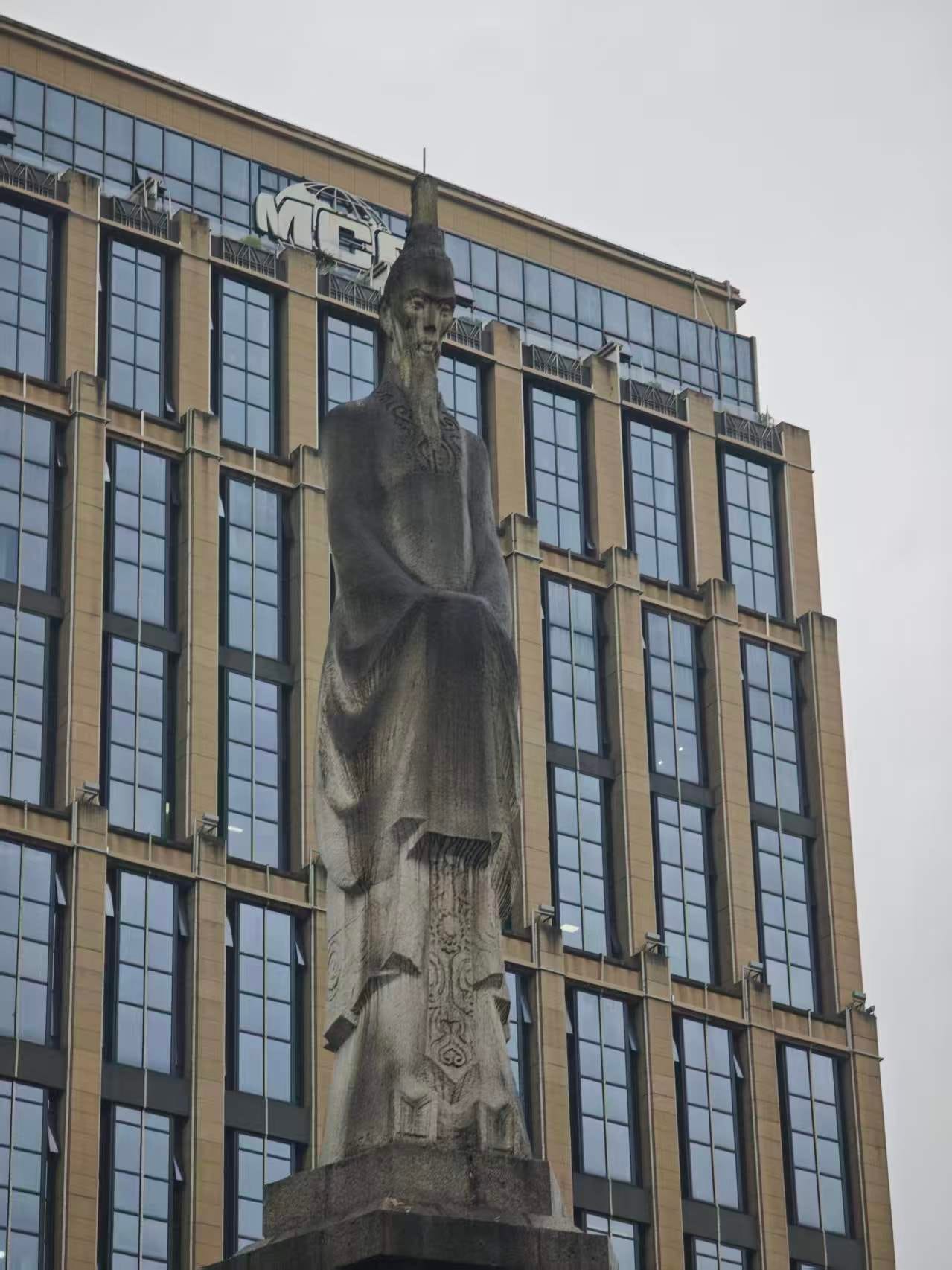
So now that I’ve defined the bookends, perhaps we have a better way to define a T3… cities like Ganzhou, Zhenjiang, Yichang, or Guilin?
In my view, T3 is the lowest tier of city that still functions as a true regional hub of urbanity, a place that can absorb populations, services, and economic activity from other prefectures.
This is at least true for the top half of Yicai’s T3 list. There are 70 T3 cities, and when we get to the bottom half, I’m not sure there’s really much distinguishing them from the T4 cities. In other words, I’d say the Yicai T3 bucket is a little too large to be rigorously descriptive, because there’s too much of a gap between the cities in the top half and the bottom half. This is a complaint I will be sure to lodge with the appropriate departments at Yicai, when I get the chance. :D
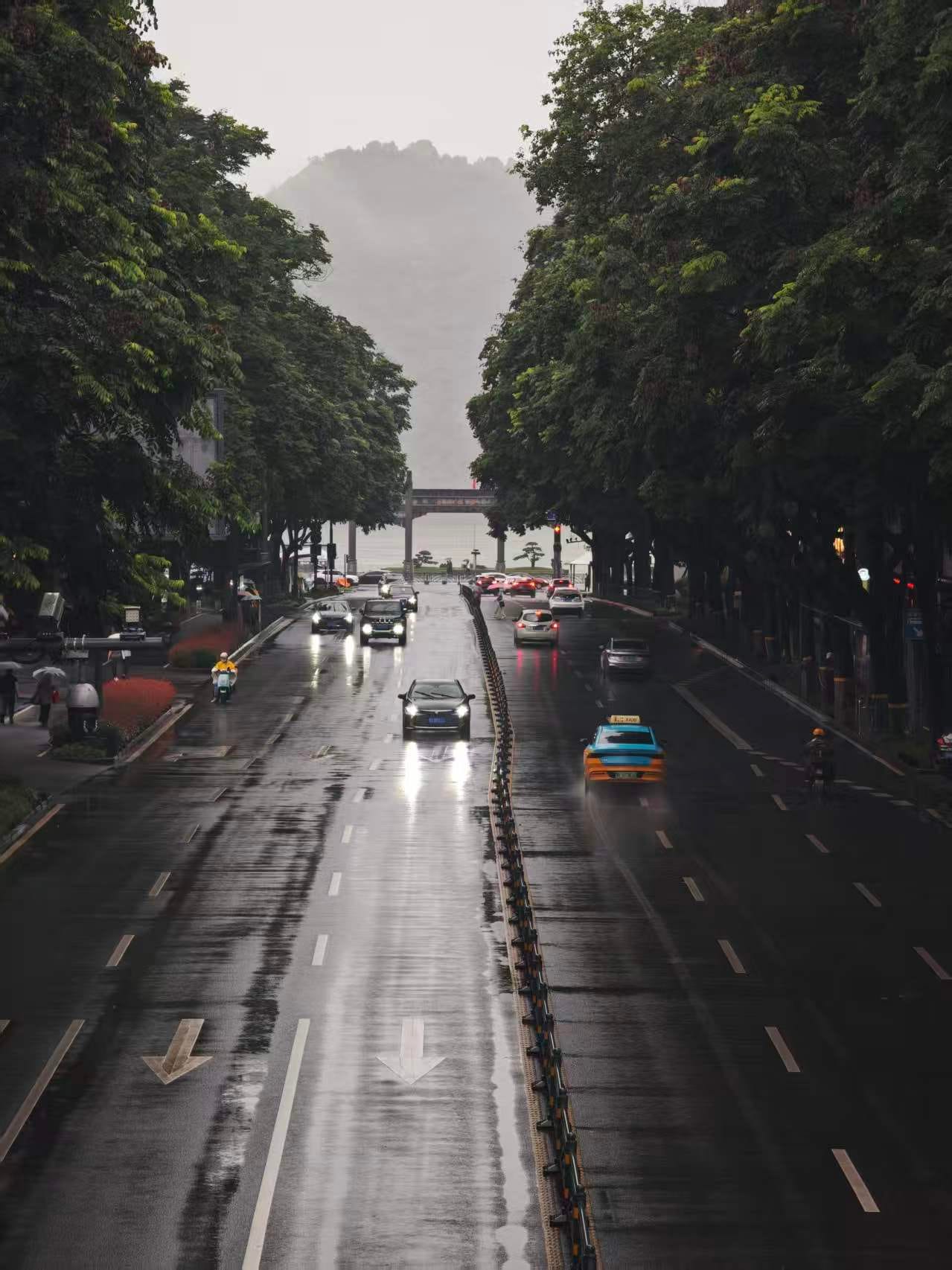
Putting that aside, my conclusion is that I should define T3 Chinese cities more by their proximity to T2 cities than by their proximity to T4 cities.
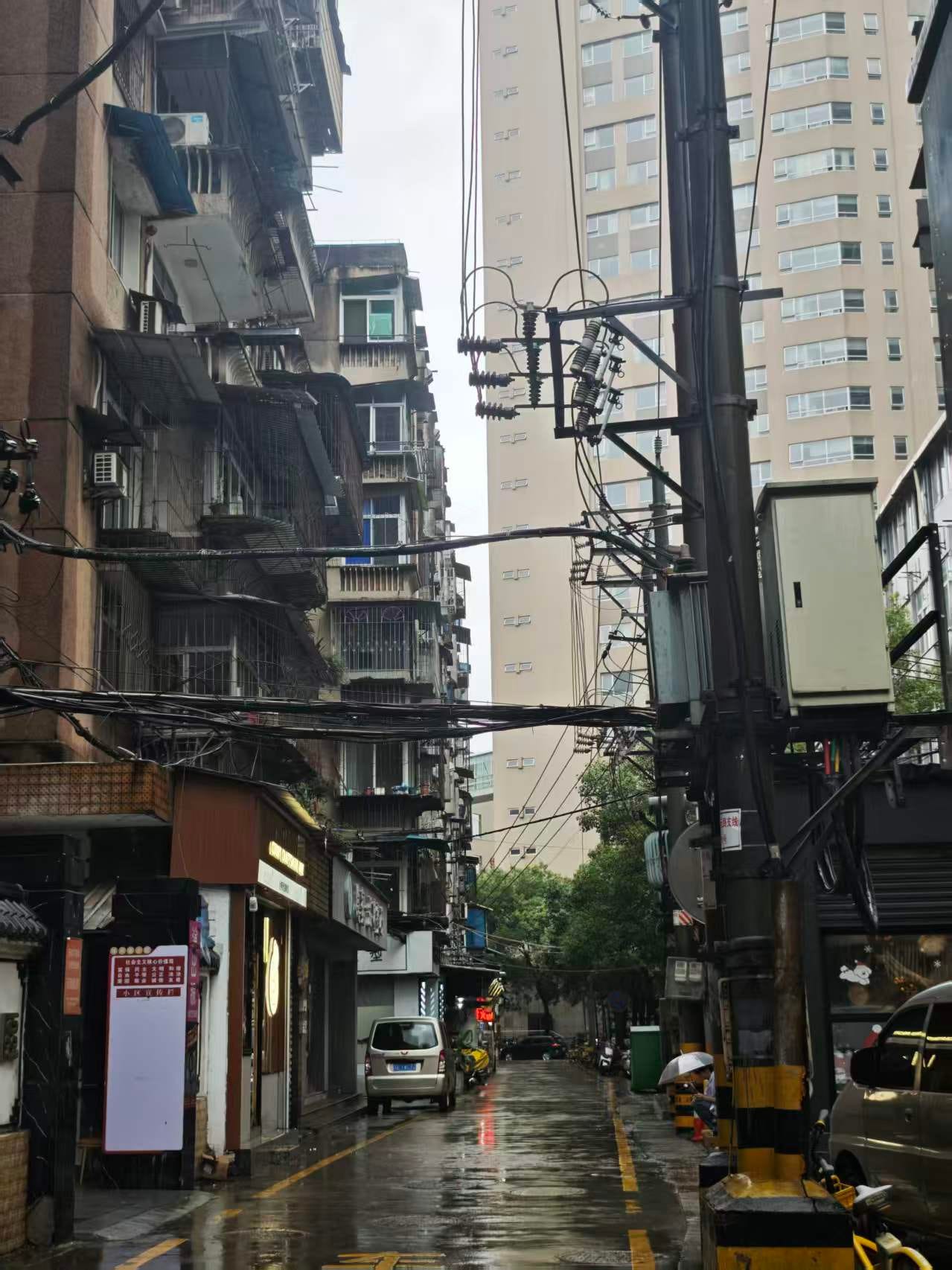
Yichang demonstrates this logic well, sitting comfortably in the top half of Tier 3.
It has a genuine industrial economy, dominated by power (Three Gorges) and chemicals (it sits on one of China's largest phosphate bases). But it also has a healthy equipment manufacturing sector (especially hydropower-related) and Yantgze shipping/logistics sector. T4 cities rarely if ever have this.
It has a comprehensive 4-year university (China Three Gorges University) offering a broad range of disciplines but especially known for strength in electrical and hydropower engineering. Not all T3 cities have a comprehensive university, but the strong ones do. CTGU isn’t elite per se, but it’s a real regional institution, with credible research output and industry ties, putting it well above the types of vocational schools you’ll find in T4s.

China Three Gorges University, which several people asked me if I was a student or teacher, so I guess it has some international presence. It has seven 3A-ranked (三甲, which is the highest tier) hospitals, including a major hospital ranked in the national top‑150 (Yichang People’s Central Hospital). It is basically the primary healthcare node for the 1000km gap between Chongqing and Wuhan. It serves not just the local city but a wider hinterland of western Hubei and rural Chongqing.
It is a human capital hub. Despite being far smaller than T1/2 cities, it still attracts net worker inflows. The service workers I spoke to were from all over Hubei and even neighboring Chongqing. So it’s a place people move to for better urban opportunities - not a place that people leave for better urban opportunities.
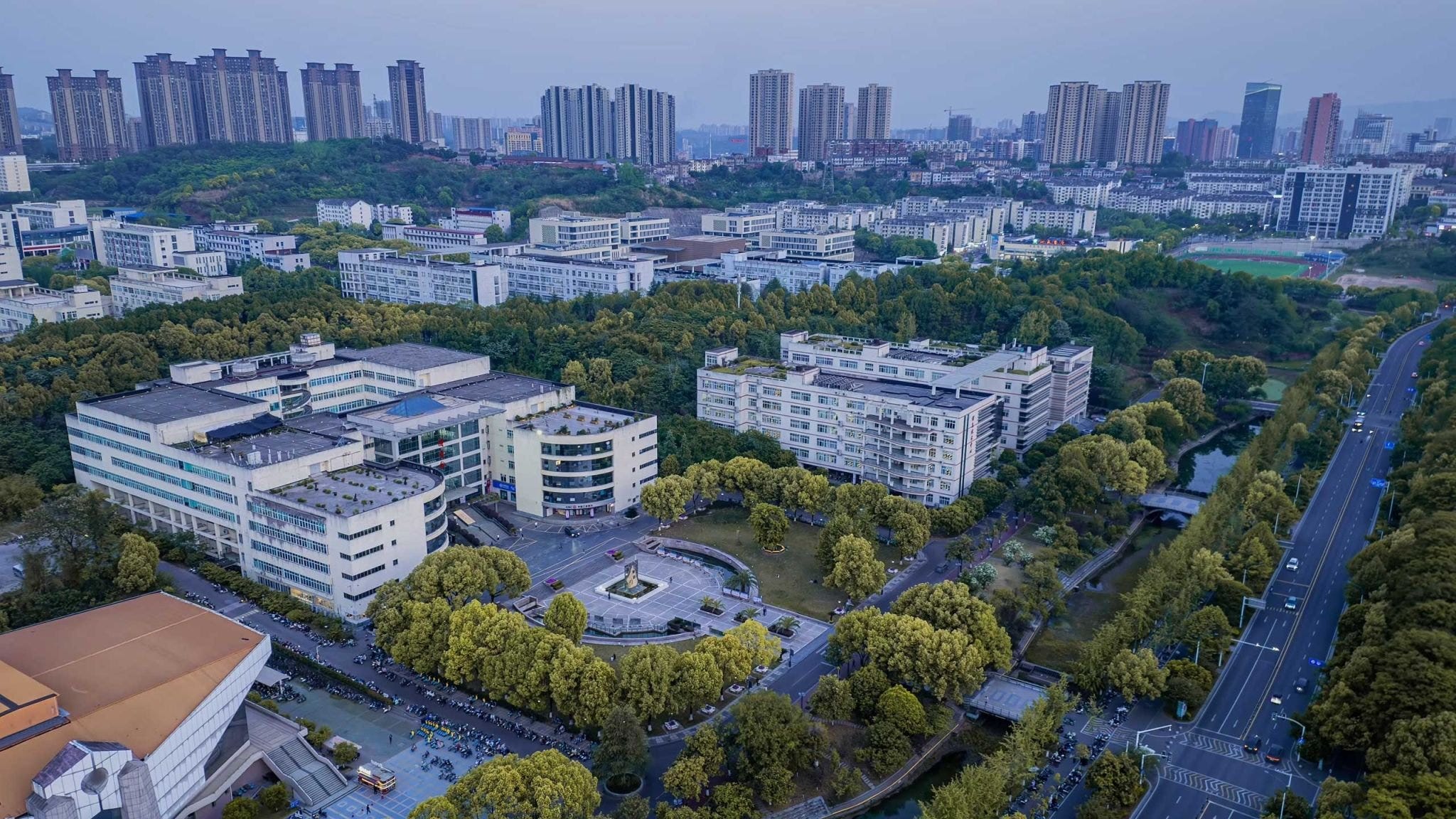
So, that’s Yichang. Nothing amazing, nothing standing out really incredibly so, but a real city nonetheless, and a credible second economic pole for Hubei (contested with Xiangyang). I didn’t find it unpleasant. It's a perfectly functional small city - a “real” one - and a clear step up (or two) from a place like Ezhou, where I had just spent the three days prior to arriving in Yichang.
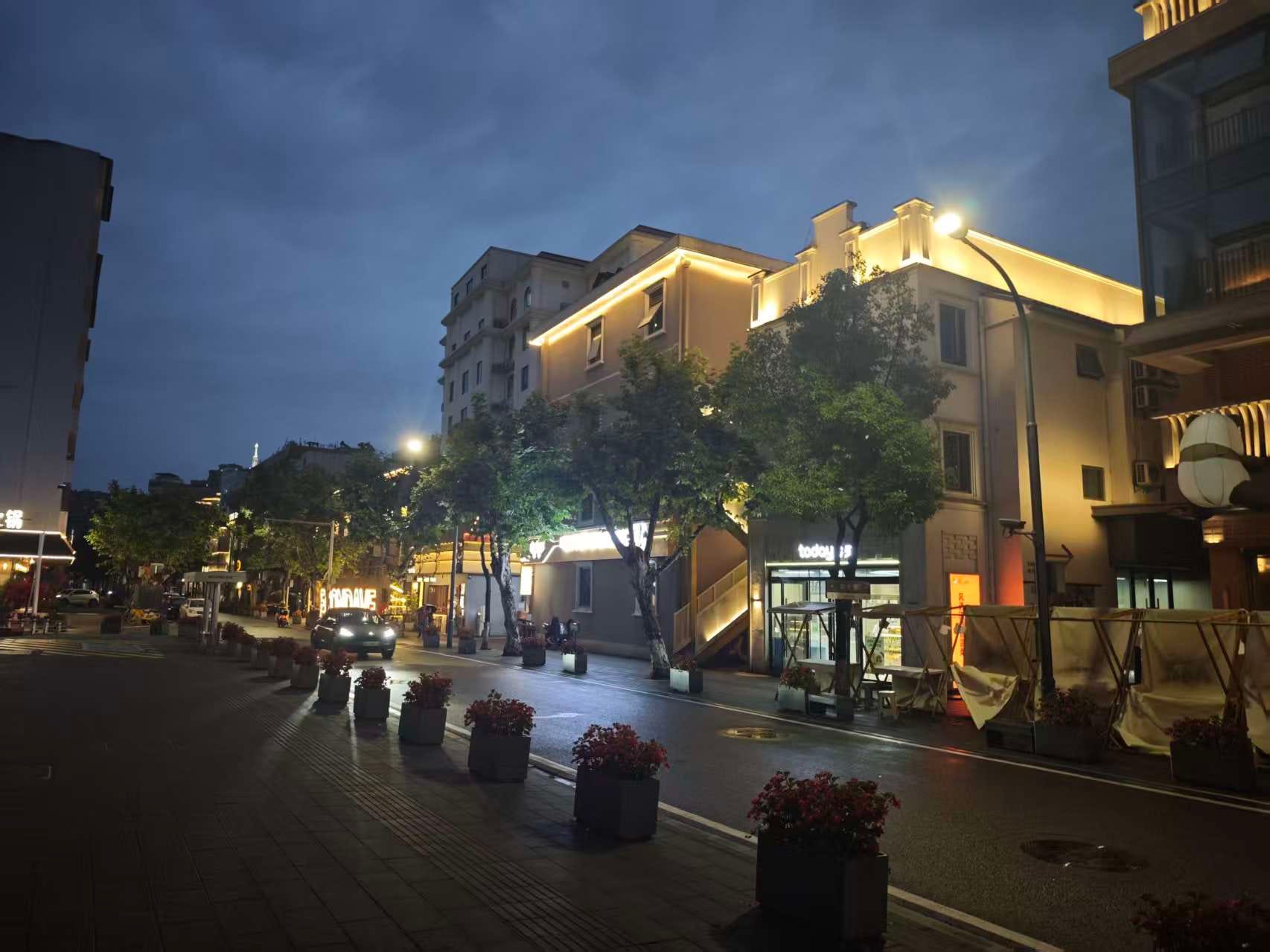
I’ve only visited Ezhou once or twice a year for the last 7-8 years (for holidays) and I can already navigate it without GPS, and have already tried what feels like almost every restaurant in town. No way I could do that in Yichang.
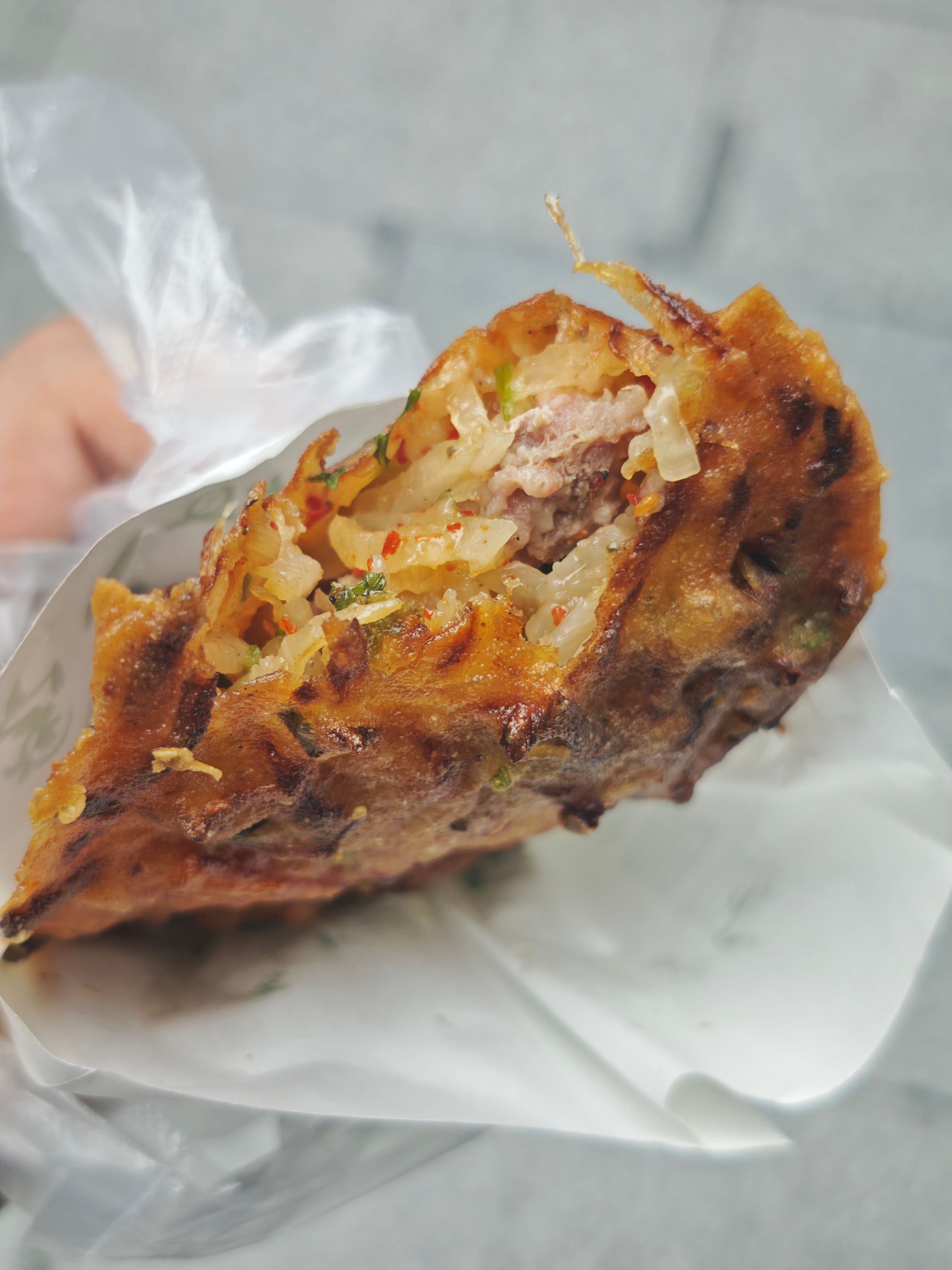
Now remember, I only spent one day and one night in Yichang on my way out to Three Gorges, so I’m not claiming to know everything, just what I picked up from vibes, backed up by the context of a lot of Chinese inland travel.
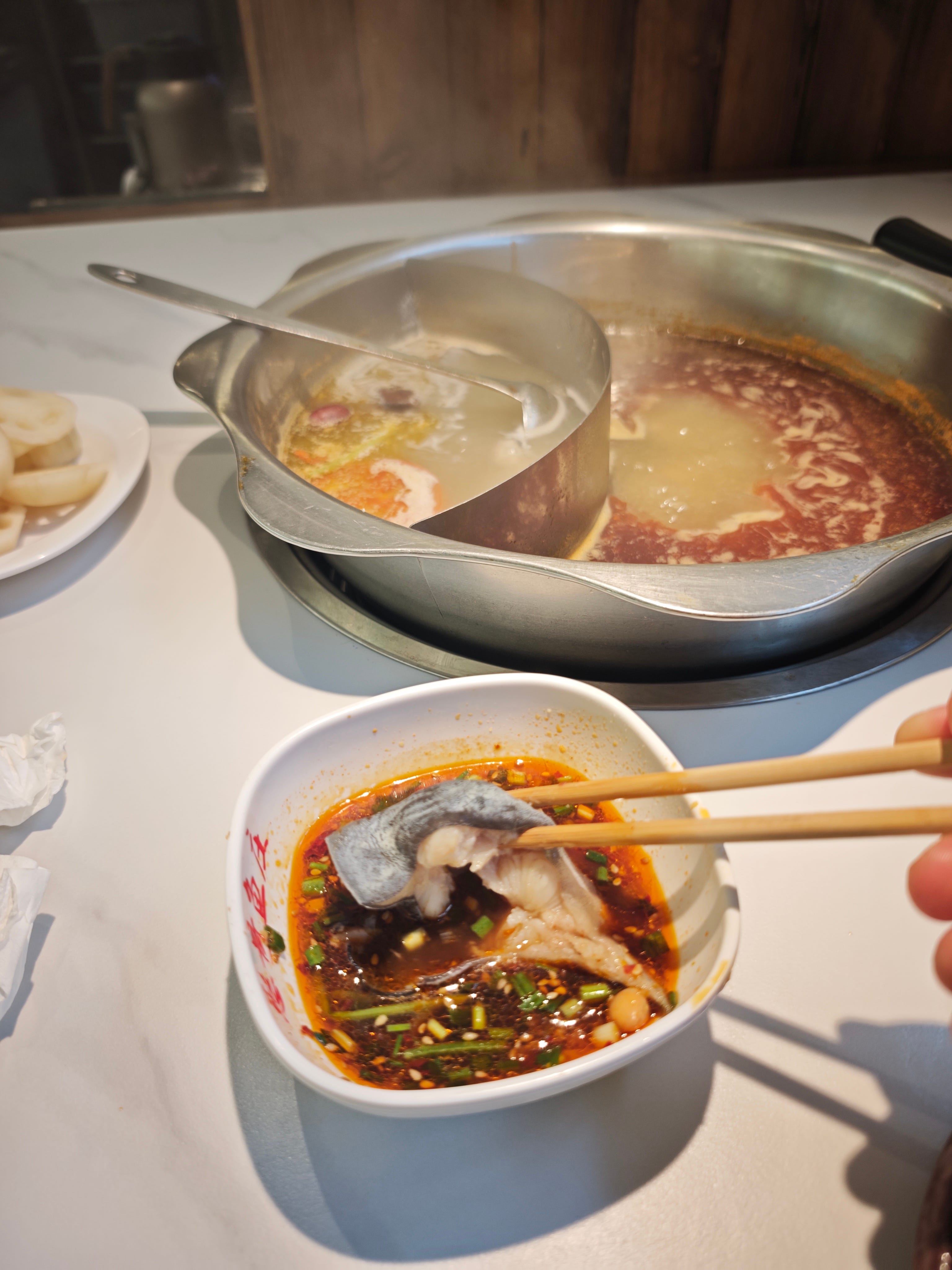
So I arrived, stayed in a nice new hotel for 350 CNY a night, walked the streets, got some street food, walked some more, ate some dinner, snapped some pictures, chatted with a few locals, and called it a night. Don’t sue me.
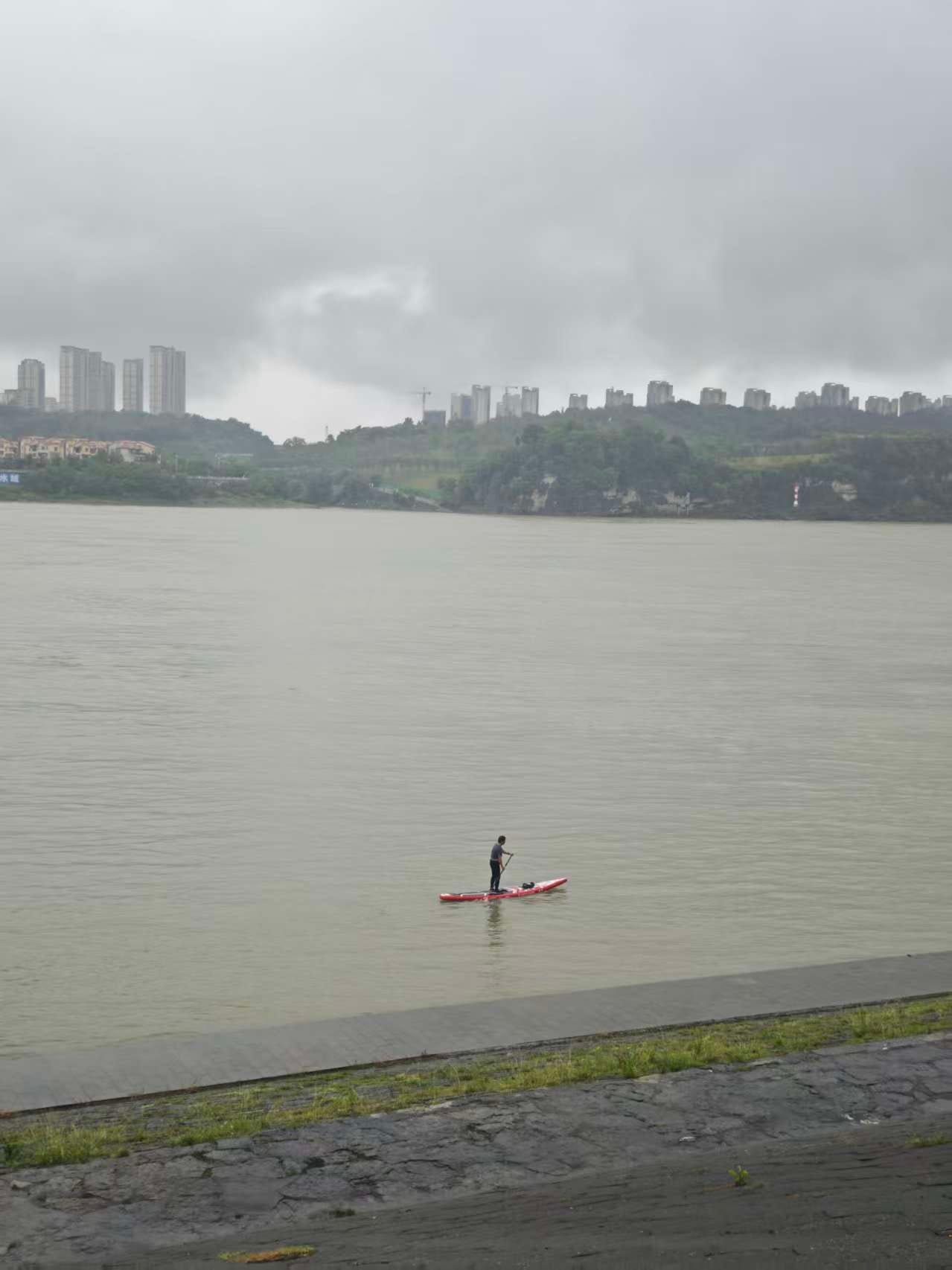
Although Tier 3 is still above the median city urban development level in China, Yichang is still much more representative the "average" urban Chinese experience than any T1/T2 city. You will learn far more about the Chinese urban condition spending time here than in any number of visits to Beijing, Shenzhen, Hangzhou, or Chongqing.
Yichang is not trying to be (nor can it be) a mini-Wuhan, but it’s also much more than just a large Tier 4 prefecture town. It’s Tier 3, and I think I know what that means now.
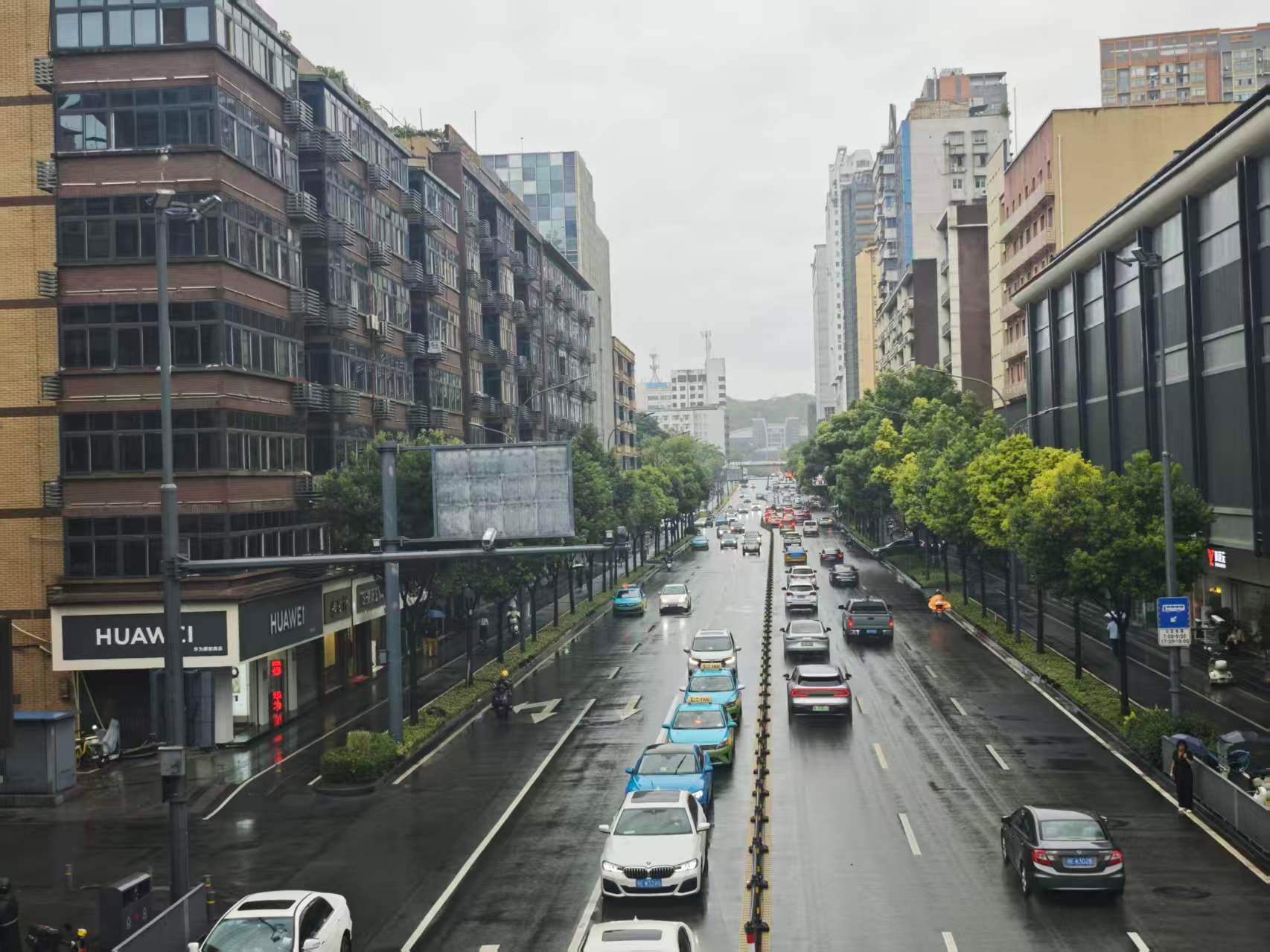
Thanks for reading.
Nice piece, thanks much. I don't think it's possible to get a feel for China if one doesn't go to all these places few outside China have ever heard of. Even lots of foks in China aren't familar with the "real cities" in Hubei.
I'm an 恩施女婿. I only drive through Yichang to get to the mountains and all the lower tier cities of Enshi Prefecture. West of Yichang, the landscape starts transforming into something truly amazing. Zhangjiajie gets all the press, but the Enshi Grand Canyon and surround regions offer much of the same, absent the mega-crowds. The Tujia-Miao culture also becomes more obvious and prevalent in the food. 油香。。。that fried radish cake...folks from Enshi claim they invented it...😋
I've only been to Taian, Shangdong of the T3 cities. Is that more 'T4 attached to huge tourist attraction' than a true T3?