
Note: For the last few weeks, I’ve been back in the United States traveling. It’s not a permanent move, just a long-overdue trip back home to see family and friends. I expect to return to China in the first week of November. Before that, however, I want to take an opportunity to write about the unique and yet somehow familiar economic challenges of my home state of Maine.
Most likely you have little reason to care about this little corner of the world, but hopefully I can hold your attention for a few minutes anyway. If you subscribed exclusively for China content…don’t worry…we’ll get back to that soon enough.
This is a two-parter. Link to Part 1 at the bottom.
Chapter 1: Keep Going North Until You Hit Canada
I have mentioned before I have a specific interest in China’s rural economic development because of its connection to my own life. See, I grew up in Maine, as far north and east as you can go in the US without ending up in Canada. We are a rural state, a sparsely-populated one, and one of the poorer states in the country (44th smallest economy and 40th lowest GDP/capita. We are famous for lobsters and Acadia National Park and Stephen King novels and that’s about it.
I come from the even more sparsely-populated northern part of the state, in Aroostook County. There are only 67,000 people left in Aroostook (and dropping) so don’t be too surprised if you’ve never met one of us out in the wild. Often, even people from southern Maine tell me they’ve never been up there. In Aroostook, we drive pick-ups with hunting rifles in the gun rack, listen to country music, and inject a remarkable number of Québécois French phrases into our heavily-accented English (a patois which I lost as soon as I went to college, but inevitably pops out when I return).
Up here, we never lock our homes or our cars. Hell, we usually leave them running with the keys in the ignition in the grocery store parking lot in the winter so the heat can say on. Jeezum rice, it’s cold in the winter, y’know? Who would steal a car anyway? Everyone knows everything about everyone. If you were driving someone else’s car, it would be obvious...

Overall, Aroostook can’t be described as having a strong economy.
Historically, Aroostook’s industrial economy was dominated by the production of forestry products and small-scale agriculture, with a bit of light manufacturing. While harvesting wood and production of paper and forestry products is still the #1 industry in Aroostook, and a core provider of well-paid blue-collar jobs, it is struggling, due to cheaper international competition, reduction of paper use in a digitized world, and lack of workers. In 1970, the paper industry employed a quarter of Maine’s total workforce. Today, paper products, wood products, and timber harvesting together employ fewer than 15,000 people state-wide.
Small-scale farming is rapidly disappearing too, while the light manufacturing is already nearly entirely gone (mirroring its general decline in the US). Tourism has arisen as a new third-place contributor to GDP (behind wood harvesting/processing and agriculture) but still faces many challenges. We’ll talk more about tourism later.
Chapter 2: Demographics
Like many rural places in the USA, Aroostook’s population is in decline and its economy is stagnant. It’s striking to me, though, how similar these structural challenges are to the ones faced by rural areas in China.
Just like in China, young people of working age have few reasons to stick around the countryside, and increasingly choose the area to leave for bigger cities. While it’s not quite at the extreme you’ll see in some Chinese towns, which have literally nothing but elderly people and small children, there’s certainly a less-mild version of this going on.
The reasons for Maine’s poor economic performance are varied, but just about everyone can agree on one thing: we don’t have enough workers. Entry-level workers, skilled workers, professional workers, it’s all the same. There are not enough people to fill jobs in Maine. This was repeated by everyone I spoke to in researching this piece (and I spoke to a lot of people!)
Here is the growth trend of Maine’s labor force for the past few decades. Yes, it shrank over the last decade.

The shrinkage in the labor force is especially pronounced in rural areas like my home county of Aroostook. It’s hardly shocking, considering the population overall has been shrinking for decades. Our communities are just withering away.

Not only is our population shrinking, it’s also getting older. Families are having fewer children as cultural norms change and the cost of raising children keeps going up. Plus, many young people have been siphoned away to more attractive careers downstate, or out of state. Yes, just like rural China.

Chapter 3: Welcome to Fort Kent
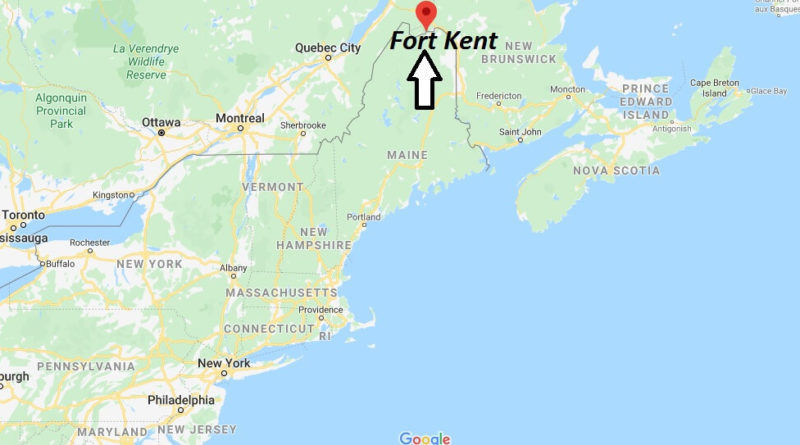
I went to high school in Fort Kent, Maine, population 3800 and shrinking.1 There is an international border crossing into New Brunswick, Canada. We are the northern endpoint of US Route 1 (the southern terminus is in Key West, Florida). You’re equally likely to hear French or English spoken on the street. We are the frozen northern extremity of Maine. Your friends from southern Maine have heard of Fort Kent, but they have never been. They’ve always wanted to visit, but it’s just so far.
My parents told me that when they arrived in the mid-80s, Fort Kent had multiple bars, restaurants, and a downtown that might be described as lively - rowdy even, on the weekends. Then, the local forestry industry dried up. Now, it feels like a town that’s been treading water and barely keeping its head dry for three decades. There’s a small branch campus of the University of Maine and a regional hospital and I’m certain that without those two key employers, the town would already be an empty shell. Very little changes here. The population slowly trickles away. New restaurants open, then close again. Older people retire and no one takes over their family business, so it just closes permanently.
Over the years, I’ve often wondered who - if anyone - is looking at these issues from a strategic planning angle, trying to figure out how to “save” these towns, if indeed, you believe they can and should be saved (and I do). After my recent travels around China observing the top-down rural rejuvenation programs under the New Countryside initiatives htere, I was particularly curious how this work is being done in the USA.


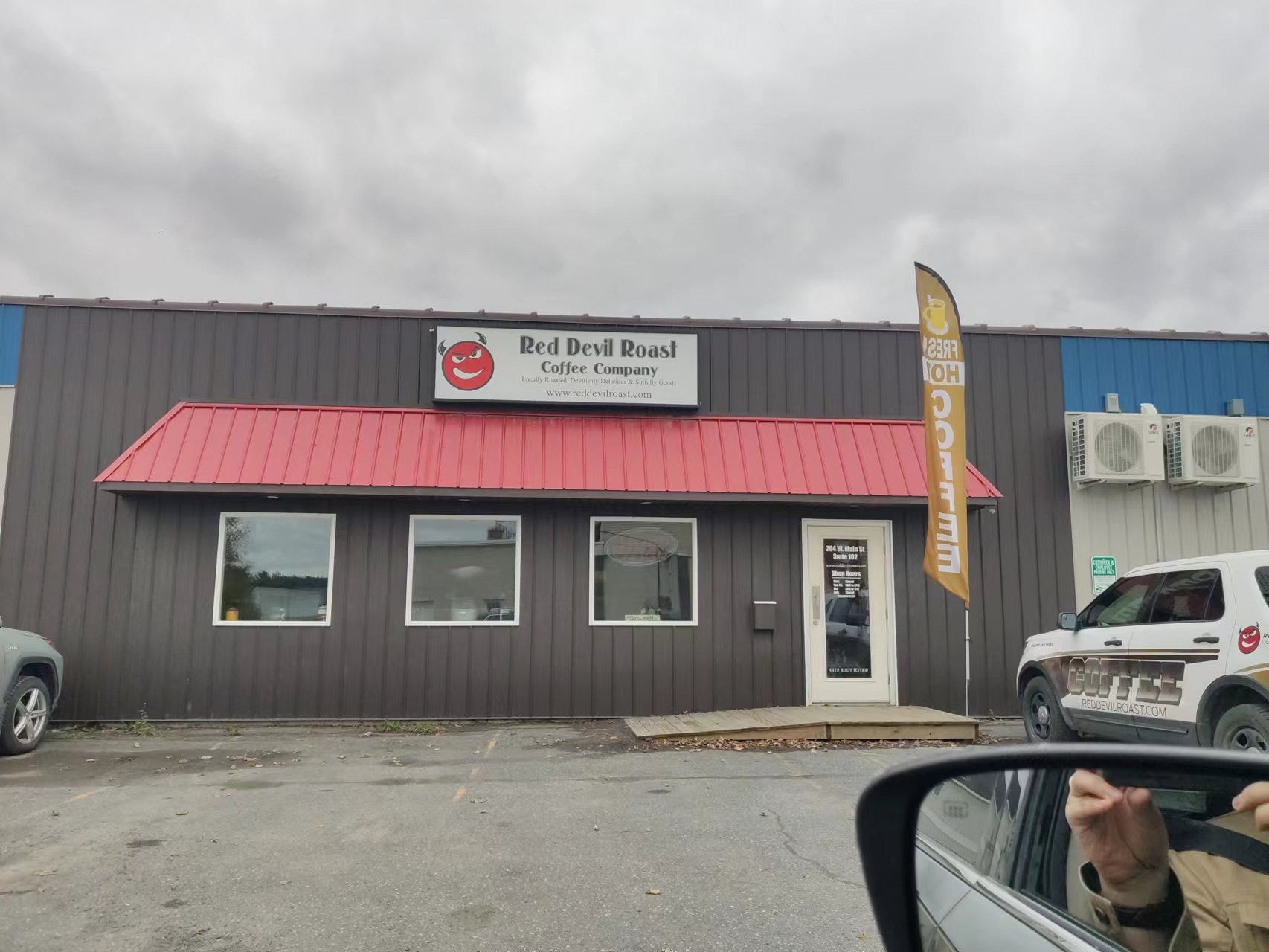
On my trip home this time, I noticed a new business in Fort Kent, a real coffee shop called the Red Devil Roast. Not filter drip diner coffee, but a guy roasting his own beans and making barista espresso drinks, in a part of the world where people have been drinking sludgy drip coffee their whole lives.
He told me he had previously traveled the world in the military and sampled high-quality coffee, and eventually decided that what our hometown really needed was proper lattes…so he made it happen. Before opening his shop, he had to spend time learning to roast and prepare the beans. To cover those startup costs, he had applied for (and received) a small business loan from the Northern Maine Development Commission (NMDC).
I had never heard of NMDC before, but I took a look at their website and realized that if anyone was going to be able to tell me more about the strategic economic planning of Aroostook County, it would be these guys. NDMC is headquartered in the city of Caribou, Maine, not far from Fort Kent (Caribou has a population of just 7600…I use the word “city” in the administrative sense). So, I gave them a call and set up an informal interview/chat session with their Director of Economic Development, Jon Gulliver.
Learning about NMDC
Jon told me that NMDC is a nonprofit designated by the federal government to provide economic development services to rural communities in Northern Maine. They help small towns with economic consulting, marketing, tourism development, attracting employers, etc. Since the 1970s, they’ve also had a lending and community grant finance program, which is what the Red Devil Roast had taken advantage of.
I asked Jon who is responsible for economic and strategic planning for small communities in the area? “For most small communities, it’s us. Some of the larger towns and cities have their own dedicated person to do strategic planning for the town, but most will use our services” he told me. I discovered NMDC is a membership organization - regional communities pay annual dues in order to use its services. Jon told me the dues only cover a very small portion of their annual budget though - most of it arrives via federal grants.
One of NMDC’s long-term strategic goals for itself is to become self-sufficient and not be so reliant on federal grants for funding. Indeed, their community financing and loans division is already self-sufficient. This division provides bridge financing for businesses that are too early-stage or too uncertain for commercial banks to be willing to provide loans, like the Red Devil Roast had been. For me, this was somewhat reminiscent of China’s Rural Credit Cooperatives, which were established by the People’s Bank of China to offer micro finance services in rural parts of China.2

I told Jon about my experiences traveling around the Chinese countryside, and some of the initiatives that have been put into place as part of the New Countryside program, including the new infrastructure development, and creation of tourist attractions and commercial enterprises that will hopefully entice young people to come to live and work in these communities.
“Yeah, that’s the ‘if you build it, they will come’ approach” Jon said. “At the beginning, we also wanted to have a plan to grow our communities with people from outside. But now we’re just focused on trying to keep who we still have here”.
Jon told me that that during the early stages of the pandemic, Aroostook’s population actually grew for the first time in years, as people in cities bolted for the countryside. The gain was short-lived, however, and the long-term trend of population decline resumed again last year.
Obviously Jon knows more about the details of Aroostook’s economic development than I do, but I can’t help but feel that setting an objective to not lose people is a bit of a low goal. In that scenario, even if you succeed, you’re just treading water, not making any forward progress. Perhaps they are constrained by budgetary limitations, or perhaps I am just being naïve about a dozen other complexities, I get that. Still though, I feel it should be possible to attract new people into the region while simultaneously creating reasons for locals to stay here, instead of either/or. But what do I know?
Chapter 4: Plumbing the Depths of a Labor Crisis
Near my home is a gas station/convenience store owned by one of my teachers from elementary school. I stopped in for coffee on my way out to Caribou to meet NMDC. He told me after 15 years of running the place, he and his wife going to put the place up for sale at the end of this year, not because business is bad, but because they’re exhausted. Even with the minimum wage up to $15/hour in Maine, they can’t even find someone to work behind the cash register…and they’re burnt out.
Everywhere I went in the state, people told me the key reason small communities can’t keep businesses open is because they can’t find enough employees to hire. Not just restaurants…everything.
Most of the country has a labor shortage right now. But for Maine, shortage is an insufficiently urgent word…it’s already a full-blown crisis. In the 2022 Making Maine Work whitepaper published by the Maine State Chamber of Commerce, 500 Maine employers were surveyed on their “priorities for the next Maine governor” and the greatest percentage - 46% - selected “availability of entry-level workers” as their top concern, tied with energy costs. And that’s in the midst of an energy crisis!
But it gets even worse. Not just entry-level workers, but “availability of skilled/technical workers” and “availability of professional workers” were ALSO among the top priorities, both affecting more than 40% of the businesses surveyed. It seems there simply aren’t enough people to work at any level in Maine.
This means that even if we are able to attract outside employers offering well-paid, year-round jobs, they’re going to struggle to find people to hire. Recently, such a potential employer arrived in the region, Valt Enterprizes, a high-tech space and defense company that wants to use the small airport in the nearby city of Presque Isle to develop launch systems for satellites. I imagine Aroostook’s low population density is a big point of attraction here; falling debris from any failed launches are unlikely to land on anyone or anything of value.
Valt is the first tenant of what is planned to become the Presque Isle Aerospace Research Park. Jon at NMDC told me Valt is looking to eventually hire over 130 people, including engineers, research scientists, machinists, etc. If this actually happens, it would likely become one of the largest employers (and tax-payers) in the region. It’s exciting for local economic planners to see Aroostook benefitting from Maine’s potential new space and aerospace industry.

But opportunities like this highlight the chicken and egg paradox that arises when trying to attract such an employer. Even if there were enough workers in the region to fill these jobs, they will require specific training and degrees to fill these positions. Students will often only choose certain educational tracks when job prospects after graduation look promising, but employers will likely only see this region as attractive to locate their business if they believe they can find enough talents to hire. In this case, the local branch of the University of Maine in Presque Isle doesn’t have a 4-year engineering program3, nor does the local community college have a 2-year machining program.
To try to get around this, Valt has been forced to work with directly with local schools to provide job training to fill their CNC machining positions. Meanwhile, I imagine the positions that need engineering degrees will require employees to be hired in from outside the county, or even outside the state, to be relocated to Presque Isle. Not every employer will be willing to go through such a process. Finding one that will is crucial to breaking out of this chicken/egg paradox, which is why economic planners up here are so excited about Valt. But based on what I’ve been hearing from everyone, I’m afraid they’re going to struggle to find the people they need…
That’s it for Part 1 of 2. Didn’t want it to be TOO long, after all. Continue with Part 2 here.
Footnotes:
I specify that I went to high school here, and not that I’m from here, because I’m actually from an even smaller town nearby - Wallagrass - with just 520 people. For us, Fort Kent is the “big town” where all the local towns’ elementary schools feed into the high school.
Of course the image of China’s rural financial institutions has been tarnished by the major banking scandal in Henan recently…but the stated objective is similar.
Would-be engineering students at UMPI have the option of a “1+3” program where they do their first year in Presque Isle and then transfer to the UMaine flagship campus downstate in Orono for the next three years.
Very interesting David! Of course, the situation is very similar in rural Québec, or New Brunswick for that matter. Small towns and villages barely survive, and not every place can be a tourist attraction. So, pretty much the same as in China. On the other hand, in China they are still very busy building infrastructure such as highways and railways that help bring more tourists, and other businesses as well. First time I went to the Garze county in west Sichuan, it was almost three days of driving from Chengdu to get there. Then they finished the highway from Ya'an to Kangding, and if you leave in the morning from Chengdu, you are there before dinner. I also recently visited the Ruoergai area, north west of Sichuan, a (beautiful) high altitude plateau between Jiuzhaigou and Chengdu. I saw that they are building a railway, so there should be a high speed train within a couple of years. Not a chance, of course, that there would be a high speed train taking tourists from Boston or New York to the north of Maine! Also, it would still be difficult to attract enough tourists to make even a small town thrive, whereas China has a 1.4B basin of potential tourists. But right now, however, the internal tourism industry in China is in the doldrums. Even a normally hyper-busy place like Jiuzhaigou is "relatively" quiet (which just makes it pleasant enough to visit....). There were also plenty of tourists along the Ruoergai plateau, and locals offering horse riding all along the road. Yet for them, it is just supplementary income. Most families have a horde of yaks, 100 or more, that gives them enough of a basic income. I met a family where the husband went to work in the small town nearby, while the mother and grandmother took care of the yaks (I have some beautiful pictures). It is interesting that the government does not allow other types of agriculture to use that land, since that would destroy the unique and fragile ecology of the place, and the traditional way of life. I visited the yak research center, and it was quite a bit off the central road and not in the flat area but by the mountain side, for the reason that the government would not take good land from anyone. There, they were busy trying to breed better varieties of yaks, like mixing traditional yaks and angus beef. So all in all, the area, although remote, is quite dynamic. They are definitely not just sitting on their ass and hoping things will improve.