
This essay is adapted from a Twitter thread original posted on April 15, 2026. This is the first essay in my Hainan Province trip series, which I took over 10 days in March 2026. It was my first time properly exploring a part of China I’d spent extremely little time in previously, and was fully prepared to be underwhelmed by “China’s Hawaii”. Instead, I loved it.
Hainan's beaches are really excellent, and not just 'good for China'. The white sand beaches east of Sanya up the southern coast of Hainan are world-class...as nice as any I've seen.
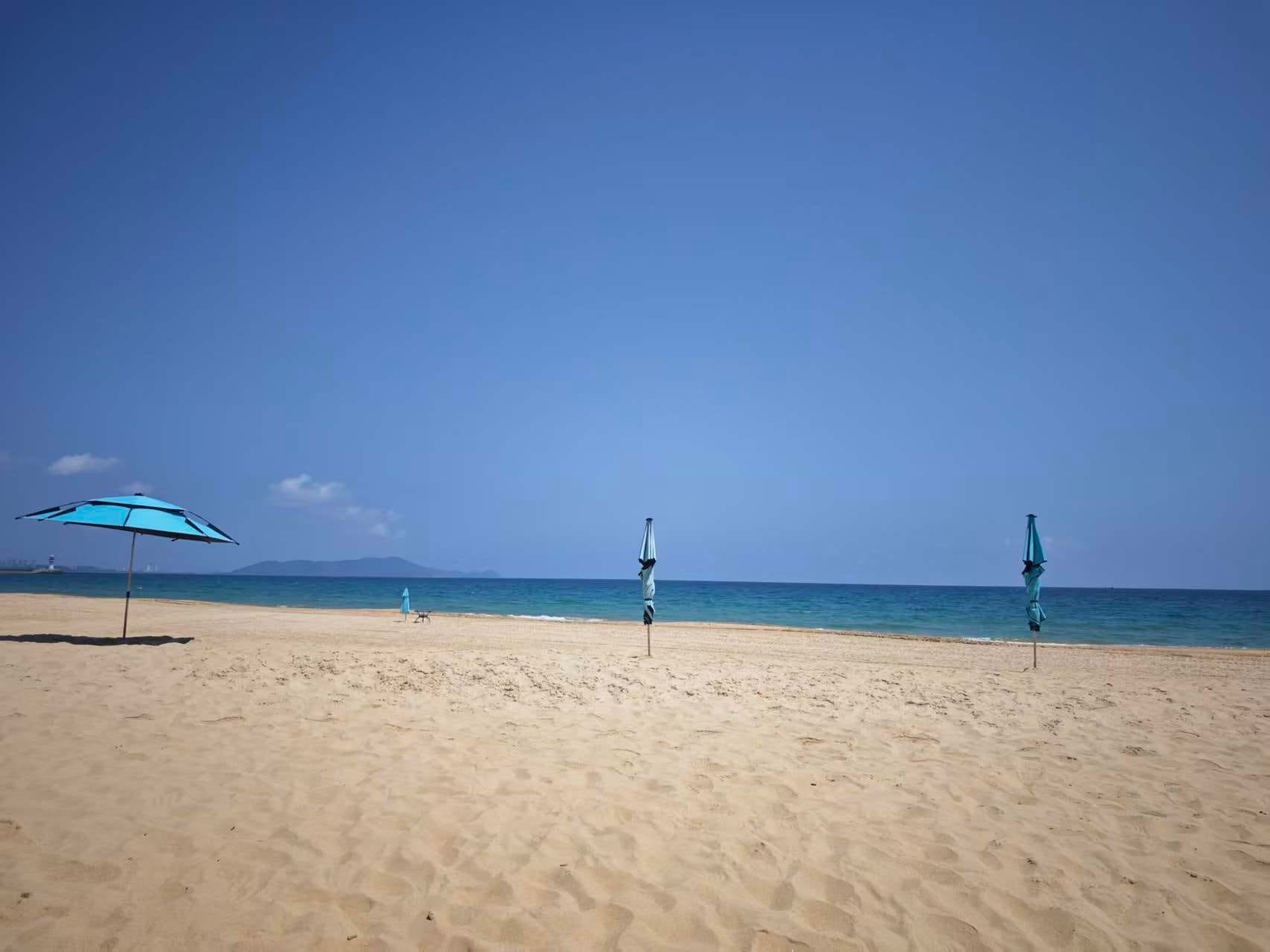
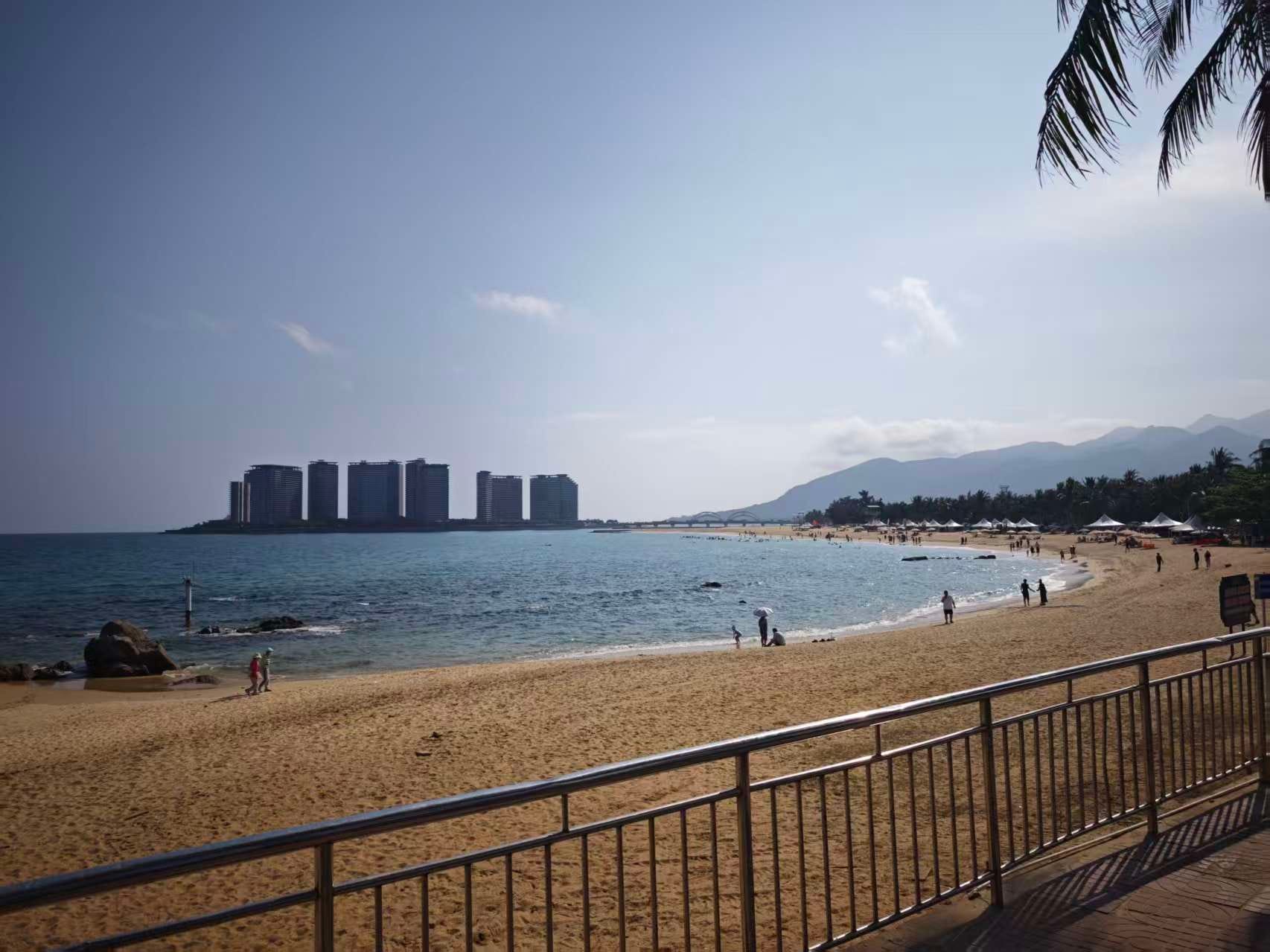
Probably the very best sand quality I saw was Clearwater Bay in Lingshui (陵水), which is a small autonomous county just east of Sanya. The white sand here was thick, fine, and soft, with clear turquoise water and great views up and down the coast for many kilometers.
Further up the coast, beach quality varied quite a lot, with both white and yellow sand, but rocky beaches were generally rare, sea grass/kelp was minimal, and the water was always very clear. It was easily equal to the best beaches I’ve seen in the Philippines.
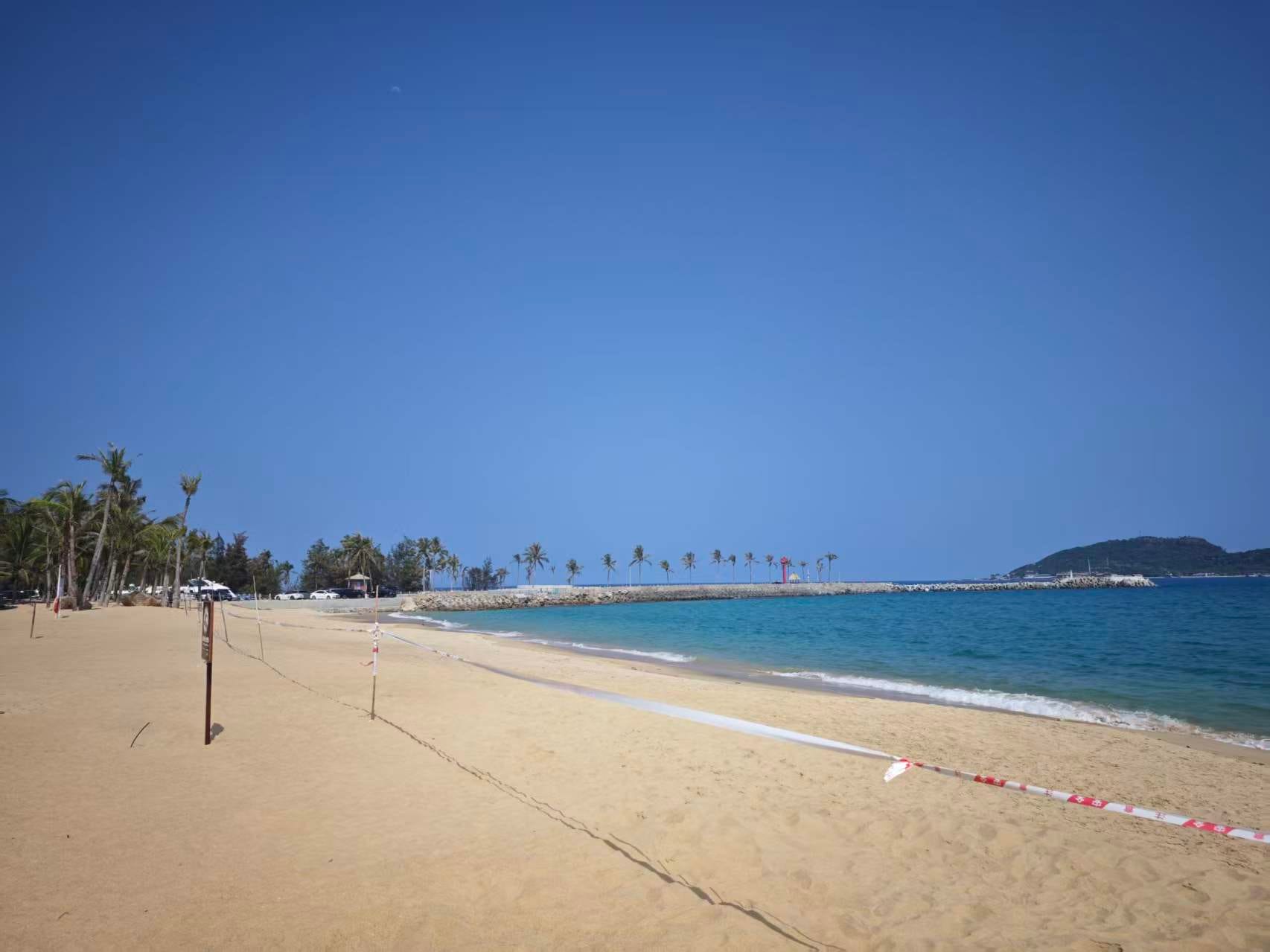
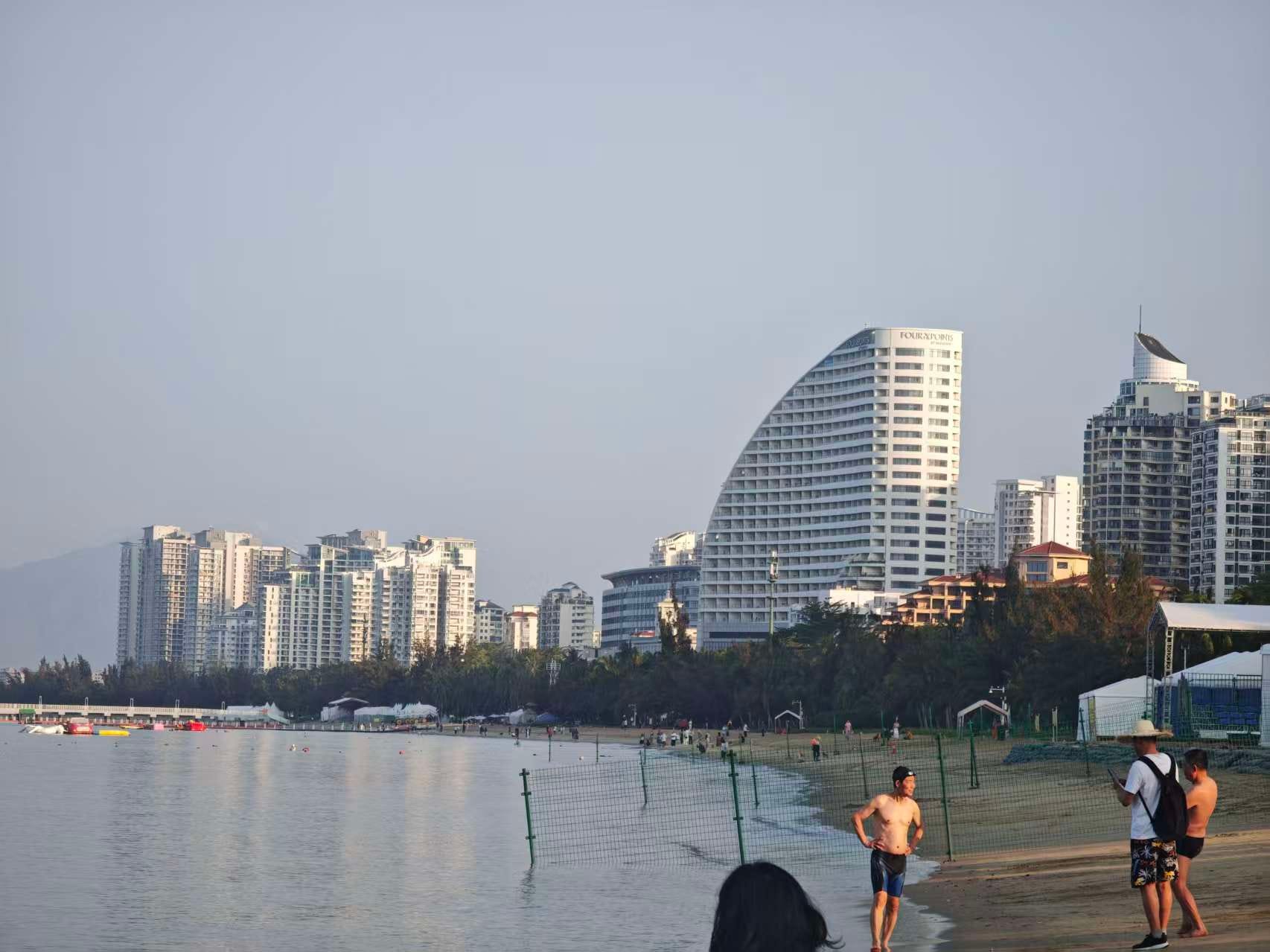
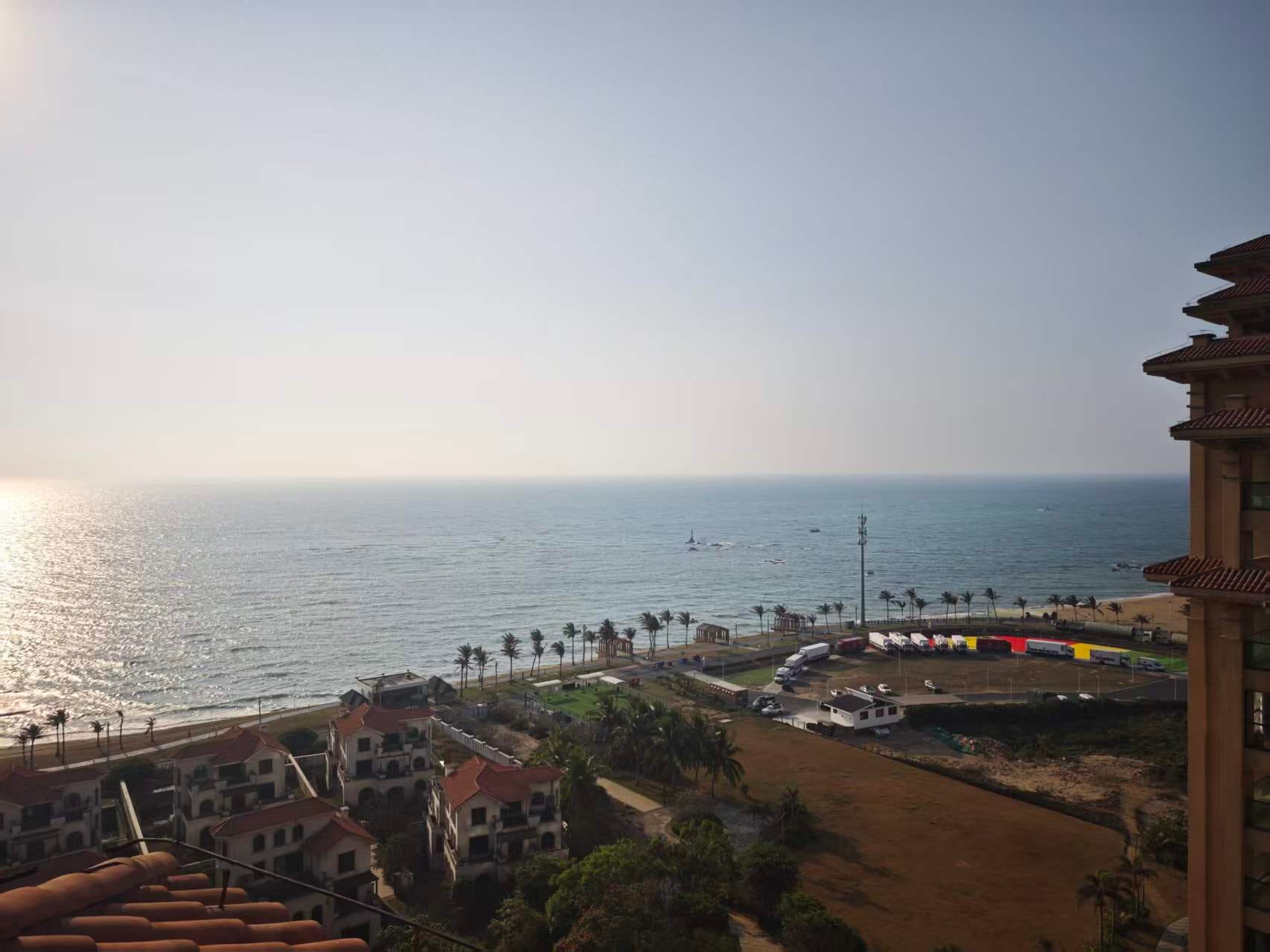
Besides beauty, Hainan’s beaches also offer strikingly clear lessons about how coastal real estate development succeeds (or fails) in China. Clearwater Bay has very little development on it, and qualifies as an utterly squandered opportunity in my eyes. Aside from a single luxury hotel (a Raffles) there's hardly any commerce on the 10+ kilometer strip...just a handful of coffee shops and photo-op locations. There's a lighthouse and a marina full of expensive-looking private boats, but not much beyond that. Compared to the dense commercial development of similar beaches elsewhere - even just one city over in Sanya - my impression was that it was all quite bizarre...until I started asking questions.
Cafe Struggles
"We keep applying for new business ventures but we keep getting rejected" the Dongbei owner of a beach coffee shop not far from the Raffles told me.
He and his business partners from Jilin (in northeast China) rented out several blocks of land on the beachfront to develop commercially, but now they're struggling to find something that will pass approval.
"You can't do hot food of any kind, because that makes smoke. You can't use certain kinds of materials because of the environmental impact. You can't exceed a certain height, or a certain floor size area. So many restrictions...we have applied for so many ideas but none of them were approved. We're really making a big loss on our investment here…"
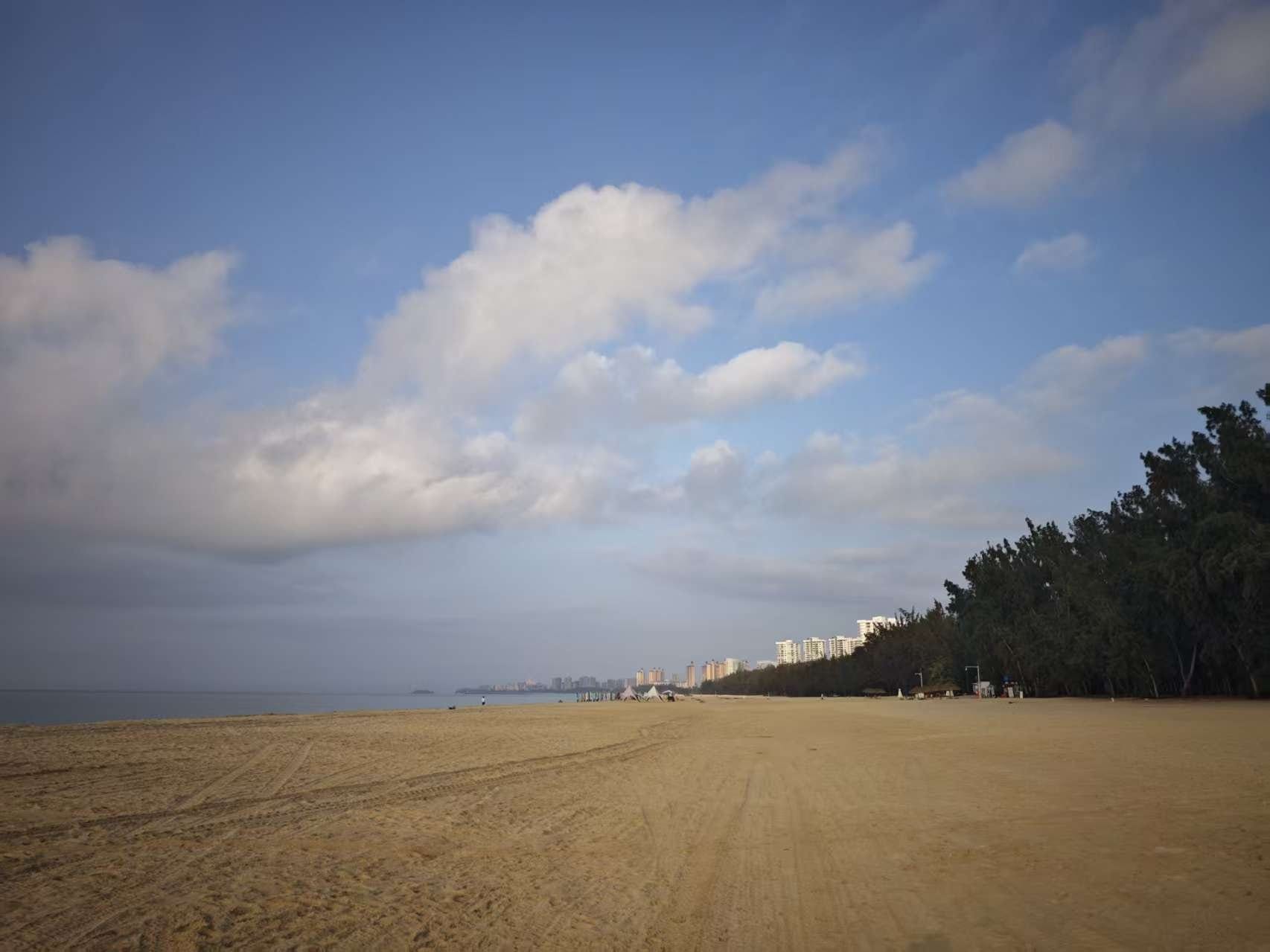
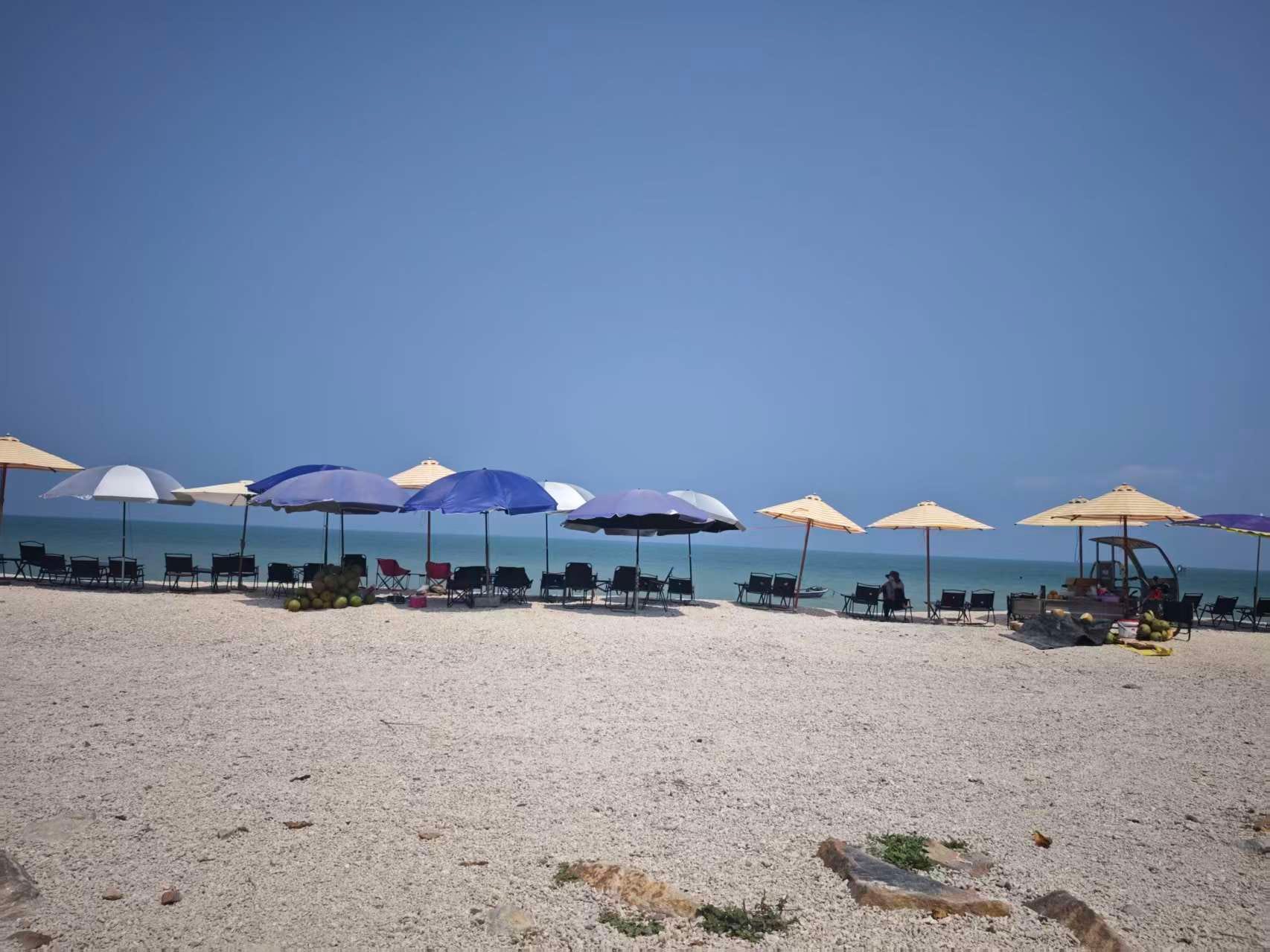
His coffee shop may be directly on the beach, but getting to it requires a 10-minute ride in an electric golf cart, with no direct vehicle access to his location. Along the way, you’ll pass long strips of nicely-manicured gardens, along with a few high-end property developments and villa complexes, but very little commerce or entertainment. The design concept for this recreational beachfront is severely lacking.
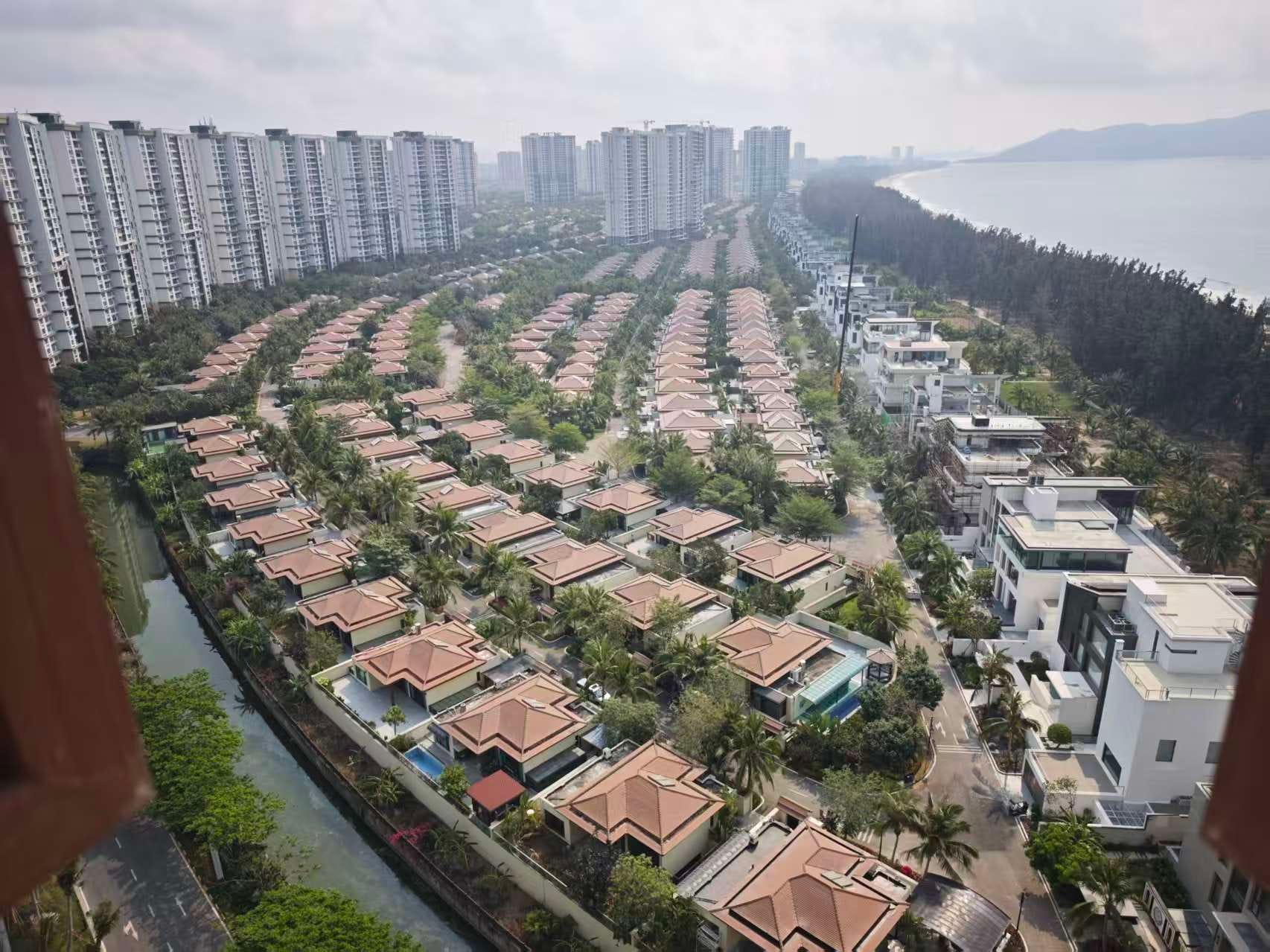
Clearwater Bay is currently owned by Chinese developer Agile Property (雅居乐) and they seemingly don’t seem to know what exactly to do with the massive chunk of real estate they control. They have development rights for the entire 10km of coastline, but have mostly filled it with endless rows of residential retirement communities.
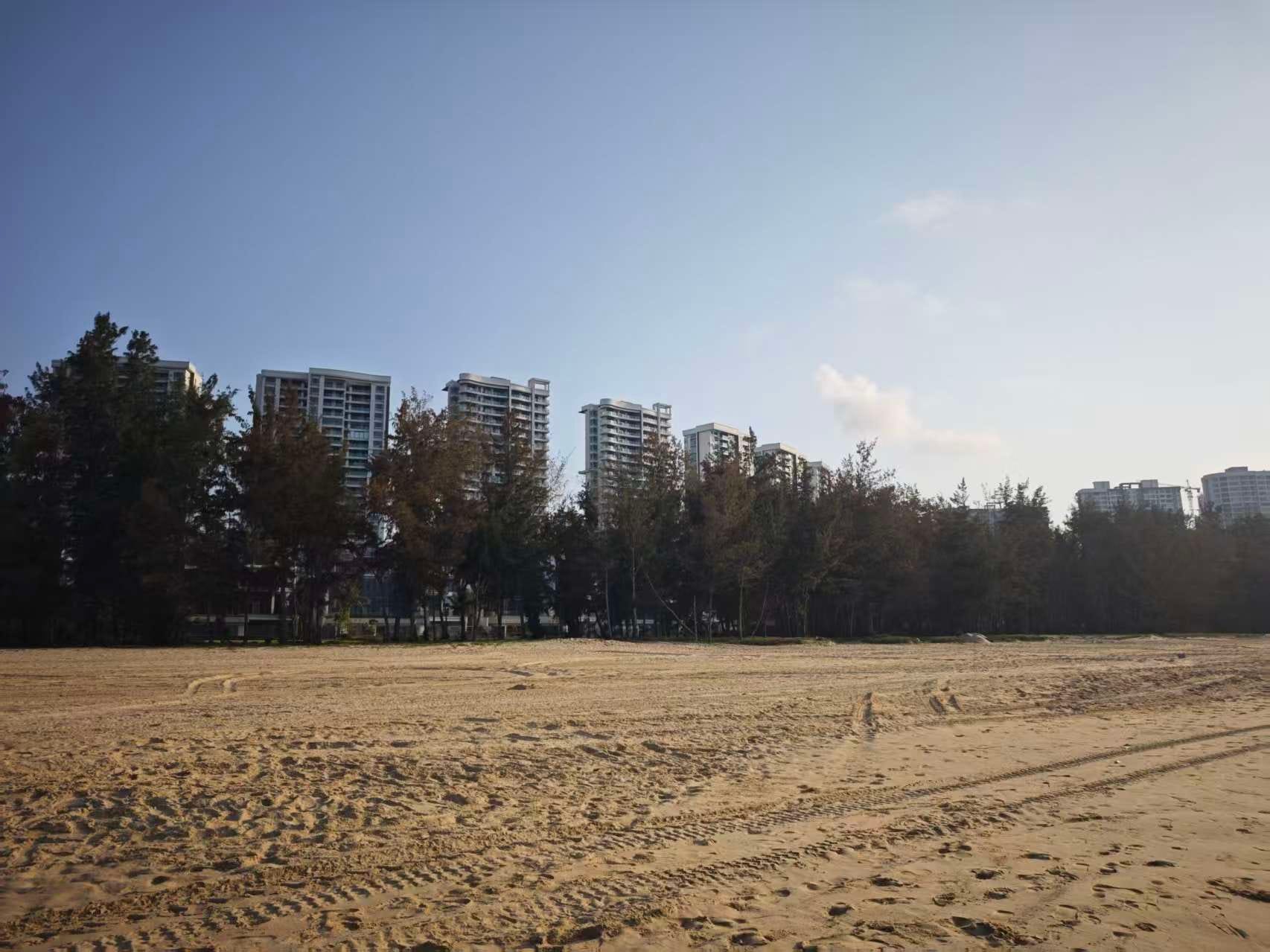
I asked the coffee shop guy why the many kilometers of beachfront had nothing except high-rise apartments and luxury villas.
"That's all they know how to make...and that's all the local government wants to see. Tourism sounds nice, but actually it only gives you an economic benefit during three periods of the year: May Day, National Holiday, and Spring Festival. The rest of the year, there's little tourism, except for the Russians. So if you rely too much on tourism, you can't get rich. They prefer to just sell apartments. Or they did, back when the market was still good."
"But can't you charge a lot of money during those three tourism periods and make your money for the rest of the year?"
"You can raise prices a little during the holidays, sure, but there's so much competition in Hainan, so you can't make a lot of money. It's just too competitive."
"Yes, the car rental agency in Sanya told me that daily rates for rental cars here in Hainan are the cheapest in China" (they were, by the way. It was roughly 50 CNY, or about 7 USD a day).
"Of course. It’s too 卷...." (juan - competitive, or involuted)
"Because of these problems, there's very little commercial development along this beach? Isn't Agile annoyed with the local government because of this?"
"Of course. Everyone is annoyed. We rented this strip from Agile, and they want to help us to make money in theory, but they can't force the local departments to approve our project. Lingshui is an autonomous county for the Li ethnicity (黎族, ethnic minority native to Hainan), so oversight for development of coastal resources is very strict. Every application on the beach has to go through approval by village, town, county, and even the province level. In the end, all we can do is put out some chairs and an umbrella and serve drinks."
“So you guys must have lost a ton of money after renting this area from Agile, since you can't even develop anything on it?"
"Yes...very expensive. And it's not just the land. Everything here has to be built more expensively. You wouldn't believe how many millions it cost to build this little coffee shop, because it needs special, reinforced steel to resist typhoon winds and thicker glass. Plus the construction here is so slow. If you hire local people for construction, they work so slowly and not diligently!" He was particularly incensed by this.
"Can you believe, even if you offer them extra money to work overtime to finish the construction faster, they just say no, and go home. They really don't care about working hard. They are too 佛系!"
佛系 is popular slang right now, literally meaning 'Buddha-like' but generally describing someone who is uncompetitive, low‑stress, and goes with the flow, not forcing outcomes.
"Er...kinda sounds like you're calling them lazy. In a subtle way."
He laughed and shrugged, gesturing to the sunny beach and the ocean. "It's not unreasonable to be 佛系 in this kind of environment. But there is a reason why Hainan is still underdeveloped."
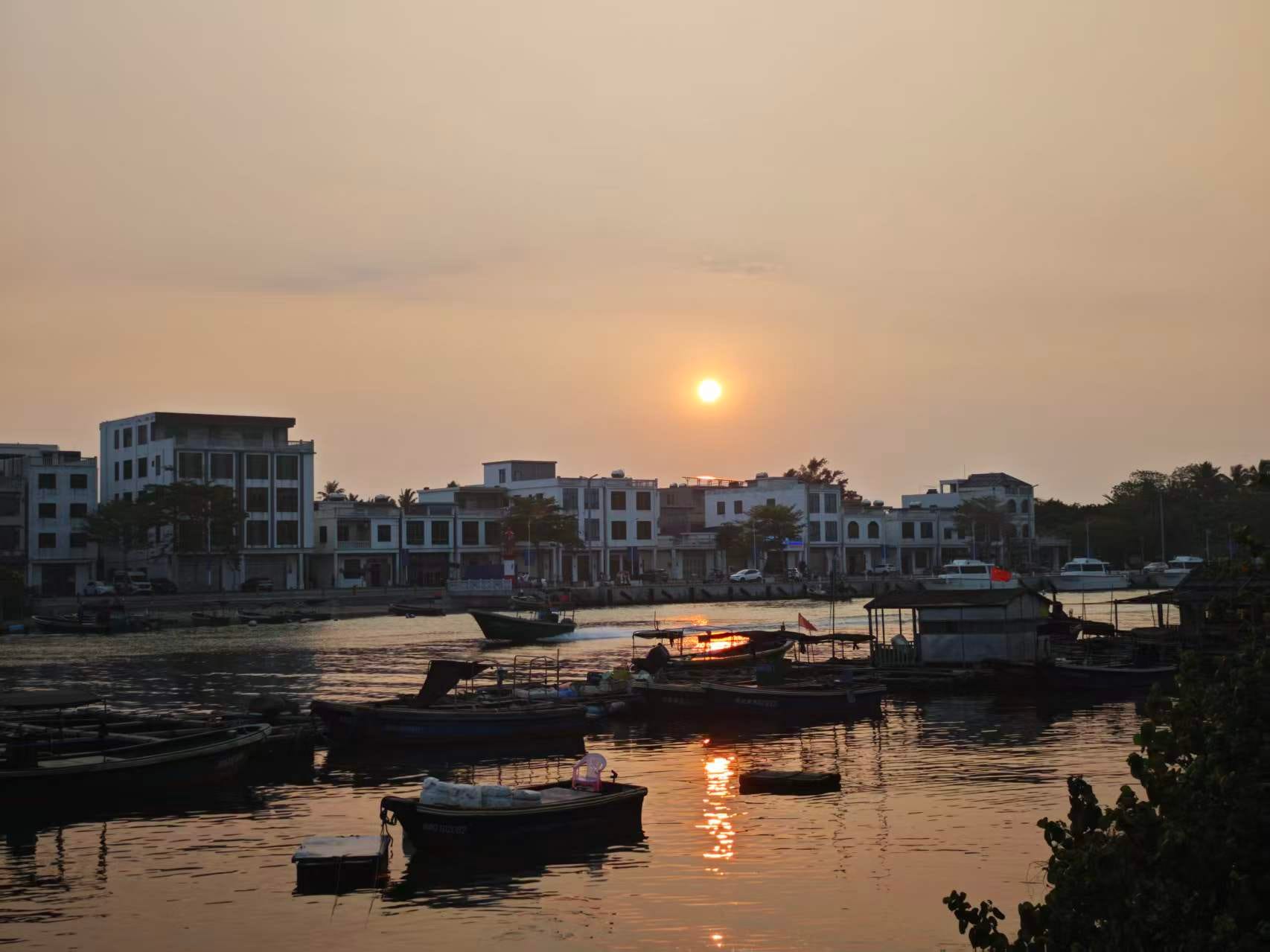
He paused and then added: "I've only been here six months and already I am feeling relaxed too. I used to feel like I needed to struggle every day. Now I think it's quite nice to lay in the hammock and swipe on my phone, then watch the sunset...."
The Matter of the Master Planner
Government restrictions and expensive construction can explain part of the story, but not everything. The coffee shop guy told me Clearwater Bay is underdeveloped because of the mismanagement of the site by Agile itself, who isn’t experienced or competent enough to be the Master Planner for beach real estate.
I’m sure it also matters quite a lot that Agile is absolutely flailing right now, had net losses of 22B CNY last year, has defaulted on some of its offshore bonds, and so clearly has no money to put into further developing Clearwater Bay, even if it wanted.
After doing more research, I concluded actually only a part of the blame should go to local conditions or poor policies. I think the competence and financial health of the Master Planner is much more important than both of those, for this kind of project. Whether they have a coherent vision...and are effective at allocating resources in pursuit of it are the key deciding factors for whether the project becomes a lucrative success, or a huge, expensive failure.
We found examples of both in Wanning, the next city east after Lingshui.
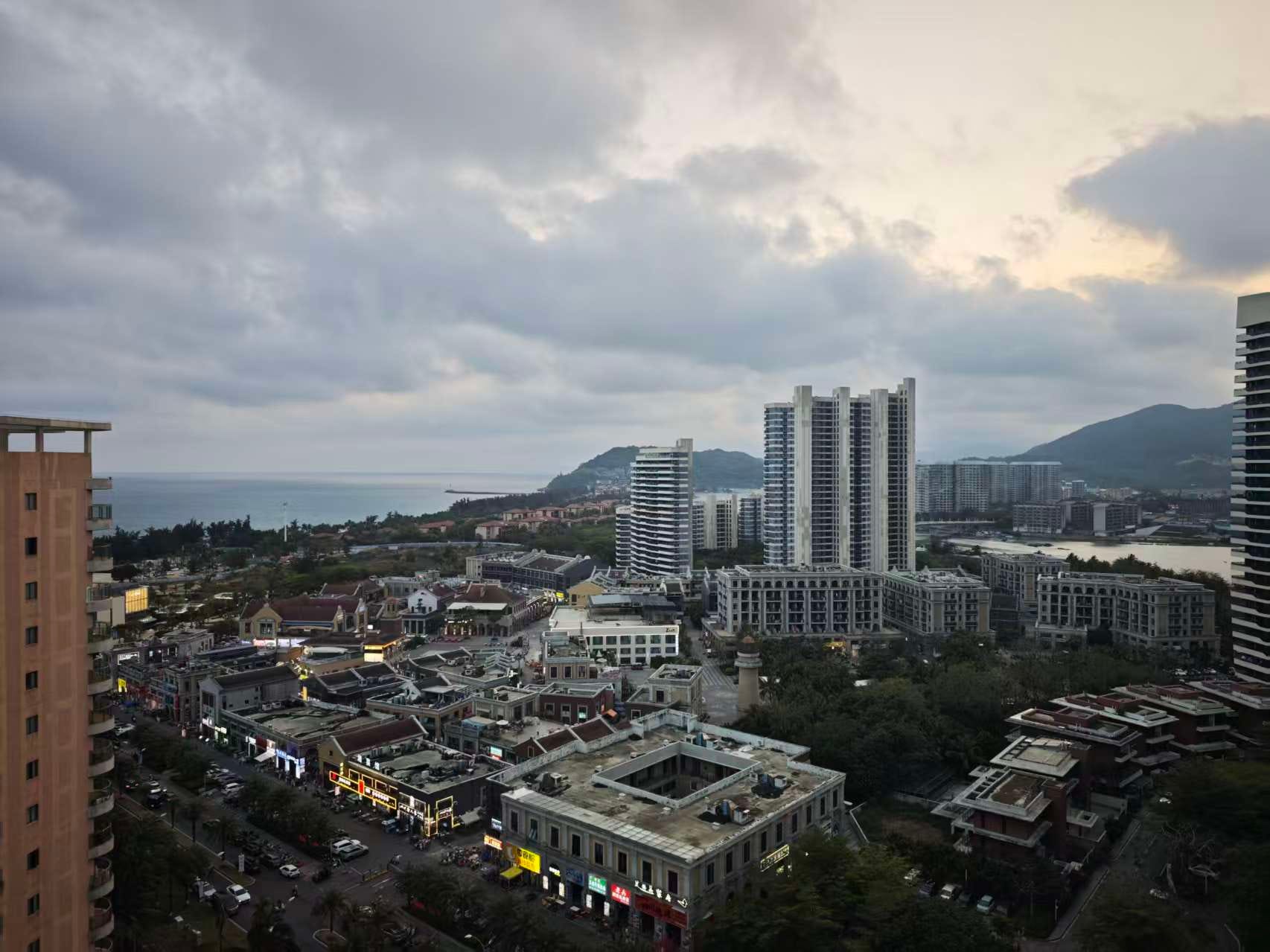
With China Overseas Land & Investment (中海) as its master planner, the “Shenzhou Peninsula” recreational beach tourism zone looks like a major success by conventional metrics - and it feels like it on the ground as well. It’s a huge, mixed-use tourist complex that is basically a standalone town in its own right, including residential real estate, malls, outdoor markets, resorts, beachfronts, and even office buildings.
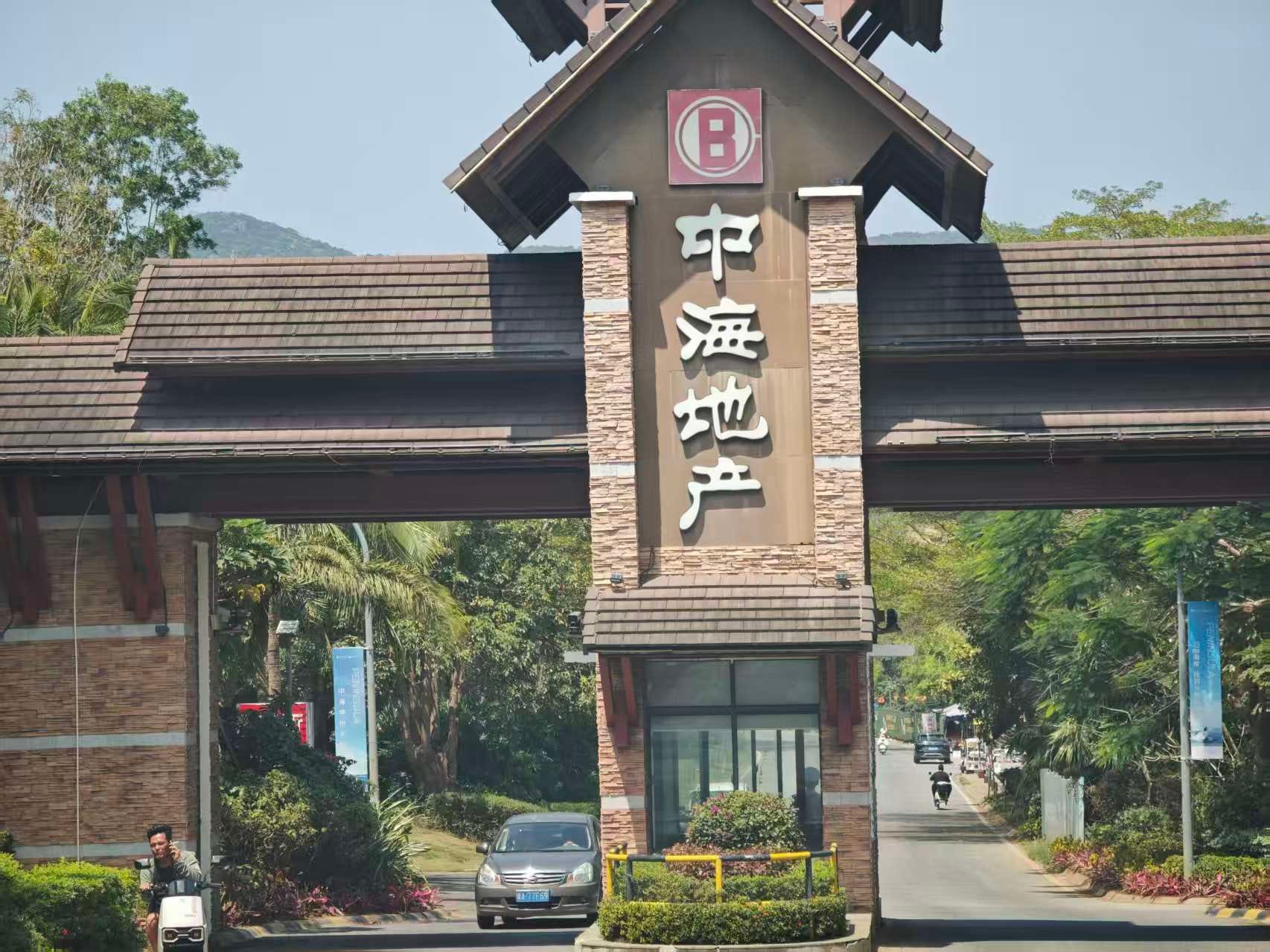
When we arrived, the beachfront hotel/resort slots at Shenzhou Peninsula were all filled by major brands (Sheraton, Holiday Inn, etc.) the high-rises seemed to have sold well, the golf course had excellent reviews, and the commercial district + food street/night market was absolutely packed with people. This is the vision of success for a master planner…fully subscribed across all their verticals. It had to be. Online reports indicated that China Overseas Land & Investment spend billions of USD to secure the development rights for this parcel of land.
Online, I saw quite a few listings for luxury beach villas *by owner*. This means that although the market might be bad now, at least the developer succeeded in moving units initially. From an investor perspective, this is a success, regardless of what happens in the secondary market later.
About Land Reclamation Projects
By way of contrast, we should review the outcomes of a different mixed-used real estate project that ended in disaster. They’re not hard to find in Hainan. Not far down the coast, the Riyue Bay (Sun and Moon Bay) artificial island development has clearly been catastrophic for its state-backed developer Sunac (融创). Originally conceived in the 2010s as a massive thematic artificial island, the project ambitiously planned for two offshore developments in the shape of a sun and crescent moon, linked to the mainland by bridges.
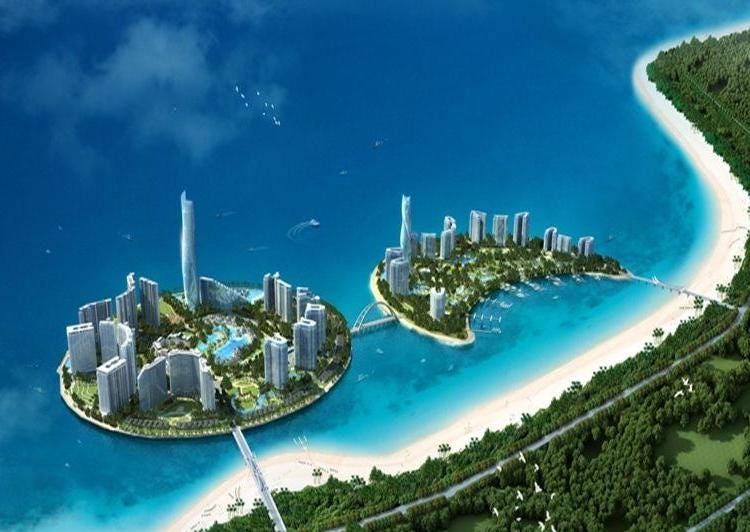
Reality had other plans. In 2017, national environmental regulators stepped in to block the construction of the “moon” island for conducting land reclamation without proper authorization. Later, the sun island finished completion just as the entire real estate market starting heading south. Today, the “sun island” is full of half-finished buildings shells and empty apartments, playing host to dozens of short-term hostels and guesthouses. I’d be surprised if anyone actually lives there full-time.
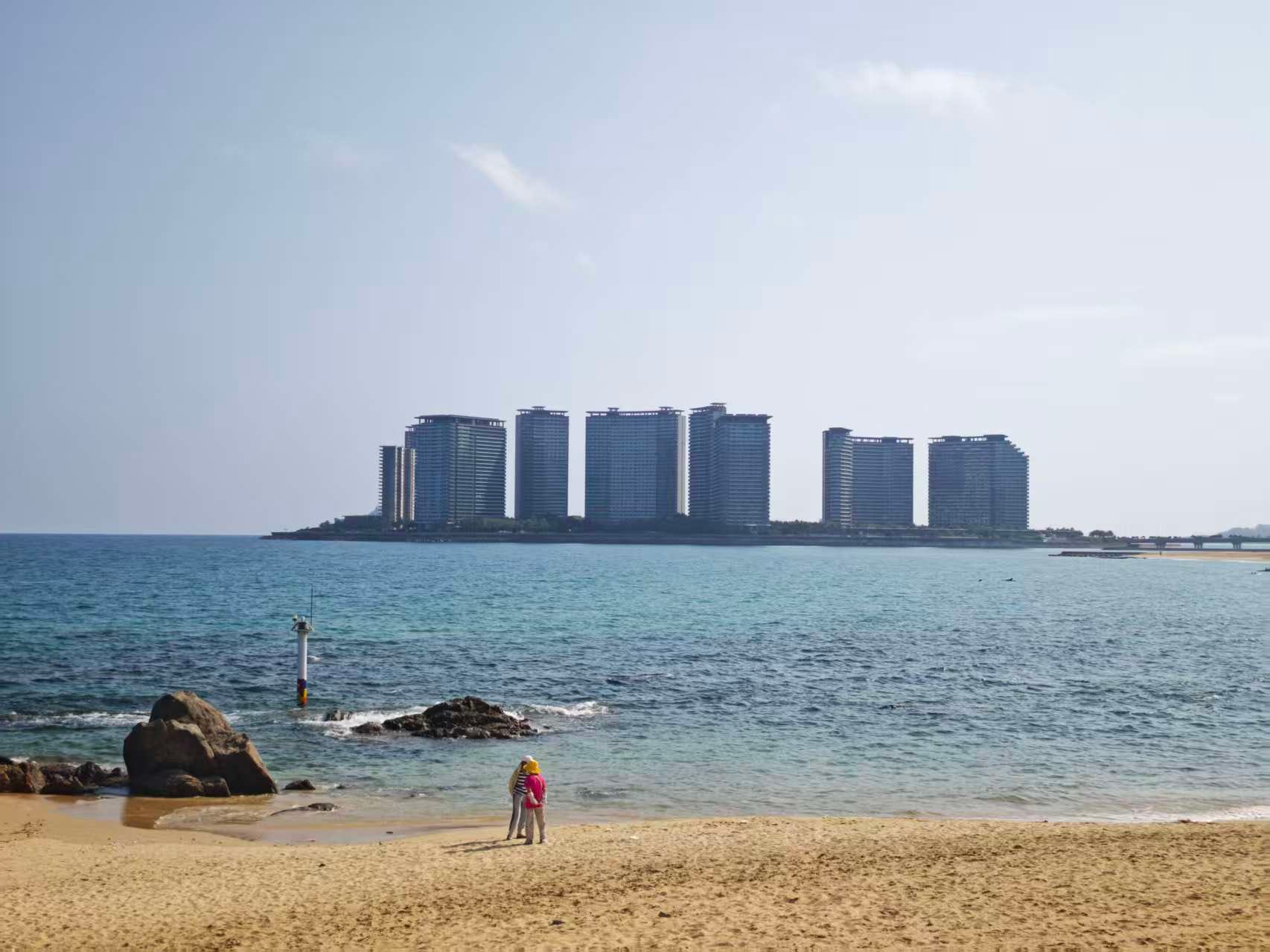
We thought about staying here initially, drove onto the artificial island, took one look around, and left. With half of the project abandoned and the other half full of empty units, Sunac’s losses must be considerable.
Aside from Riyue Bay, there were actually many poorly-conceived land reclamation island projects off the coast of Hainan in the early 20120s that all got shut down in the first round of stringent national environmental inspections in 2017/18. This included, most famously, Sanya’s new international airport, which was dinged for illegal land reclamation and later earned the project developers an 11m USD fine. Today, Sanya continues to search for a new airport site while continuing to make do with its decades-old legacy airport, which is now obviously straining under a daily passenger load it was never designed for.
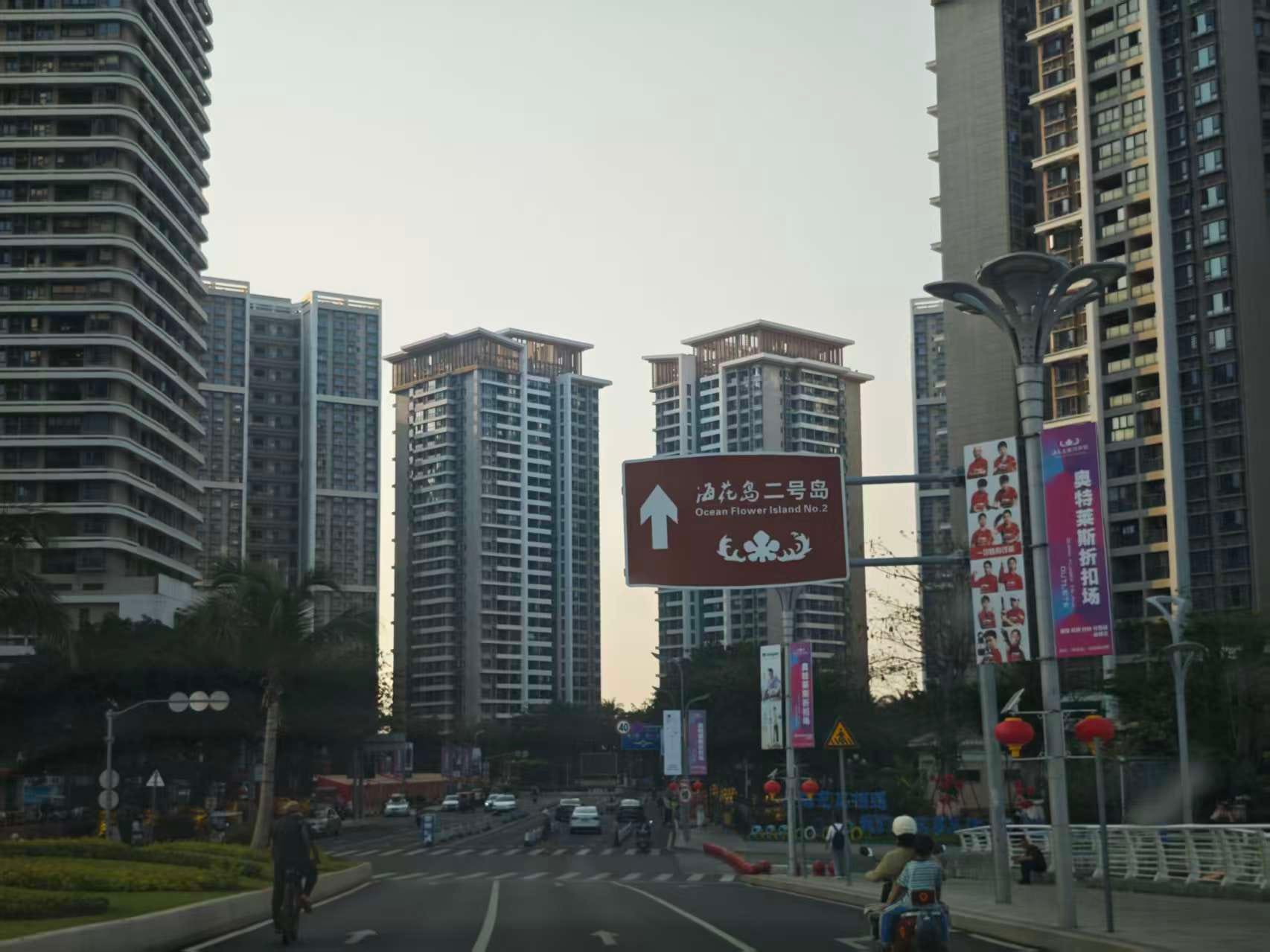
But not all land reclamation projects end in disaster. Up on on Hainan’s northern coast, on the opposite site of the island, Evergrande’s “Haihua Island” project in Yangpu Town, Danzhou is a thriving “offshore” community, despite the lack of sandy beaches (the northern coast facing Guangxi doesn’t have nearly the same natural beauty of the southeast coast). It has also faced its fair share of controversies over the years, amid dire claims about its outlook and financial viability. But when I visited later on the trip, it was full of people at least.
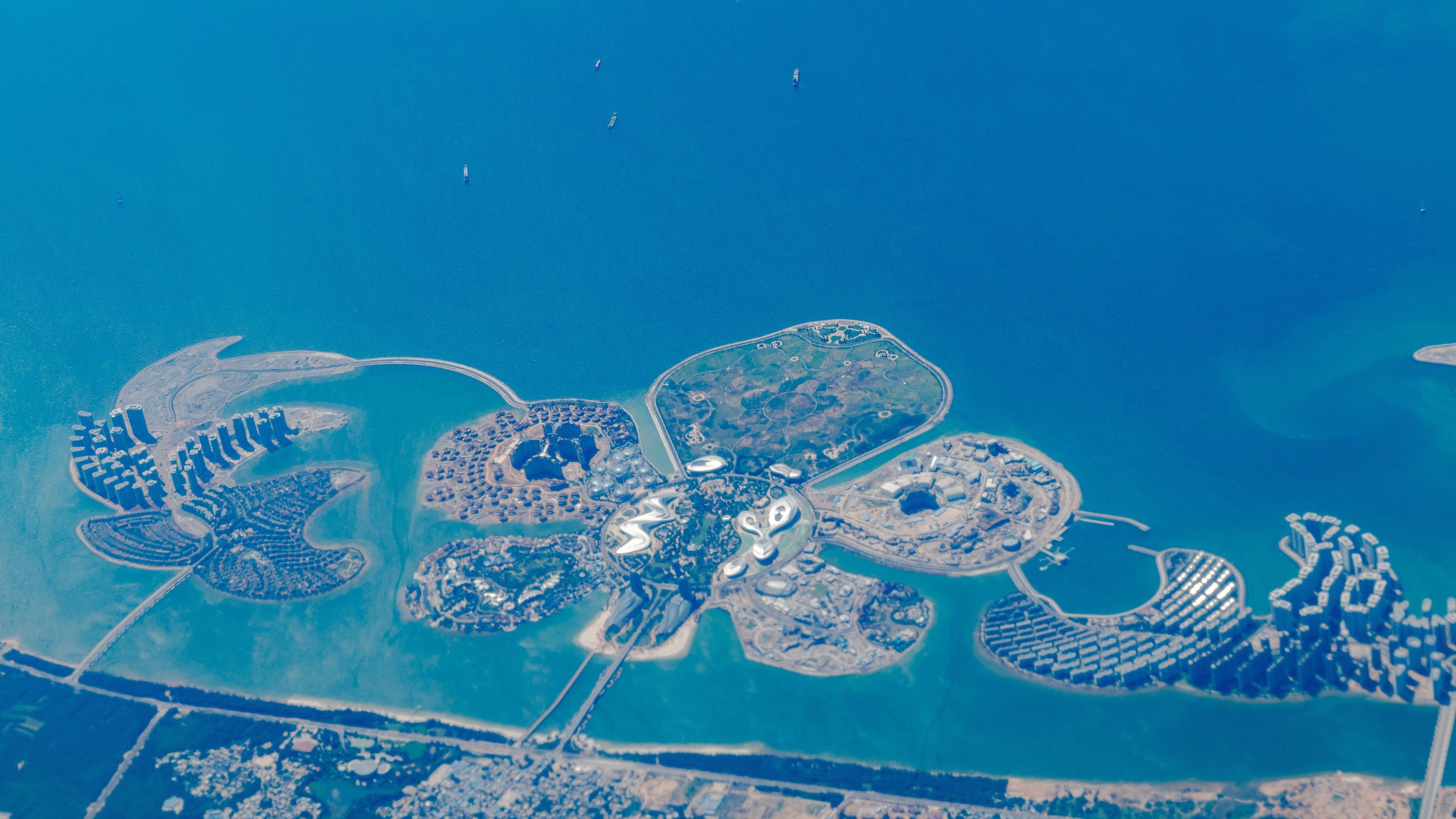
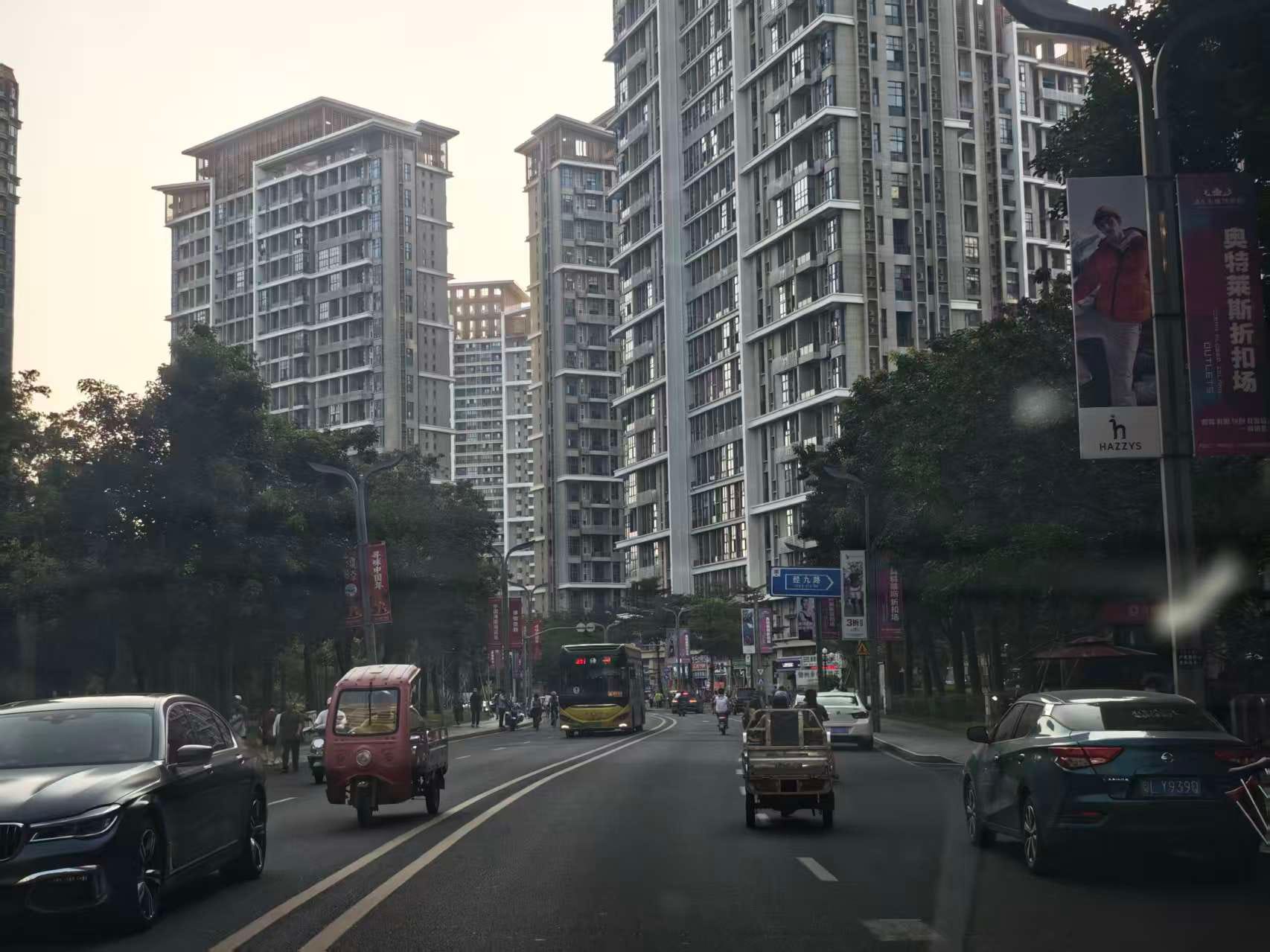
Yangpu Town itself is highly industrial (just about the only truly industrialized part of Hainan) and I don’t really understand the charm of retiring to a coastal seaside community in Hainan where the air quality is hardly much better than being on the mainland (and you can see an oil refinery from your window). But the island was packed with people when we drove through briefly. With most people getting around on golf carts and tricycles and the modal hair color being grey, it looks like quite the successful retirement community. Maybe it’s because it’s just really cheap. I saw real estate agents advertising entire 1 BR apartments in Haihua Island for as little as 120k CNY all-in. For context, that’s the price of ONE square meter of real estate in some parts of Shanghai.
Haihua Island seems to highlight a different development logic...not based on tourism or natural beauty, but affordability and internal circulation tailored to retirees. There’s clearly a market for it - certainly at the more affordable end anyway.
The Best Place in Hainan
But on this most recent trip, we didn’t stay on any reclaimed island projects - nor did we ever need to. Actually, the best place we stayed on the trip was in a little town off the coast of Qionghai city on the southern coast called Bo’ao.
Bo’ao is well-known as the host site of the Bo’ao Forum for Asia (BFA), which is sometimes called “Asia’s Davos”. The town is small but comfortable, with many good dining options, pretty beaches, a reasonable level of beachfront development, and very affordable and pretty ocean view apartments in the coastal high-rises.
In terms of beachfront development success, Bo’ao sits somewhere between the failed, arrested development of Clearwater Bay and the obvious roaring success of Shenzhou Peninsula. Charming and very livable, but also not without its share of real estate failures too…it was the perfect topic for my investigatory instincts. But that will be a story for next time!
Ive lived and worked in china since 2005. Subscribe to a lot of China 'experts'. But when I see something come out from you i make sure I read it and I'm never disappointed. Thanks for sharing.
You address things nobody else addresses, thank you for writing this amazing substack.