
This essay was first posted as a Twitter thread on July 6, 2025. It has been edited lightly for long-essay format.
While visiting Xiamen in July 2025, I grabbed an opportunity drive up to Shishi City for an afternoon. Shishi is a small Fujian coastal city, mainly known for its large garments industry - with huge business in both production and distribution. But I had a different reason for my visit: I saw it on a map and thought it had a funny name.
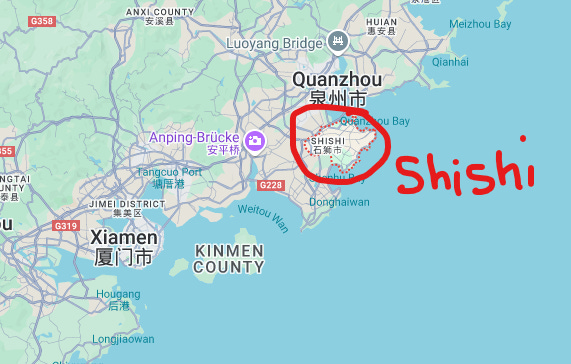
Shishi is the name of the city, and the word “city” in Chinese is ALSO “shi” (市), so its entire proper name is shi2 shi1 shi4 (石狮市) all with different tones. Its name literally translates as “Stone Lion City.” Reminds me of a tongue twister. That’s pretty much the only reason I need to visit a random small city like this…I notice it, think it’s funny, and then I decide I have to go there.

Shishi is governed by Quanzhou City and has a total population of about 700k. Because it’s a trading and distribution hub for the garment industry, about half the population is migrant workers - uncommon for such a small city where usually the inhabitants are locals.
Quanzhou has a pretty odd administrative structure (see image below). The large western counties (light green, blue, orange) are very rural - basically in the mountains. Meanwhile, the coastal districts and cities are relatively tiny, squeezed into the 50km of coastal plain tucked between the ocean and the mountains. Shishi City is the small coastal blob in dark green below, completely surrounded by Jinjiang City in lavender. It only takes a 1 hour’s drive north and west from Xiamen to reach Shishi.

Despite being small, Shishi is not a poor city. Its bustling garments industry and strategic coastal location have done wonders for the city's development.
Indeed, I wasn't surprised to find it in the Top 100 list of China's strongest counties- at #72 on the 2025 百强县 ranking. This list is headed up by more well-known wealthy small cities in the greater Shanghai area like Kunshan, Taicang, and Yuyao. I will surely write a separate post about this “100 Strong Counties” list…someday…
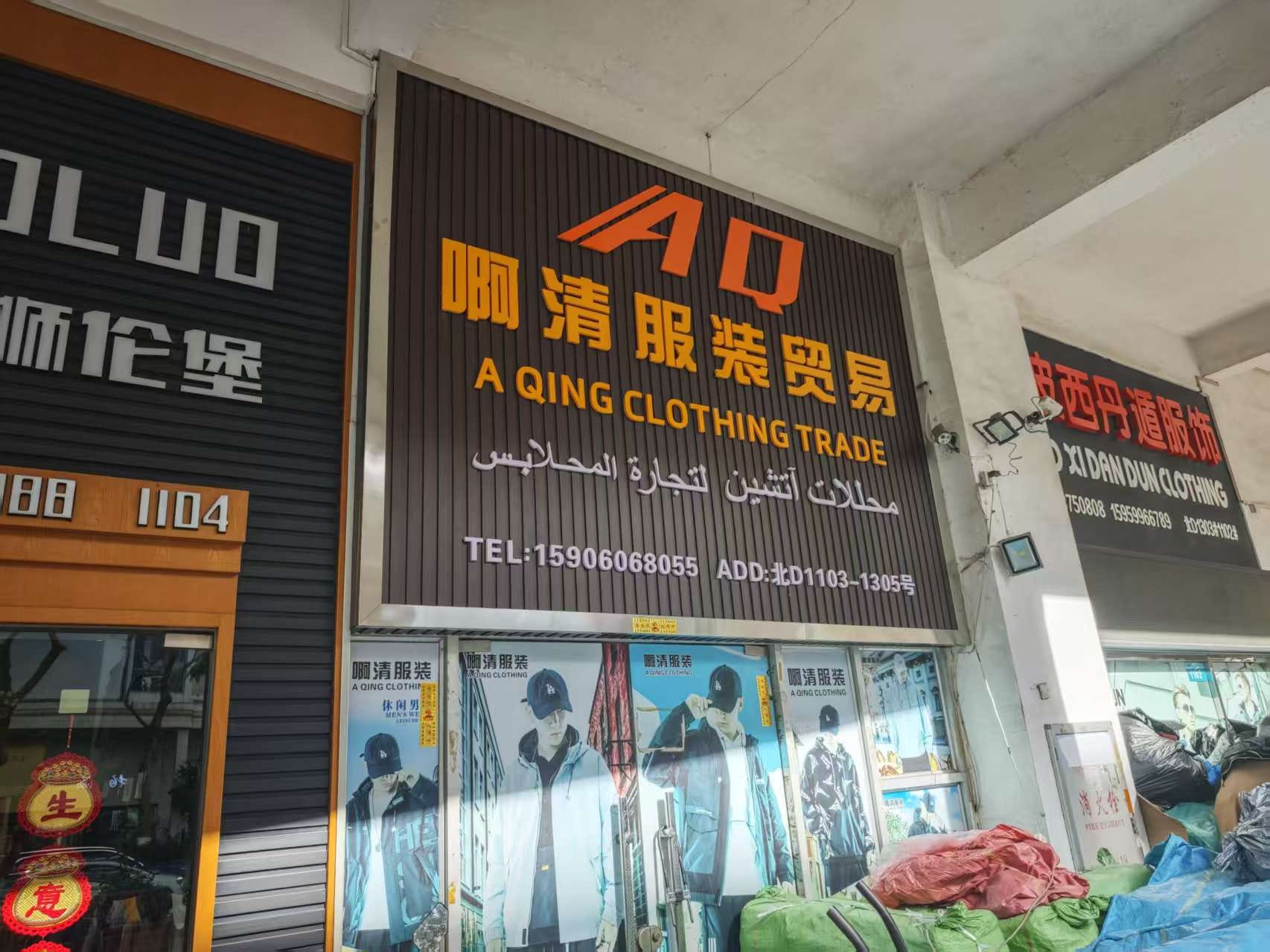
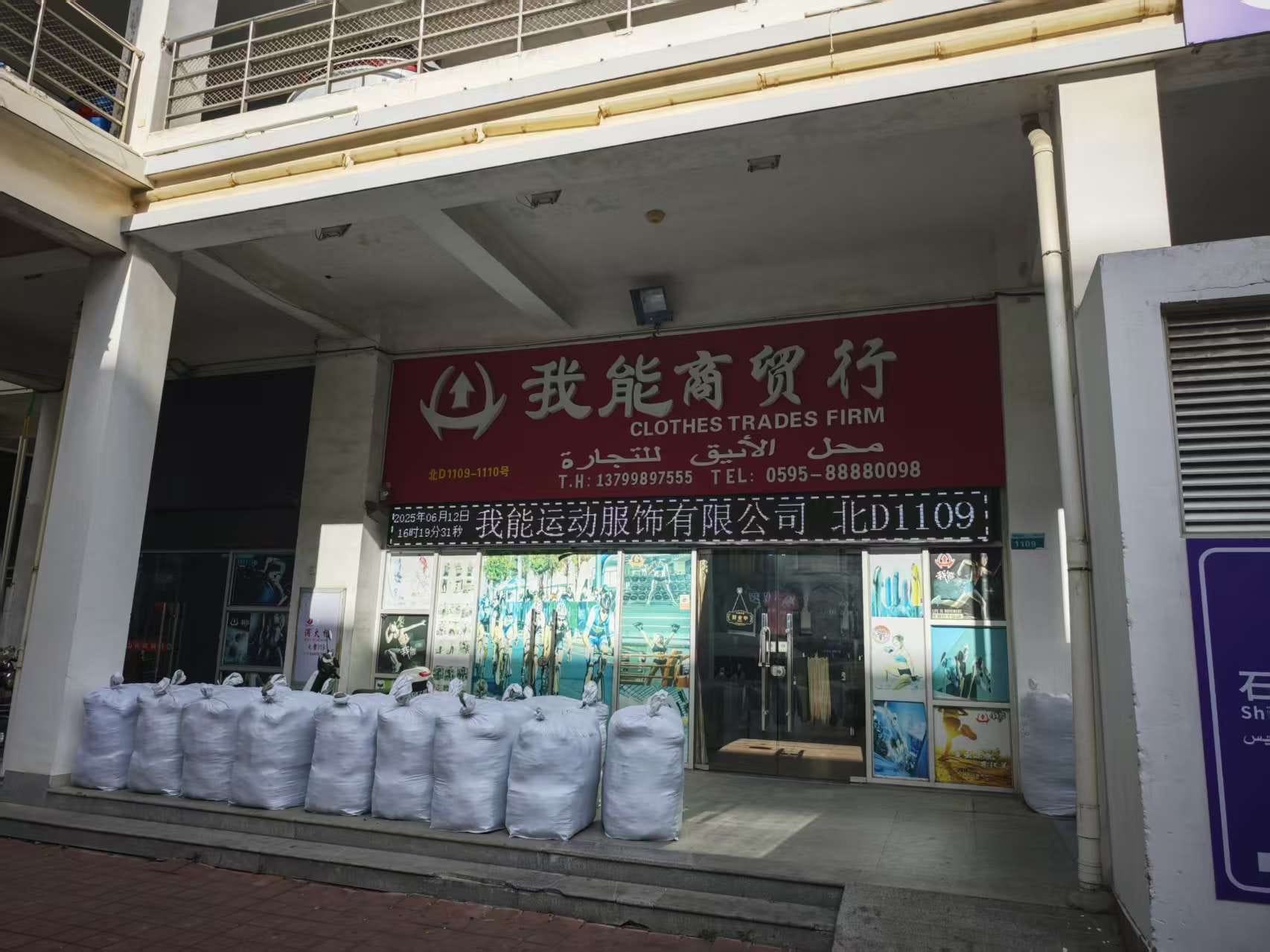
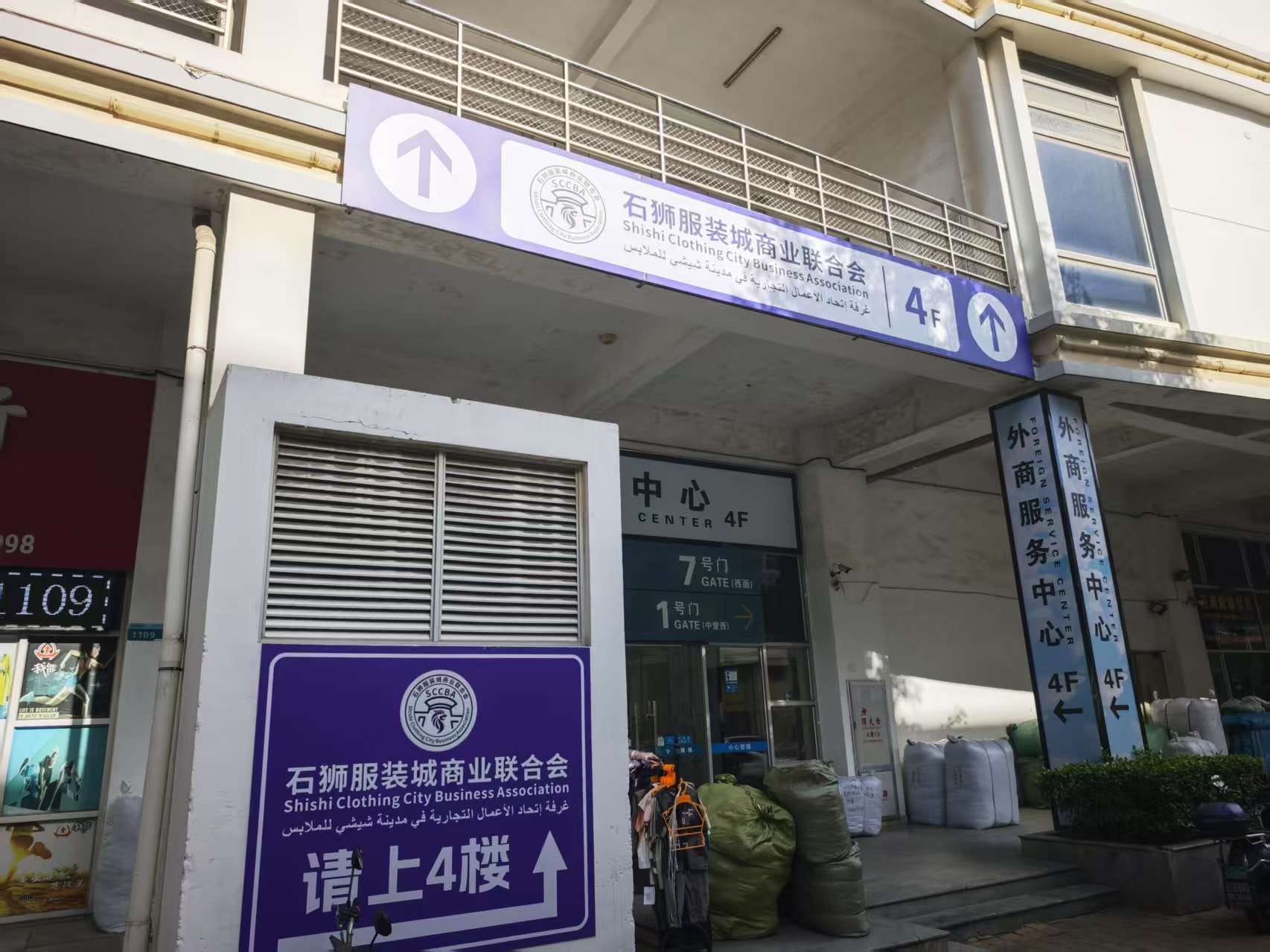
Besides its relative wealth, something making Shishi notable is the large foreign population (for a city of its small size). There are many traders here from the Middle East especially and it was common to spot shop signs and restaurants in Chinese, English, AND Arabic.
When I arrived in Shishi, the first thing I did was to visit the city's namesake - because yes, there IS a stone lion after which the city is named.
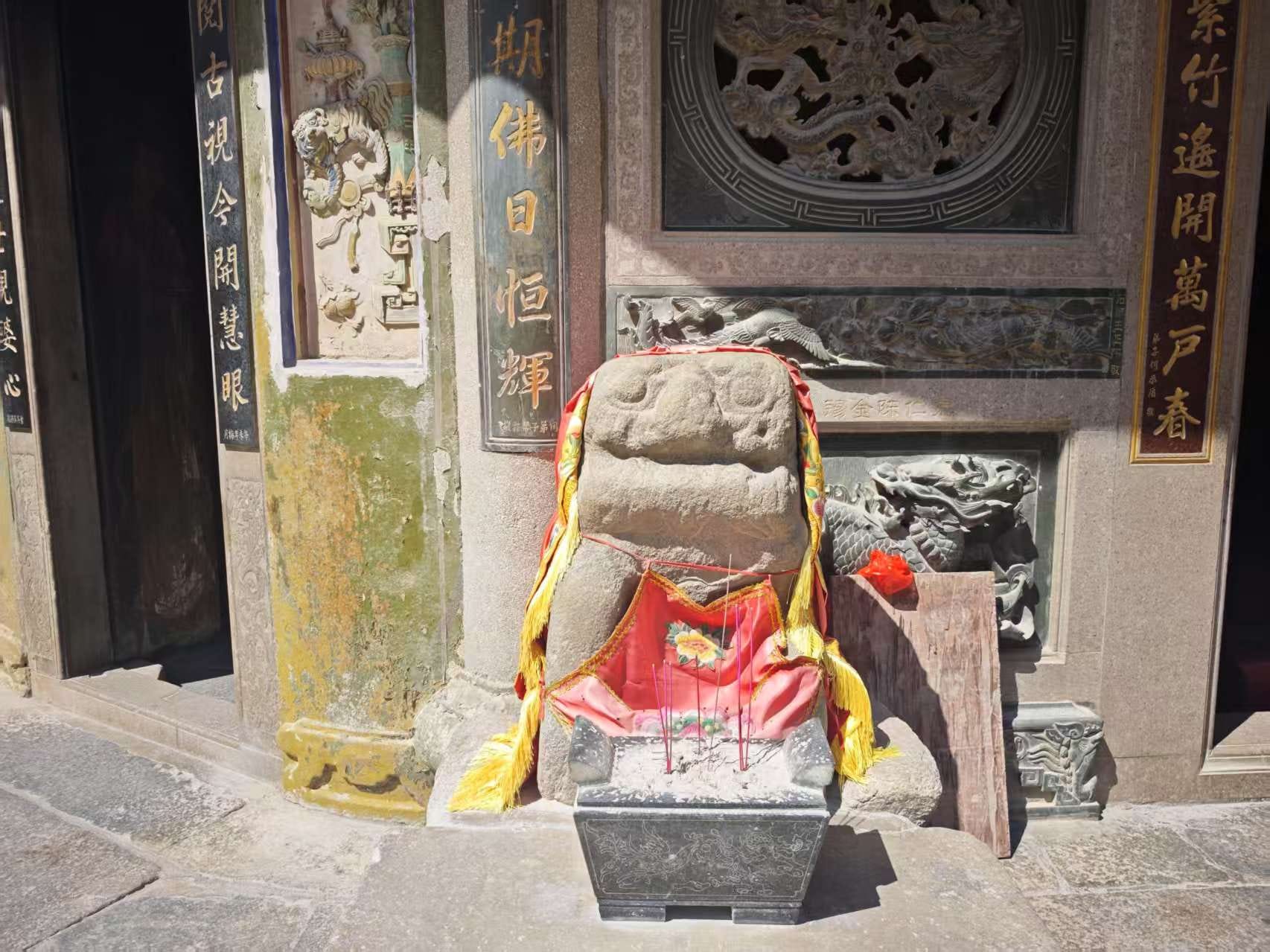
Shishi's Fengli Temple is quite small and very old. The derpy stone lion guarding the temple entrance is nearly 1500 years old - and looks it.
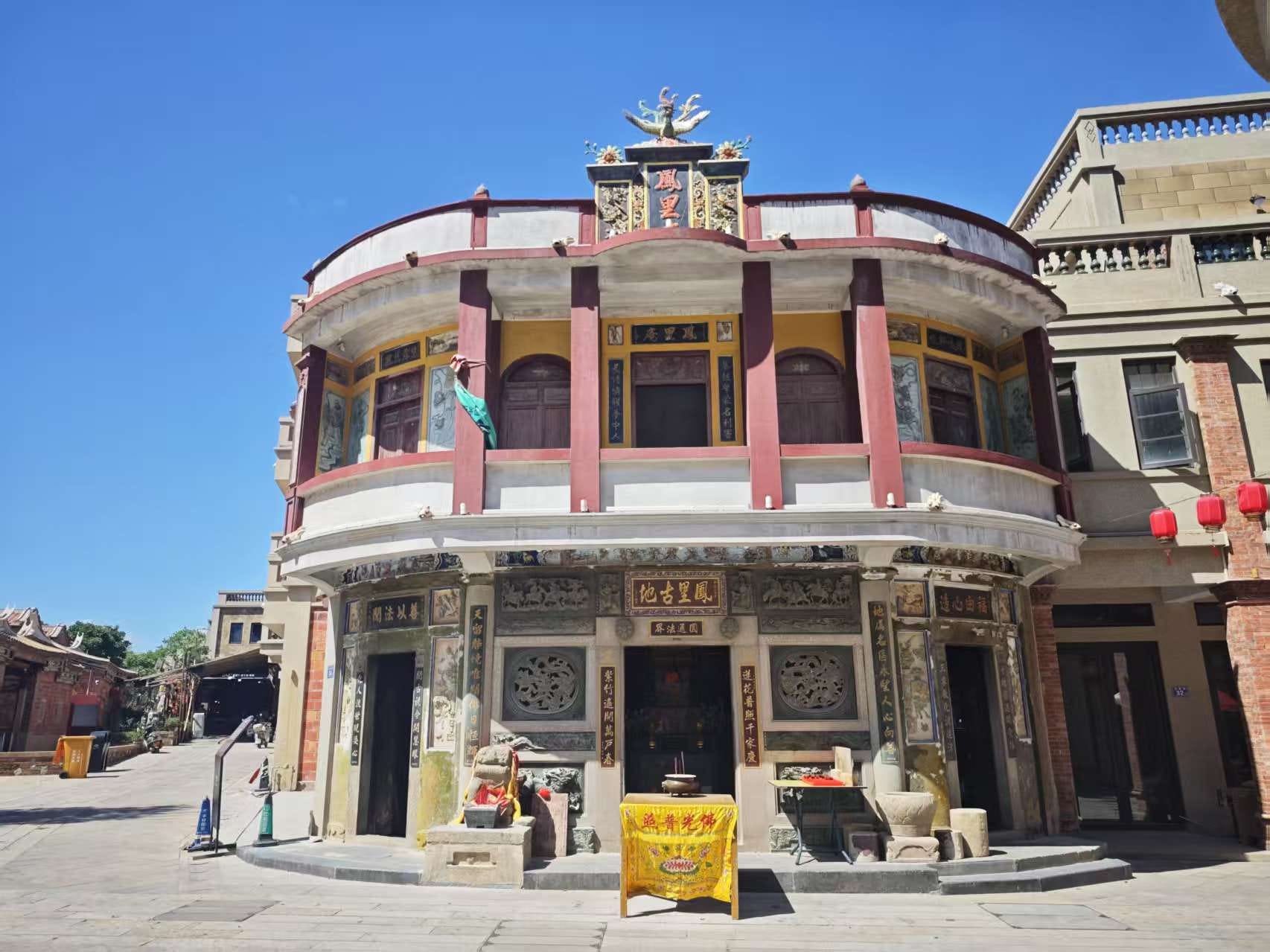
One cool thing about historic sites in smaller cities in China I've noticed is they are less likely to be renovated or refurbished for tourism, which help to maintain their authentic - albeit slightly weather-beaten and grungy - characteristics. If this lion were in Shanghai, I think it would have been "fixed up" a long time ago.
Sometimes, a renovation or refurbishment is just what is needed. The image below is the Shilang Arch, commissioned by the Kangxi Emperor in 1698 to memorialize the achievements of famed admiral Shilang who led the Ming’s Empire’s naval forces in Fujian in the late 17th century.
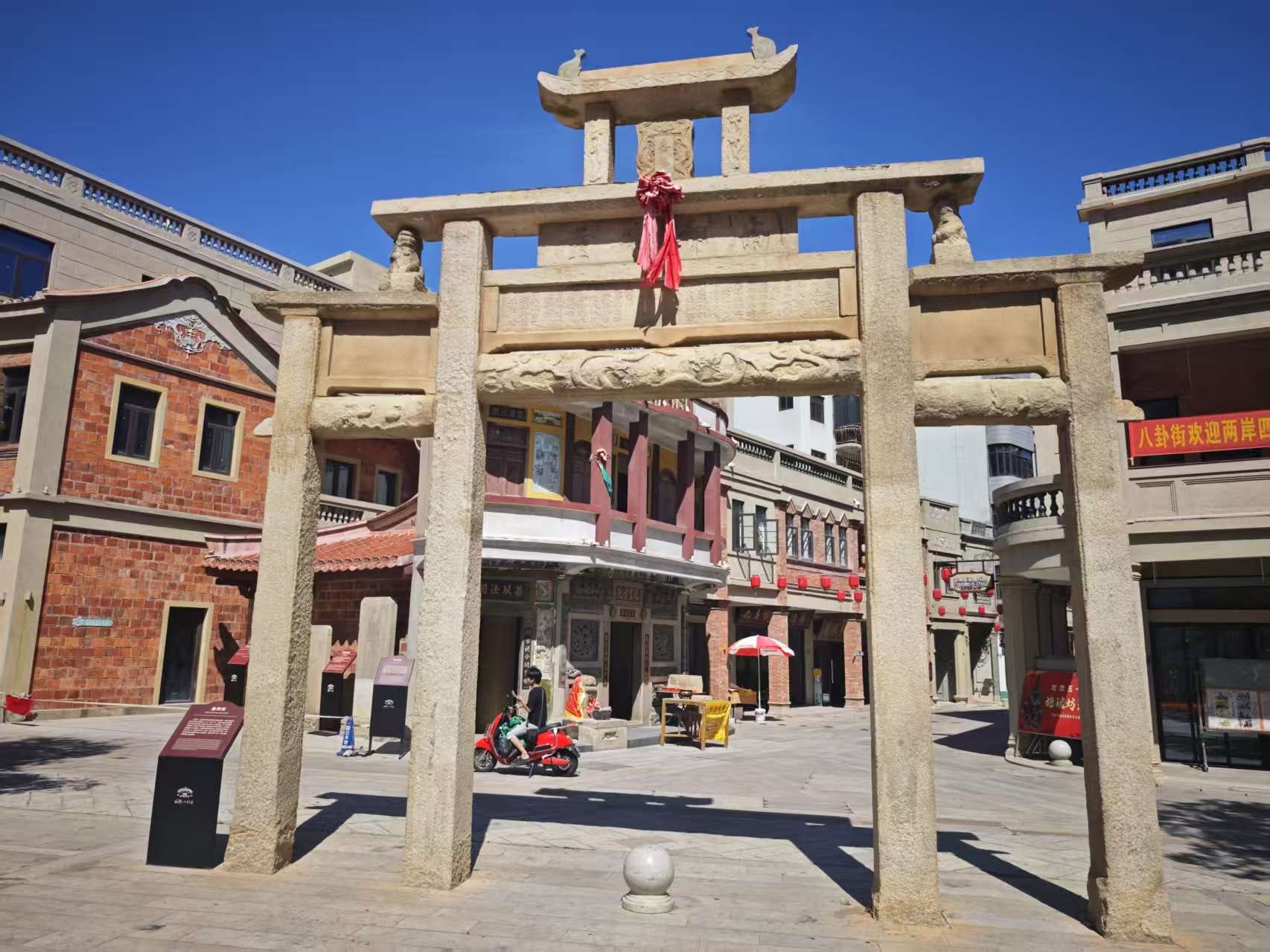
It stood unmolested for 300 years after that until local villagers encased it into a stone wall for a housing project in the 2000s. Then in 2011, when the renovation of this neighborhood began, the wall was torn down and the original stones of the Shilang Arch were discovered and retrieved. Finally it was rebuilt at the entrance of Bagua Street in 2021, still using the original materials, just in front of the Fengli Temple.
Bagua Street was still under renovation, with its shops mostly empty. But further down the street, I came across one open venue: another temple - Shishi's City God Temple.
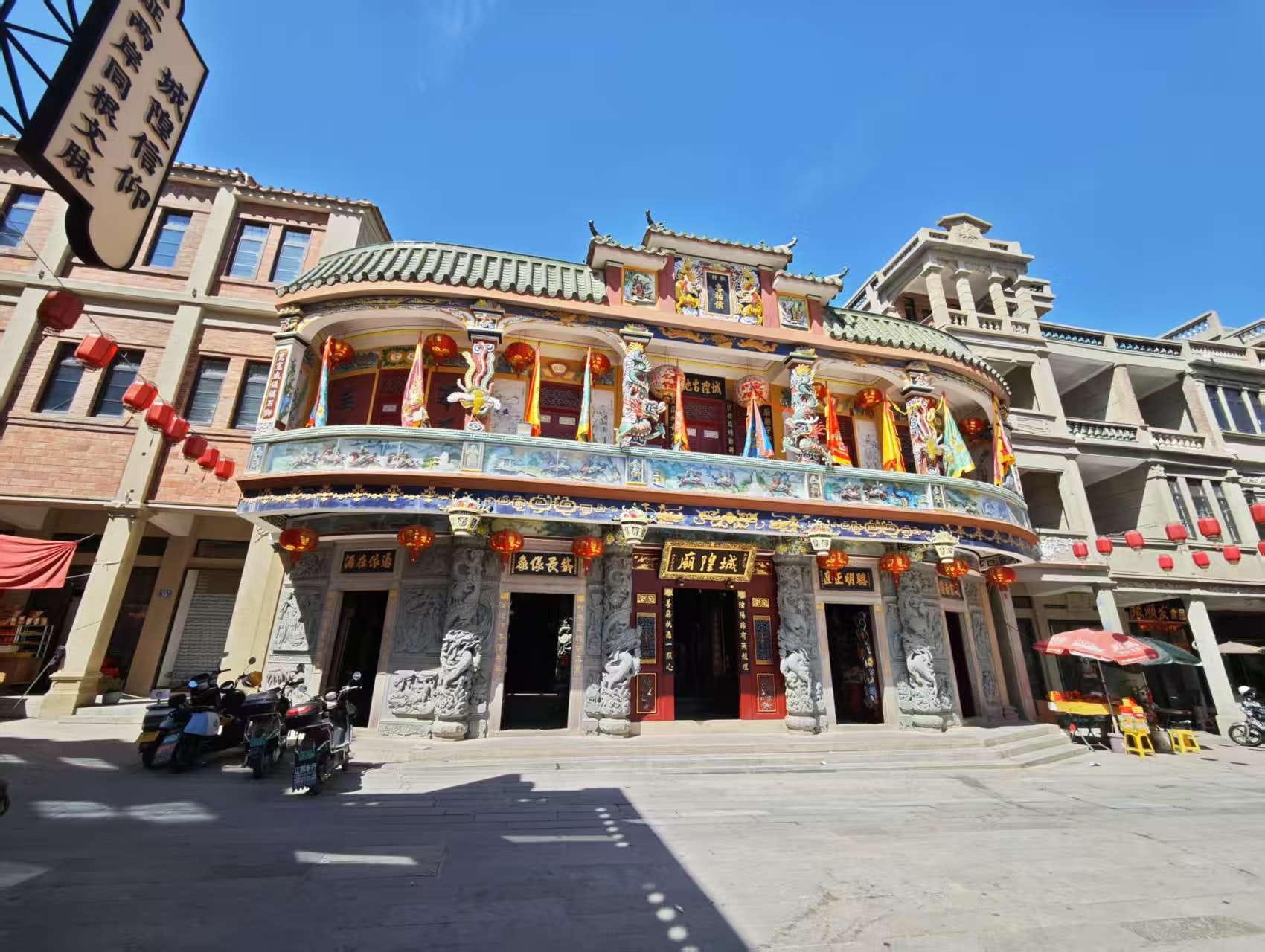
Fujian has a LOT of temples, more than any other province I've visited. Buddhist, Daoist, and family shrines are seemingly littered on every street. Matching the proliferation of the temples, Fujian is stereotypically one of the most superstitious provinces in China.
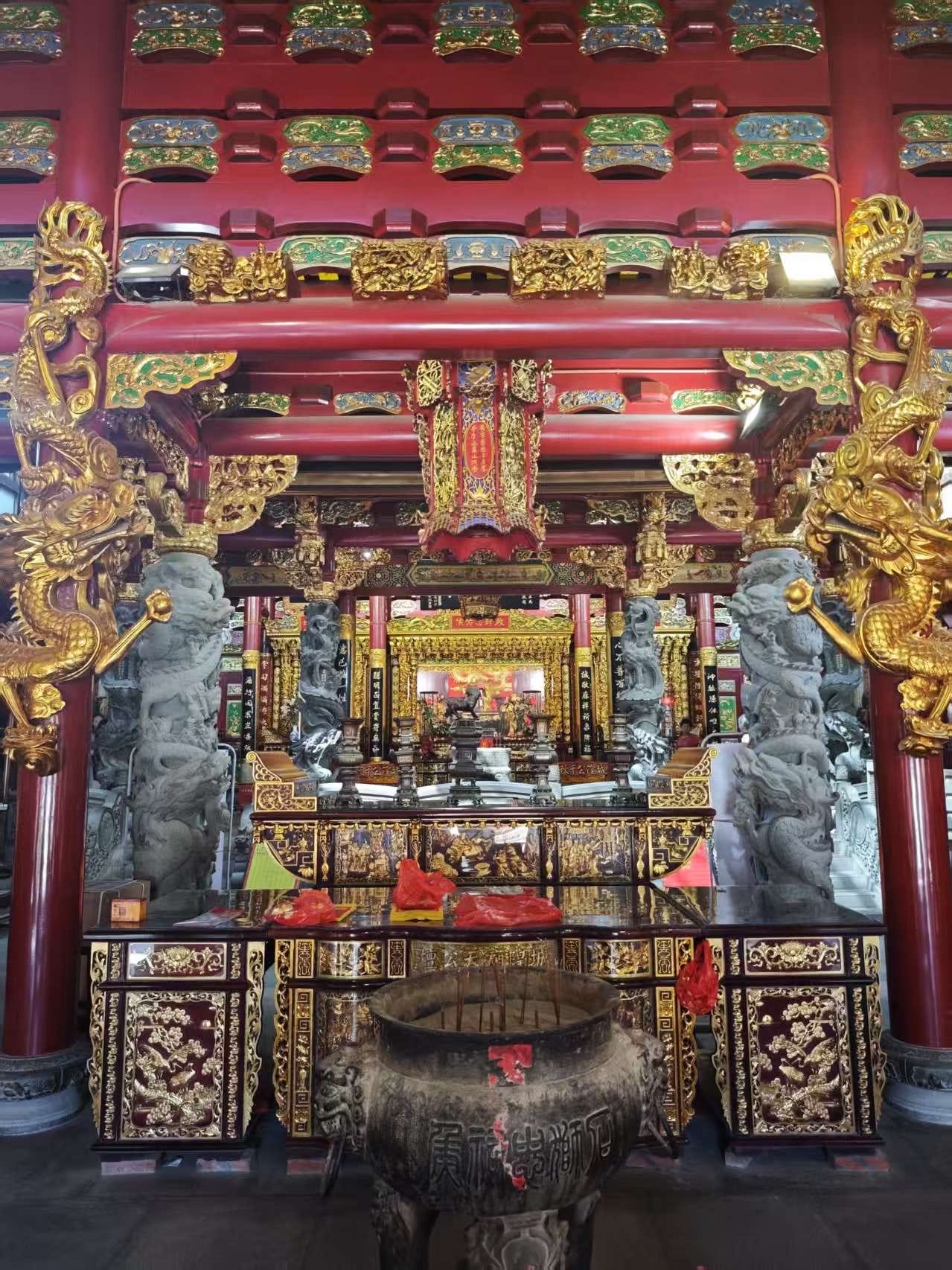
In the ornate and heavily-incensed City God Temple, I even saw a woman doing “zhi jiao” 掷筊 - throwing bamboo blocks on the ground to ask deities questions and poring over the arrangement of how they landed on the floor to seek an answer.
After Bagua Street, I made my way over to the Shishi Clothing City, or SCC, centerpiece of commercial activity in Shishi. SCC comprises several huge, multi-story malls, with hundreds of shops serving as distribution points for fabric, clothing accessories, and completed garments.
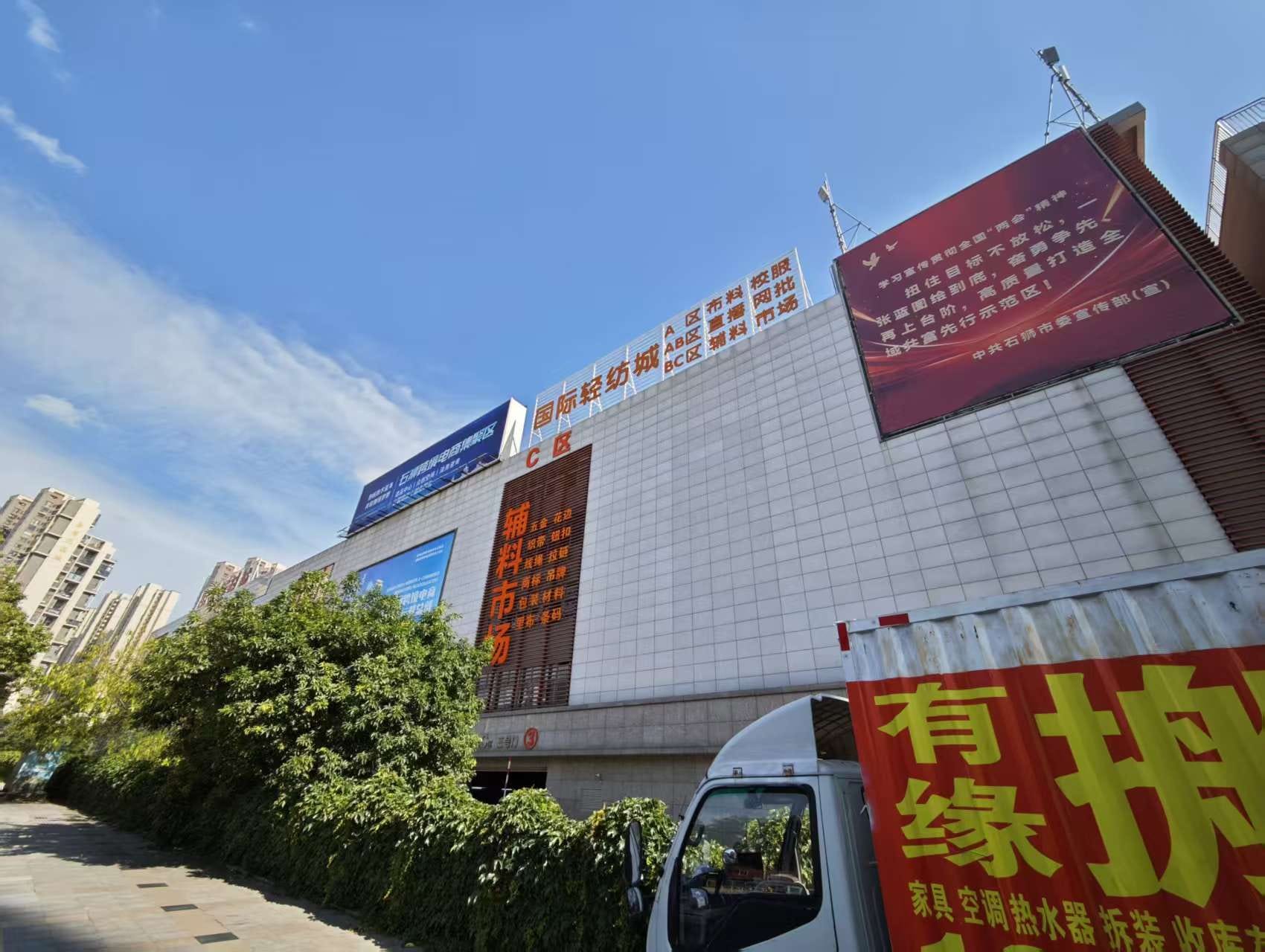
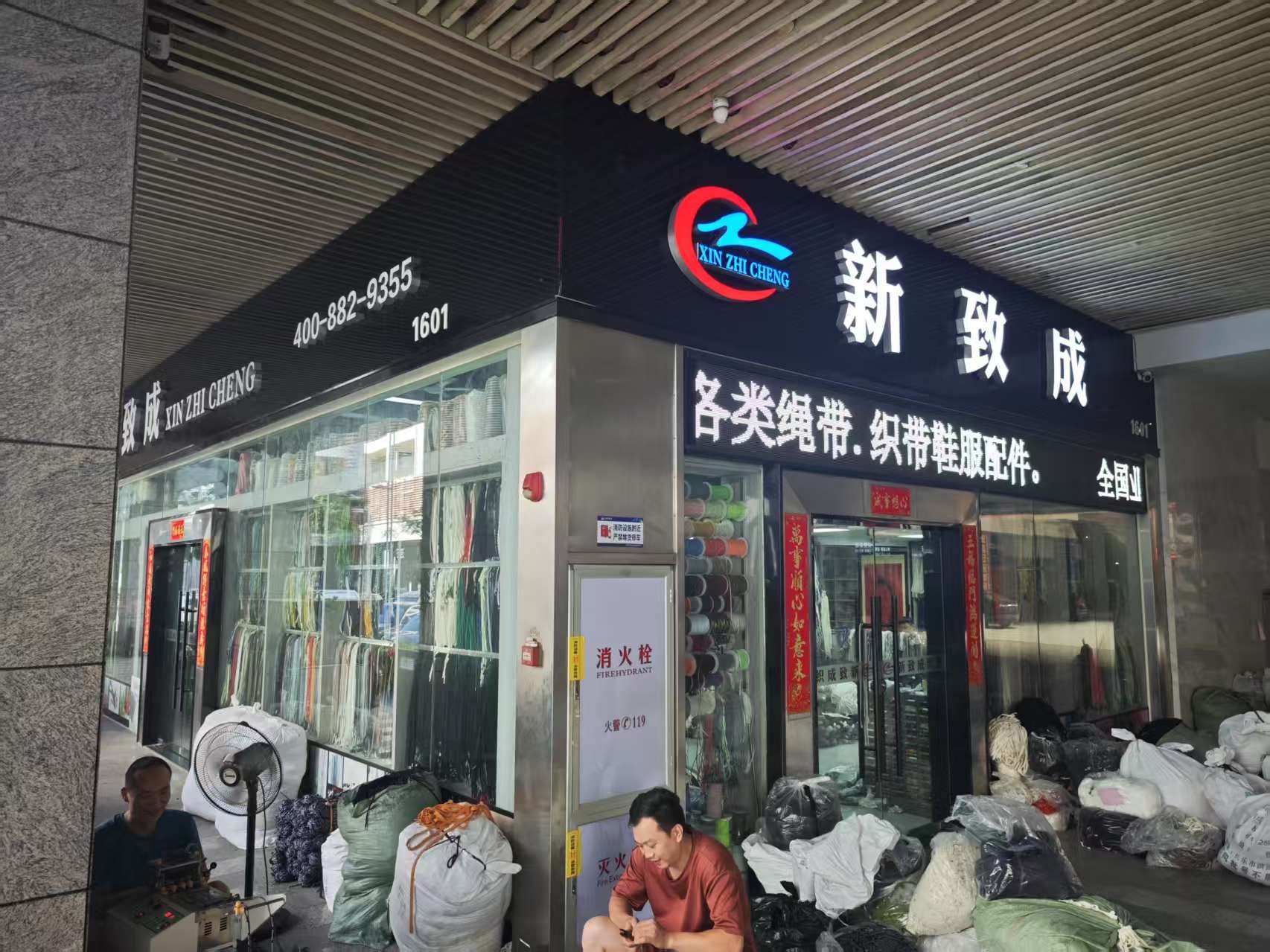
The first mall I entered was the accessories and fabric mall. I wandered, looking for someone who didn’t seem too busy who’d chat with me. After not too long, I found two guys sitting on the ground outside their shop which sold drawstrings (for pant waistbands).
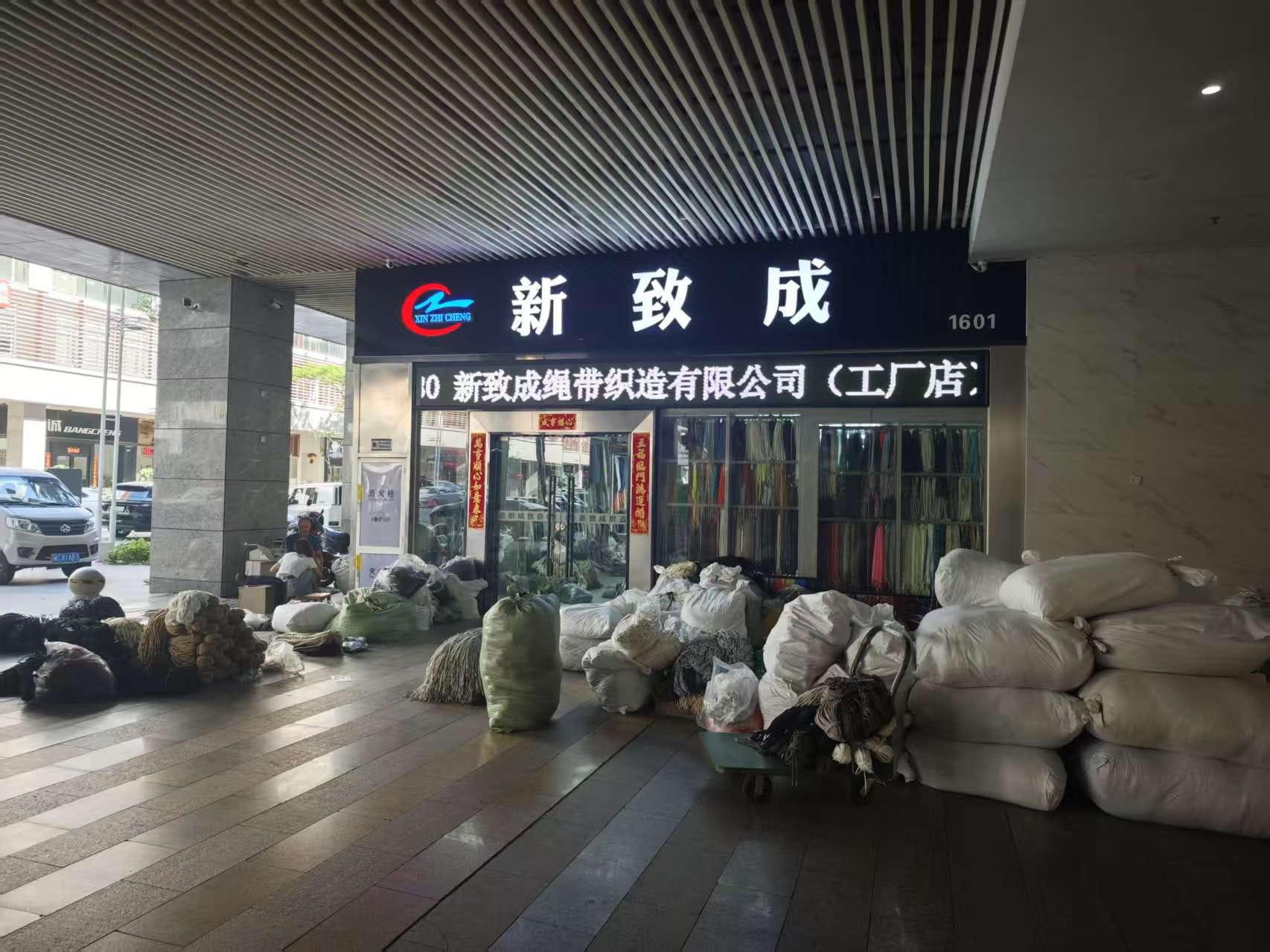
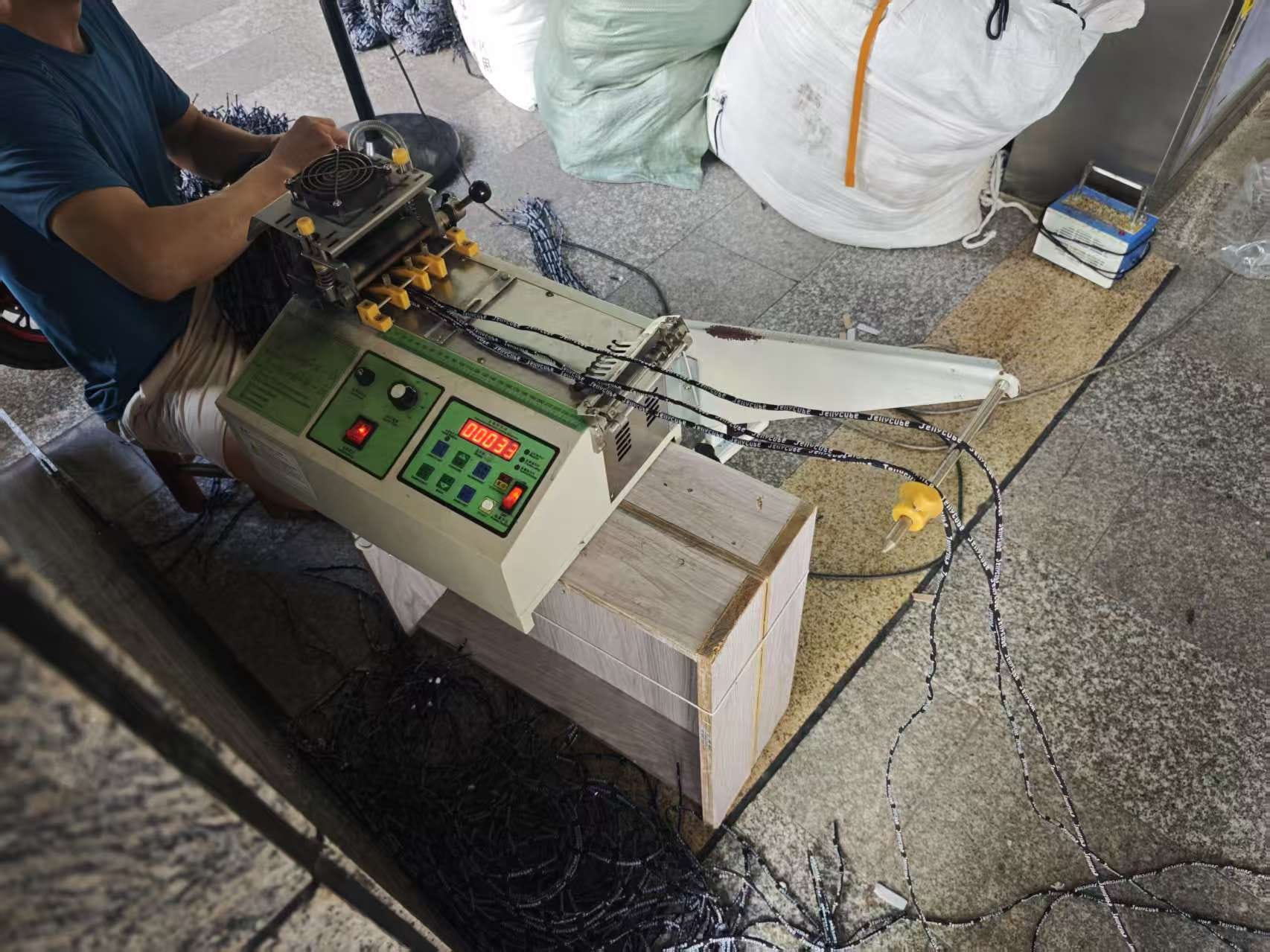
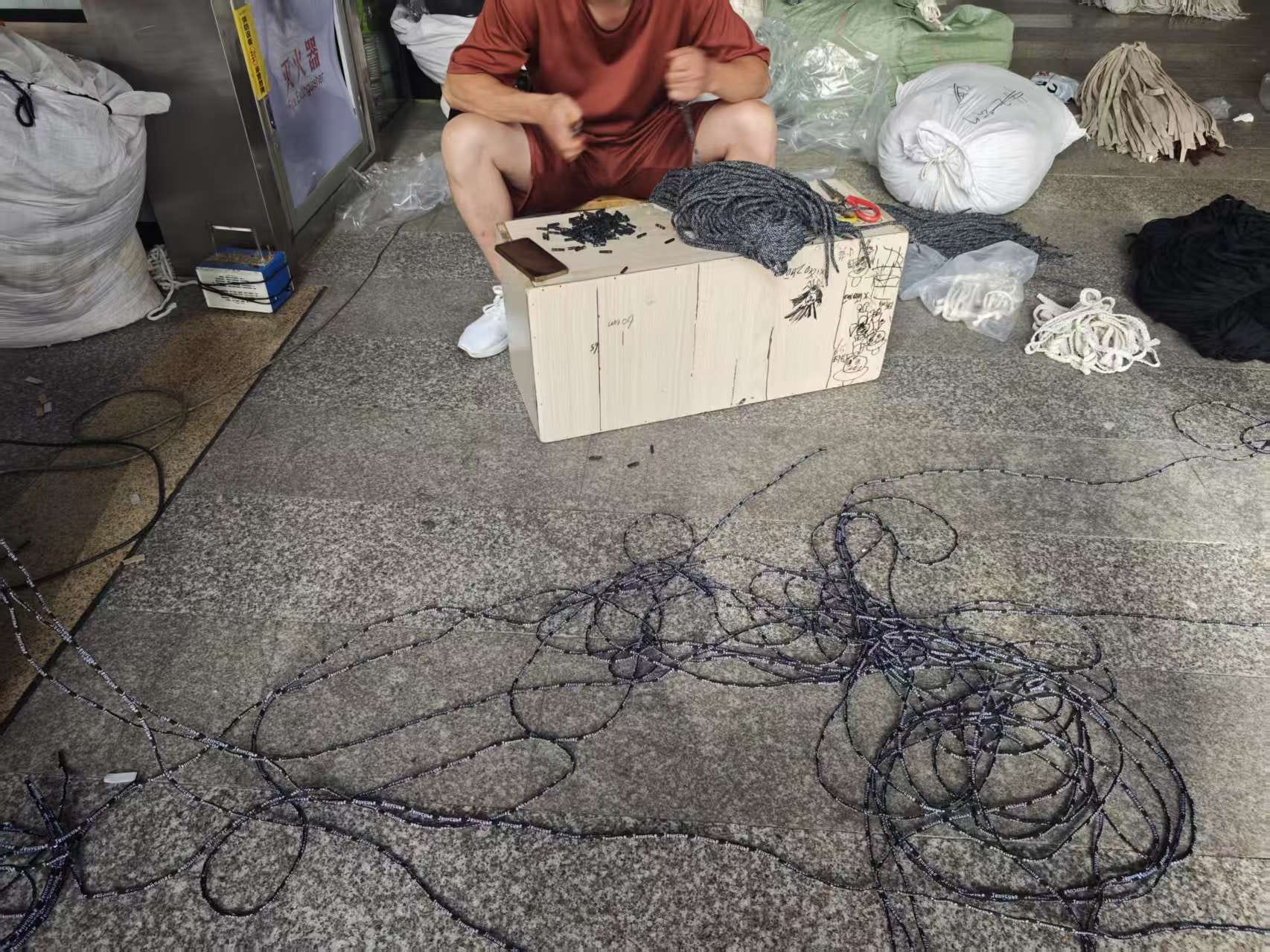
One of them was operating a digital cut-to-length machine, pulling braided cords from three separate piles at once and producing a pile of trimmed cord. The other was meticulously and painstakingly cutting all the aglets (the plastic cap thing) from a bunch of completed cords.
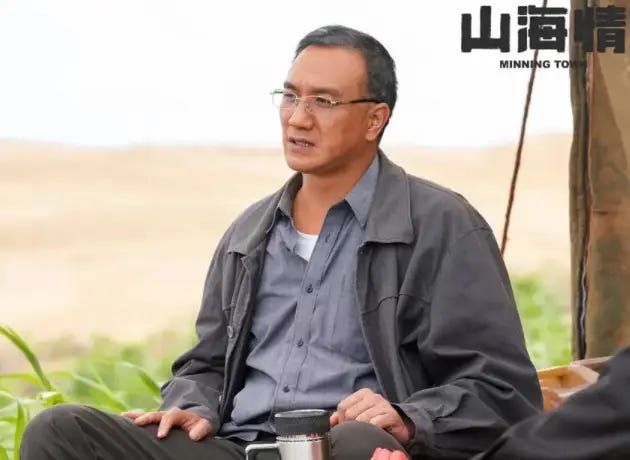
We chatted for a little bit - typical stuff like where I'm from, why do I speak Chinese, how do I like China, etc. They both joked about how proper my Mandarin sounded compared to theirs. The native local language of Shishi is quite similar to other Min Nan dialects spoken in Xiamen, Quanzhou, Zhangzhou, or Taiwan, and native Min Nan speakers often have heavily accented Mandarin, especially if they don't use it often. Indeed, "Fujianese people have barely-comprehensible accents" is such a well-known (and often true) trope that it can be used as a punchline in Chinese TV and movies. See, for instance, the character of the mycology expert Professor Ling in the show Minning Town (although apparently the non-Fujianese actor’s efforts at mimicking a Fujian accent yielded poor results, according to experts on the internet).
I asked them how business had been recently.
“Ah, alright” the one operating the cutting machine responded. “Some reduction recently, because of the trade tariffs. But only for the export orders. The domestic orders are still fine.”
“Last time was worse.” the other one added. “The first tariffs from Trump last time hurt business more. Right now I have more domestic orders.”
I had to go do some internet research to remind myself that Chinese textiles and apparel were indeed tariffed pretty aggressively during Trump 1, from 2018-19, before a deal was reached. It’s hard to keep track of it all sometimes.
“Is this how you normally meet orders? Working a cut-to-measure machine yourself?”
“No, this is for a small order. If it’s a big order, it will be done in the factory. But right now I have some time, so I’ll cut the lengths myself.”
“How long will it take?”
“Not long...I’ll finish these three piles within an hour.”
“And then you still have to add the aglets on the end?”
“Yes. We have different ones for different products. Plastic and metal. These will be used for the strings inside pants, so it will be plastic.”
"What about you?" I asked the other guy. "Why are you cutting the aglets off the ends?"
"Er...it was an mistake. We weren’t supposed to use this one, so I have to remove it."
"Whose mistake? Let me guess...your mistake? Whomever fucked it up has to fix it…that’s the logic, right?”
"Aiii….." he hung his head while the other guy roared with laughter. " Ha! You nailed him! Hahaha.”
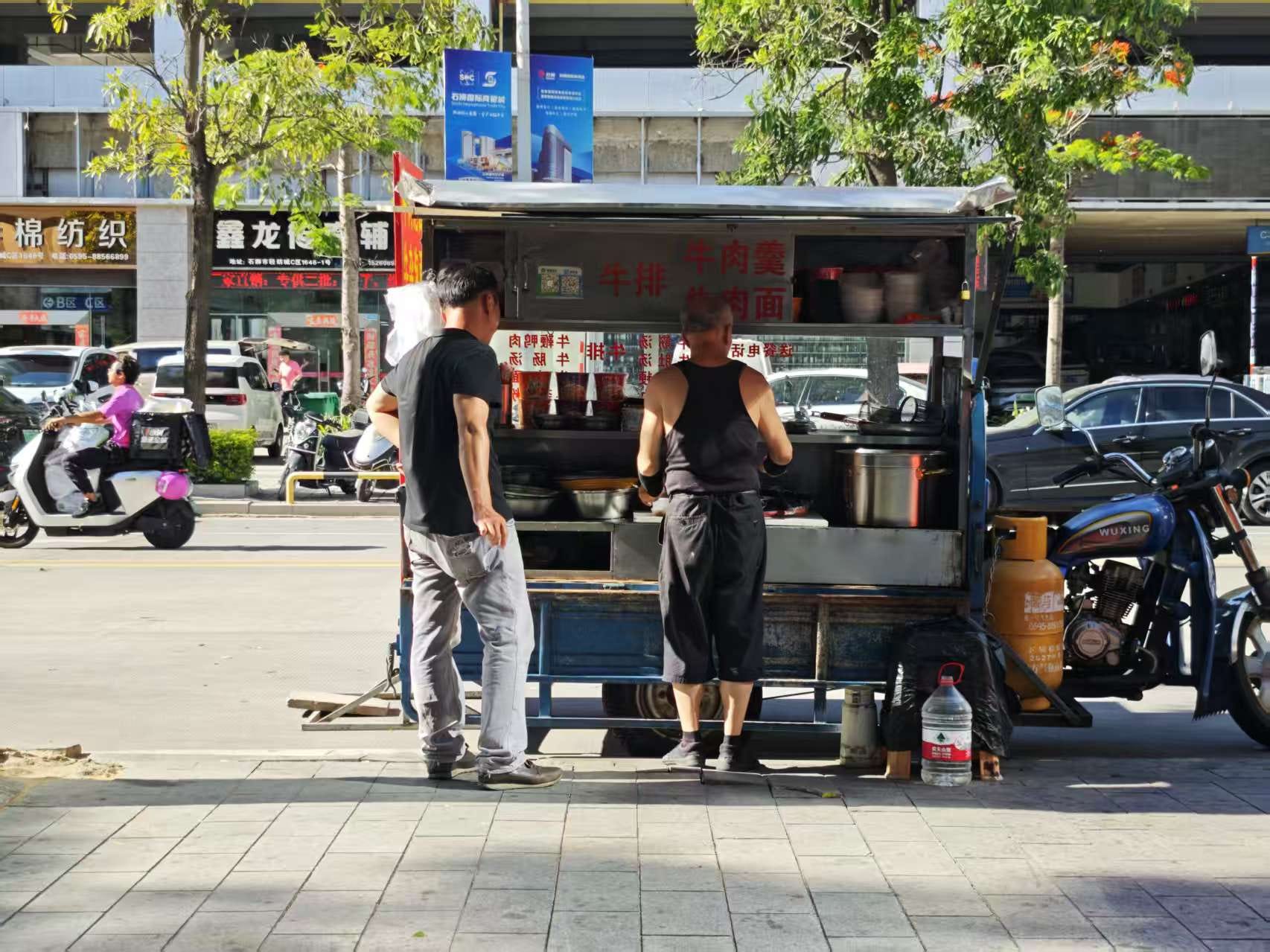
I started feeling hungry, so I asked them for a food suggestion and they pointed me to a parking lot between two of the malls where the workers grab lunch. It was already past 2pm, so once I headed over, I found just one food cart still operating. He was offering various braised meats served over noodles.
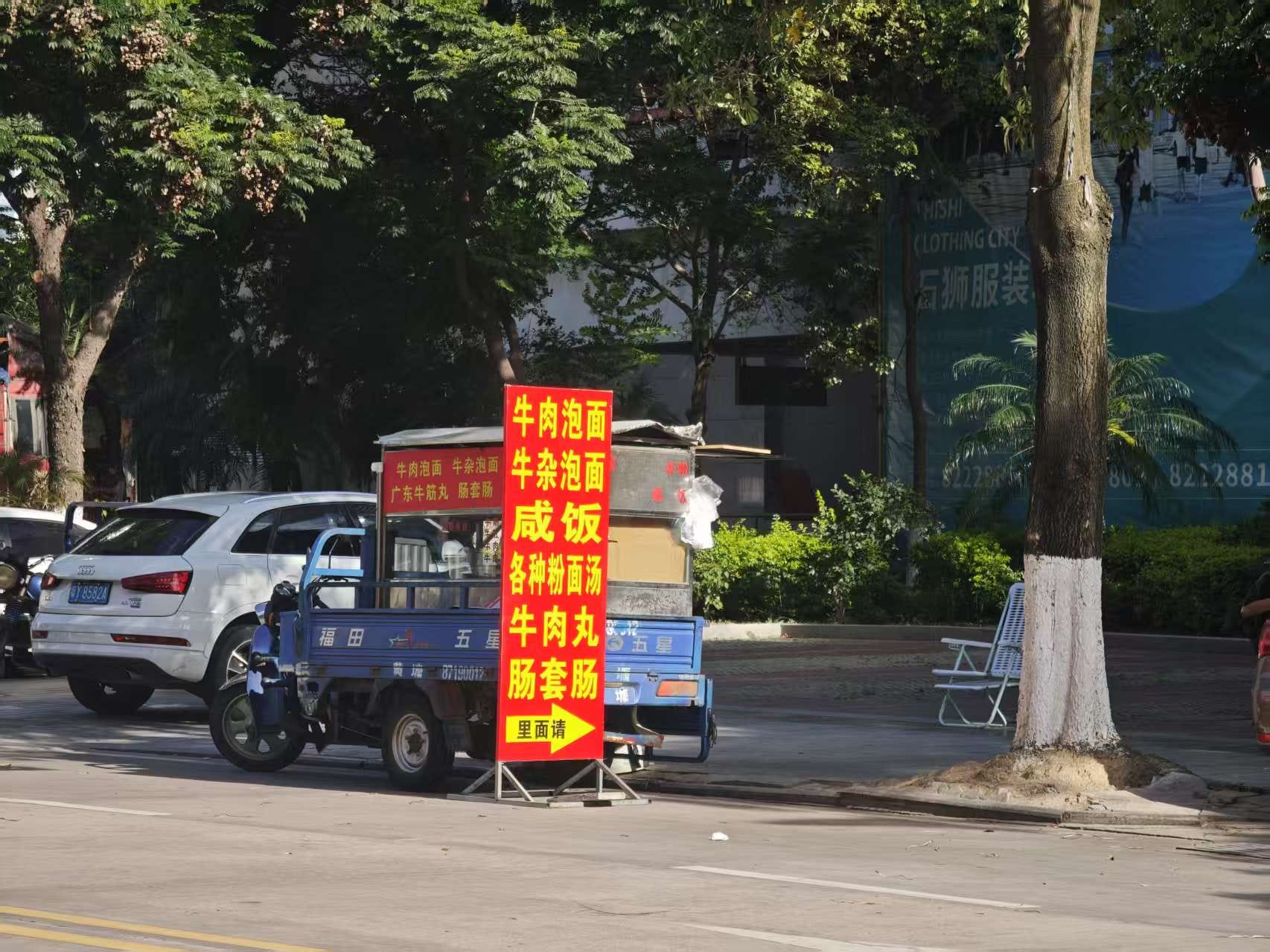
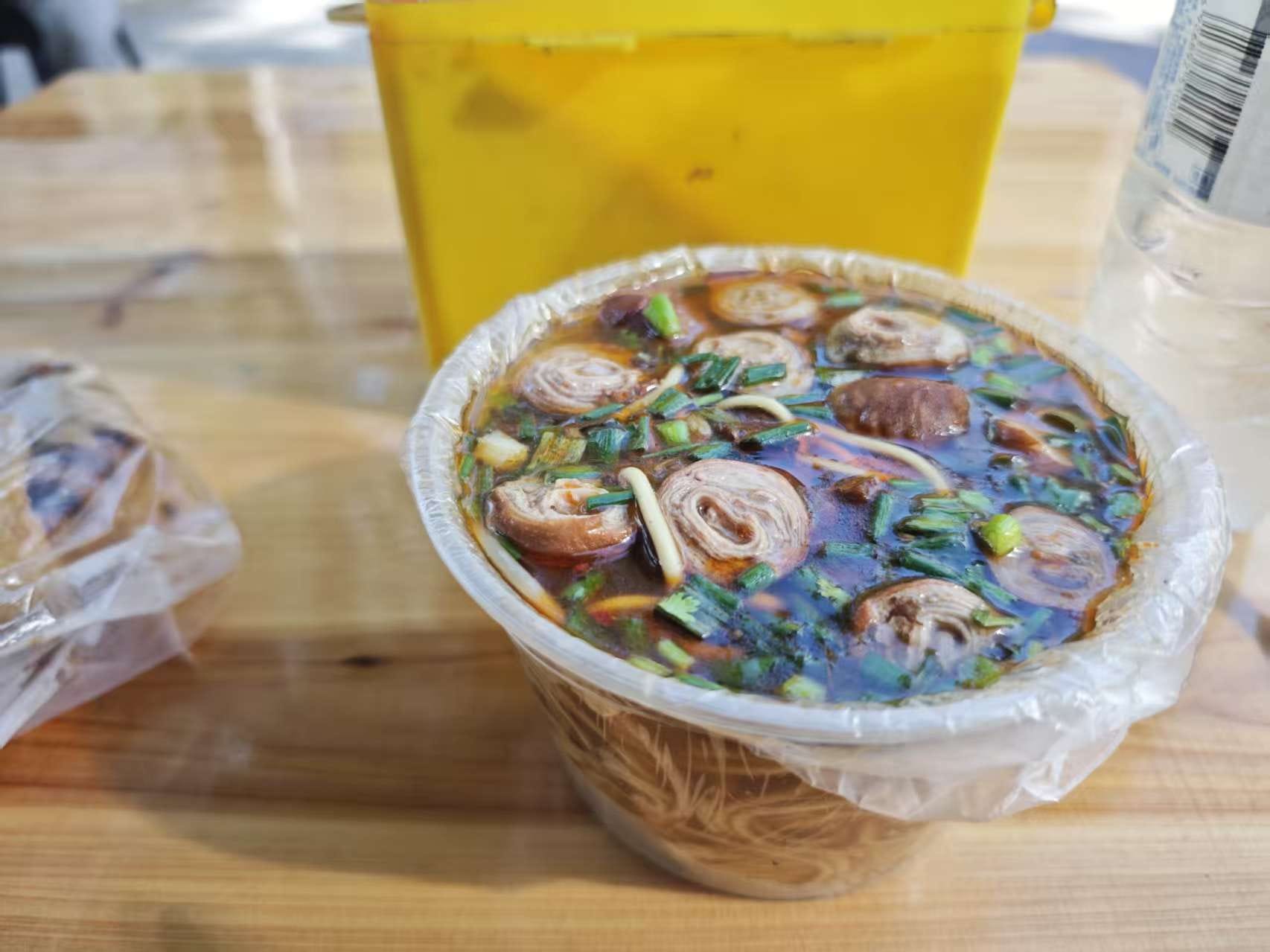
I already knew from some internet research that braised beef intestines are a specialty of this region, and so although they're generally not my favorite, I ordered a bowl of intestines with noodles from Chef Wu. He cooked the noodles in the braising juice, which was a nice touch.
The noodles were served and I discovered to my very happy surprise that the beef intestines were absolutely goddamn excellent. Chewy, springy, beefy, and with none of the off-flavors one associates with poorly prepared offal. Just delicious.
The guy sitting next to me had ordered a bowl of the same and we started chatting. He was a local guy and told me he's very happy living in Shishi. When he was younger, he worked in Hubei for a while but didn't like it and came back. There's plenty of work locally, and more importantly, it's home, so he doesn't want to leave. He mostly does odd jobs, driving, logistics, loading and unloading trucks, stuff like that.
I asked him how important is the garment industry to the local economy, but he wasn’t sure how to answer, so instead I asked him how many of his friends or family are locally employed directly or indirectly in the garments or textiles business.
He thought about it for a second, then replied: "all of them".
I told him the shopping center I had just been wandering through was pretty big, but I hadn’t seen any foreigners...were there more foreigners around here in the past? He shook his head.
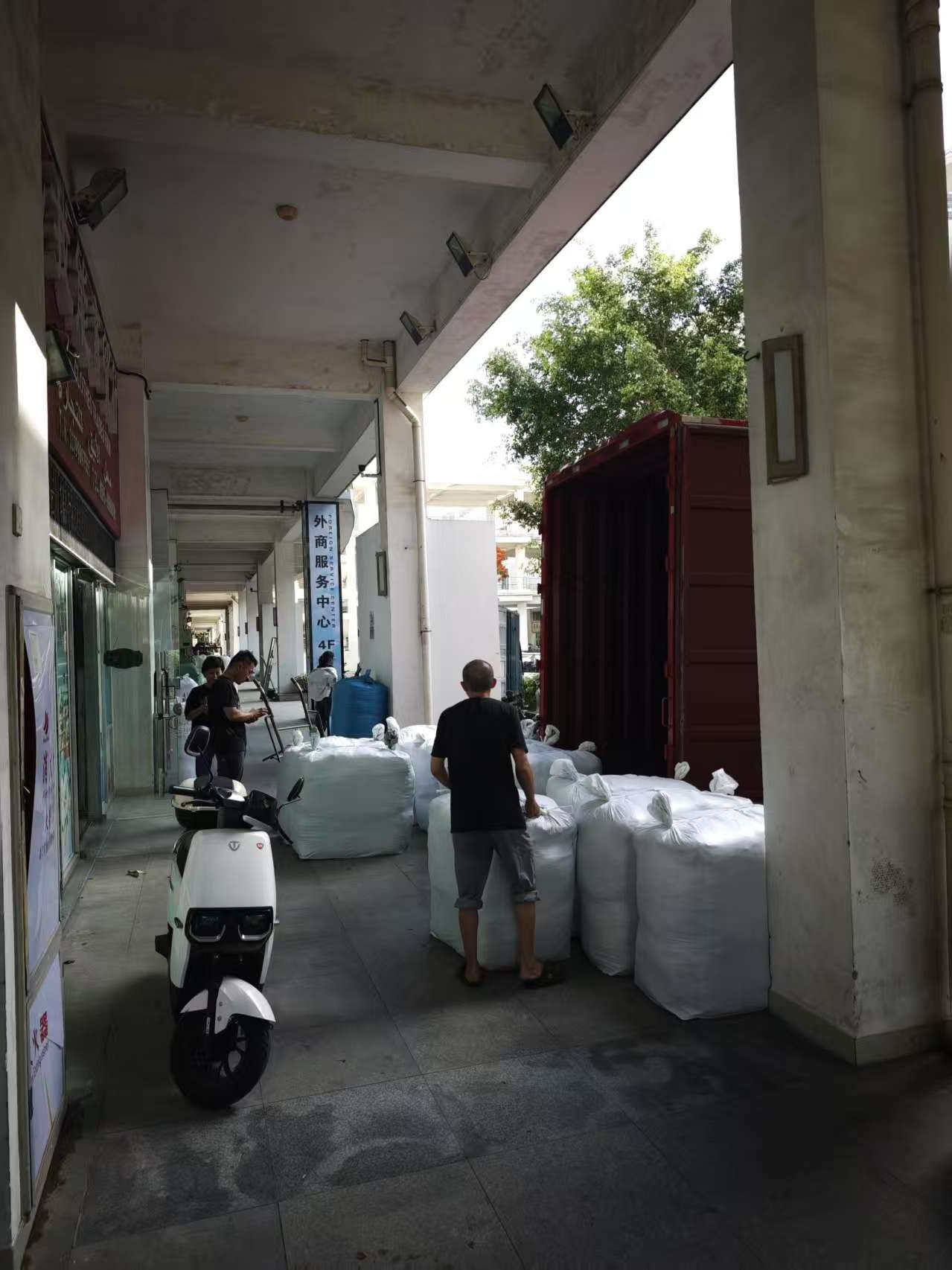
“Just not you were walking in this one, right? That’s just the accessories and cloth market. The export market is this next one, over here. And behind that is the shopping center for the domestic market.”
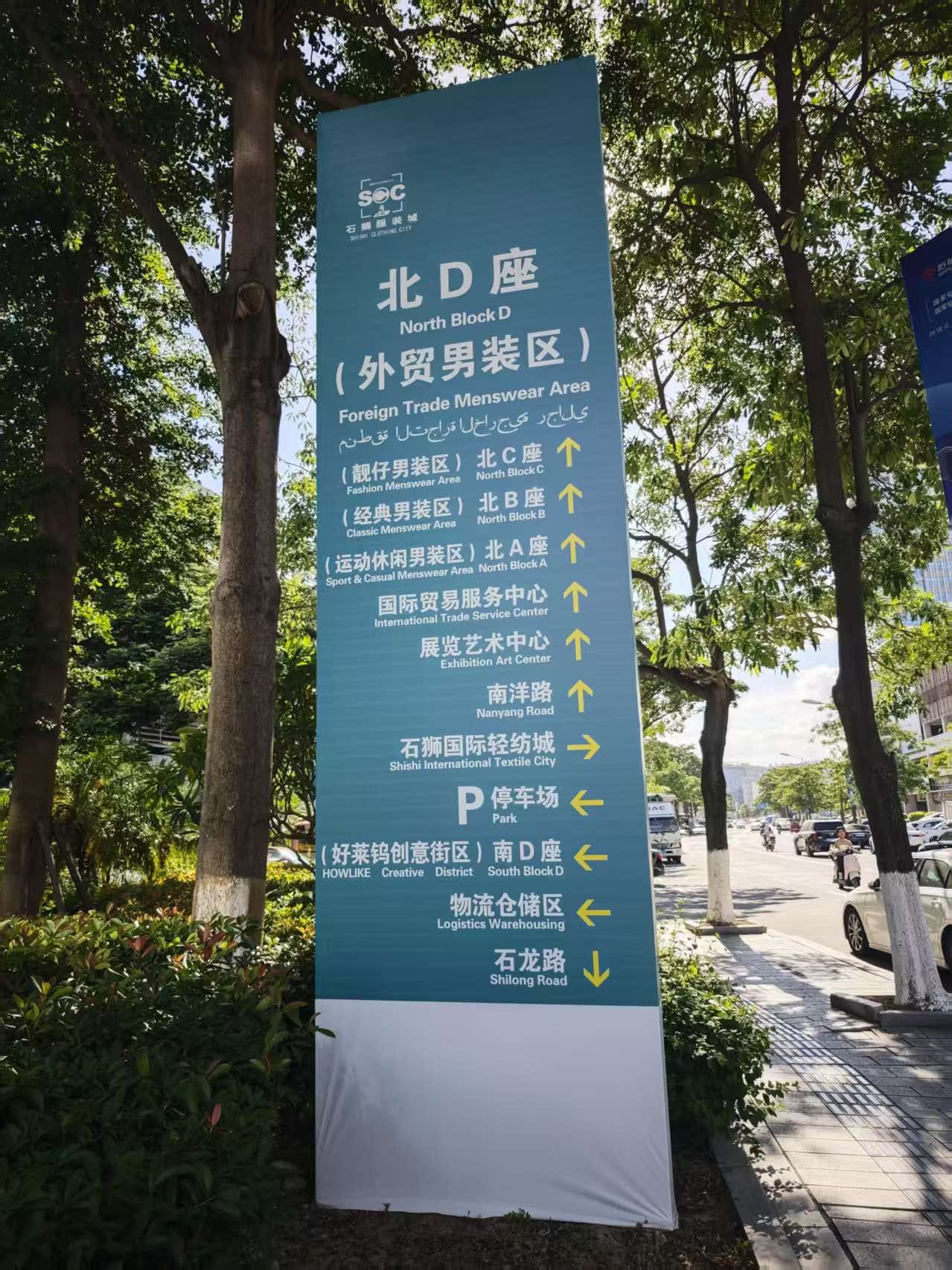
I suddenly realized at that time truly just how large the SCC is. I had been wandering around what I felt was a huge mall when I met the guys at the drawstring shop, but actually that was just one of three similar-sized shopping centers.
“We’re a small city, but we’re still one of the most important ports for the clothing industry. I think we should be #3 in China, after Guangzhou and Xiamen”. He told me there are still many foreigners living and working in Shishi, especially from the Middle East, which is why there are so many shops with Arabic and middle eastern restaurants, but I wouldn’t see them in the shopping center I’d just been exploring.
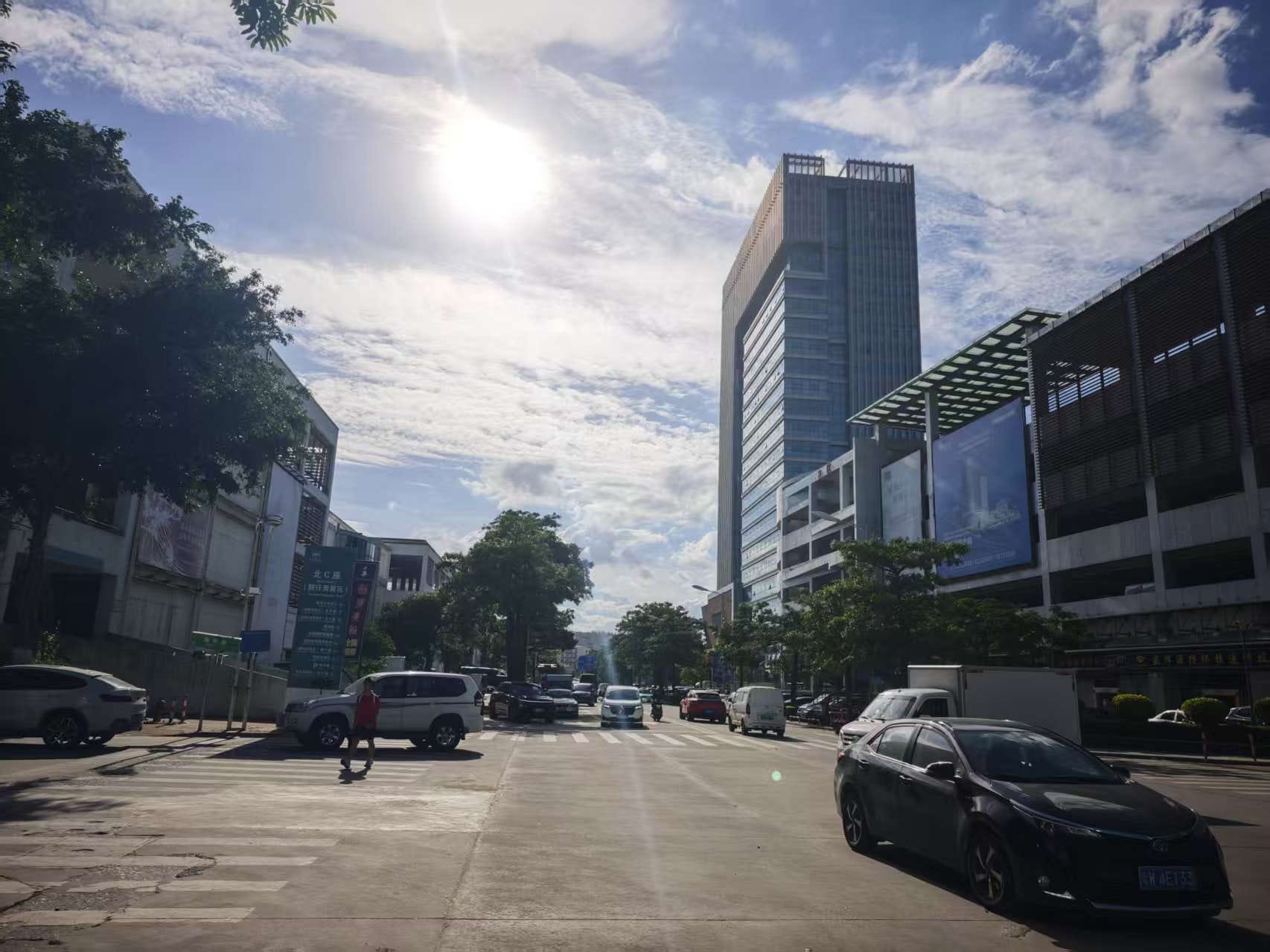
Online, I saw there's also an Arabic cultural center with a mosque and three Christian churches. Shishi has been a trading hub along the Maritime Silk Road for hundreds of years and has the unexpected cultural diversity (for such a small city) to prove it.
I chatted for a bit more about life and work in Shishi with my temporary lunch partner, until he had to get back to work. Before he left, I confirmed with him that he thinks the beef intestines are excellent too. “They’re the best I’ve had” he told me. “Chef Wu cleans and prepares them himself every day, with fresh ingredients - you can’t buy this in a store. You can’t let offal sit for more than one day...it will get gamey. That’s the key to cooking intestines....clean it very well, and use very fresh meat. Okay, I have to go. Take care friend. If it is fated, we shall meet again.” (“有缘我们再见面”)
“He comes every day for lunch” Chef Wu told me once he’d left. “He’s a very loyal customer”. I too had finished my noodles, so I paid the bill and headed on my short drive back to Xiamen. I never would have guessed a small street-side shop in a small stone lion city in Fujian would change my mind about braised beef intestines….!
Anyway, that was Shishi. I sure wish I had more than an afternoon to spend here. Chef Wu’s intestines certainly were a nice final impression of Shishi…even if Chef Wu rarely puts down his cigarette as he cooks - ha.
Unexpected trip you took us on. Thanks!