
This is a repost of a Twitter thread originally published on July 10, 2025. It has been modified slightly for long-essay format.
You’ve heard of Chinese “nail houses” - those local residents whose unwillingness to sell their property block the aspirations of real estate developers, highway builders, and city planners. Contrary to much popular imagination, Chinese property (and land) owners enjoy fairly robust legal property protections and it can be quite difficult to dislodge a resident who is determined to not leave.
The most famous stories are often in rural areas, where standalone nail houses are striking and obvious, requiring highways or railways to make awkward detours to avoid the holdout property. But anyone could become a holdout, including someone in an apartment in the Shanghai old city.
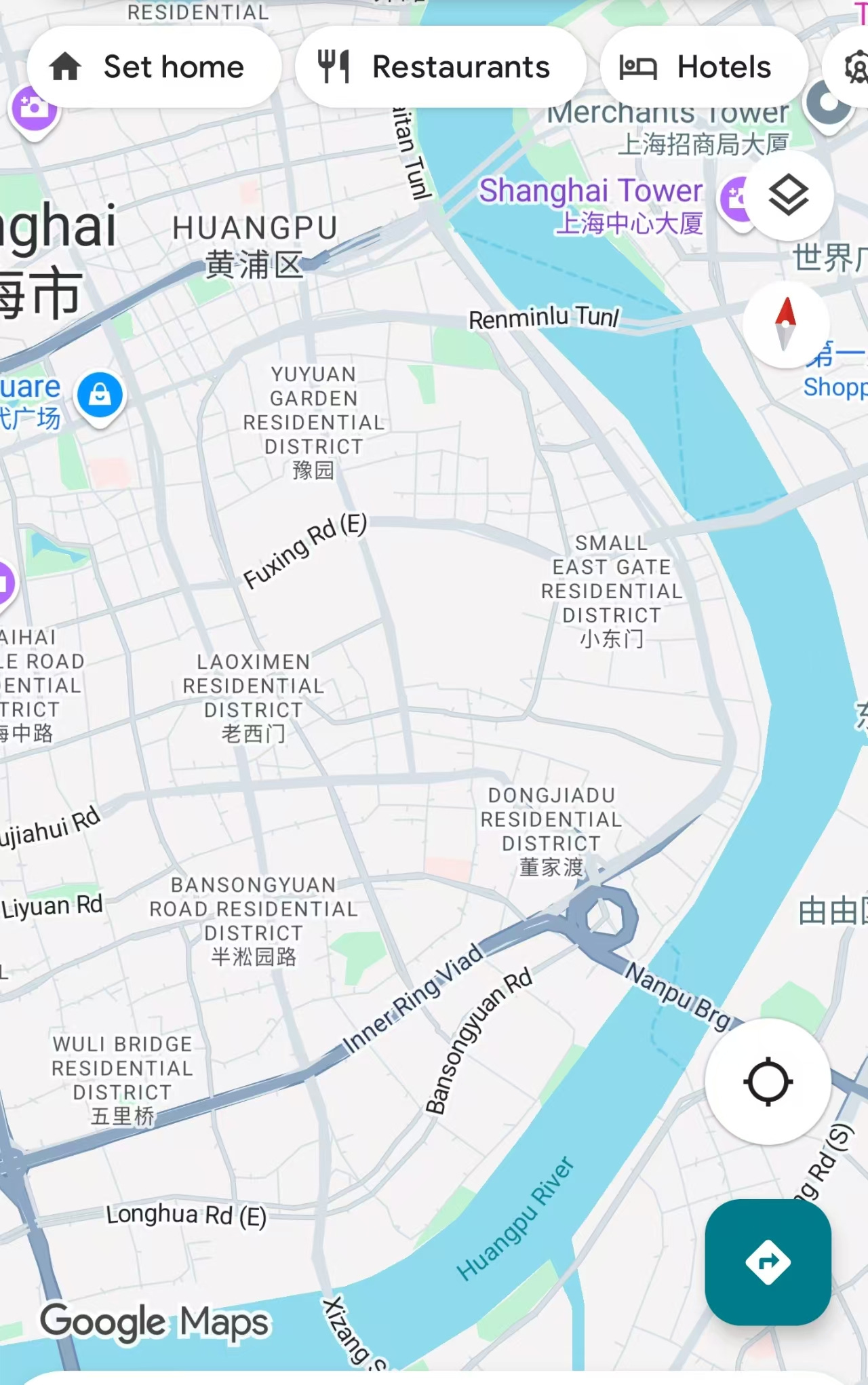
When I say “Shanghai old city”, I’m referring to the eastern part of the modern-day Huangpu District south of Renmin Road (strictly speaking, the part of Huangpu that used to be Luwan District before they were merged in 2011). This roughly the neighborhood where the ancient Shanghai city wall used to stand. Looking at a map these days, you can still trace the oval shape where the old city wall once stood, following the routes of the modern Zhonghua and Renmin Roads. Even today, neighborhoods in this part of the city still refer to “gates” that were torn down 100+ years ago, but beyond this, scant other evidence of this city wall remains.
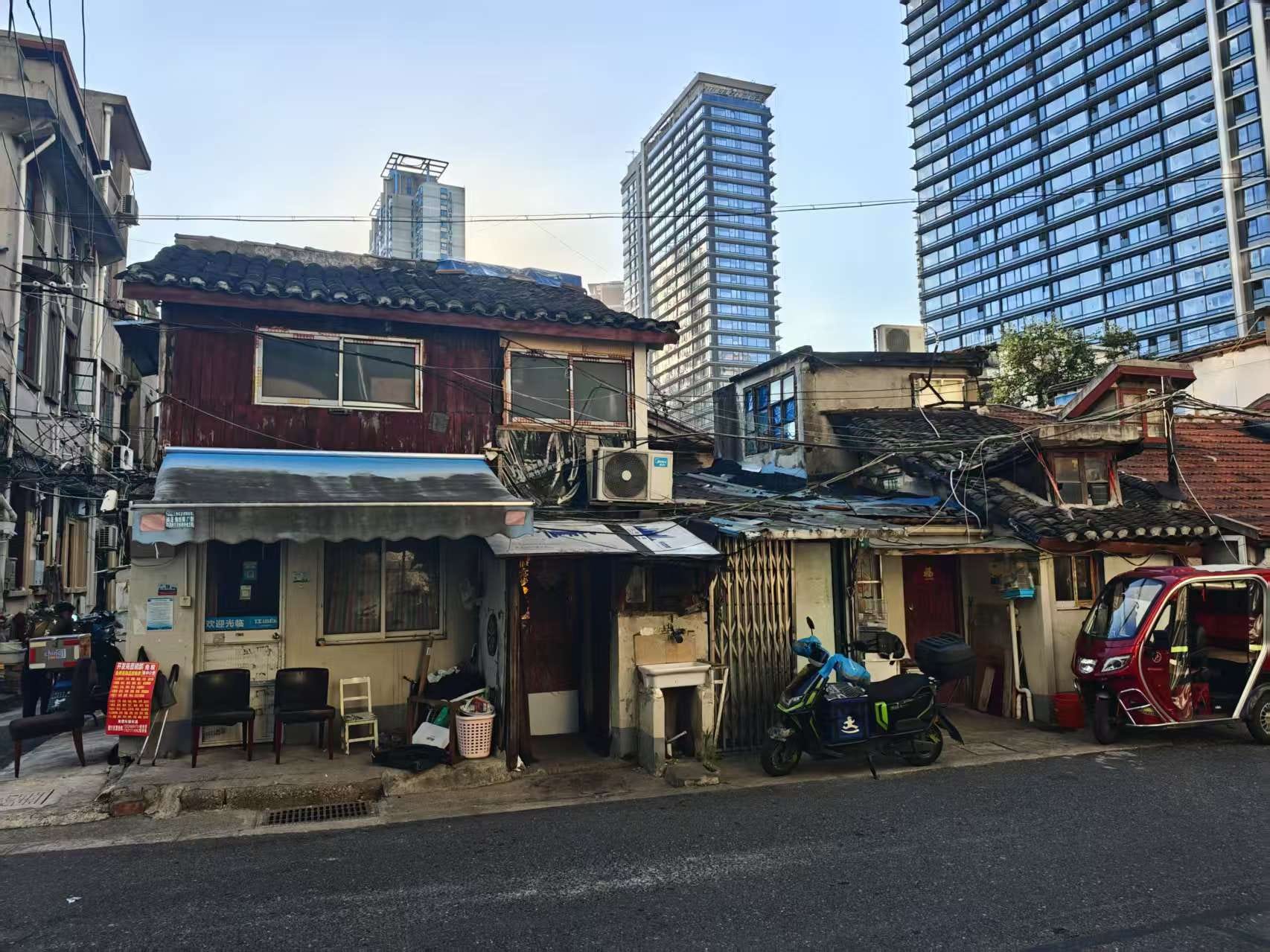
There's also now very little left of the old residential neighborhoods in this part of the city. With the South Bund development growing to the east and Xintiandi expanding to the west, these areas have been nibbled away bit by bit over the last decades until now almost nothing is left.
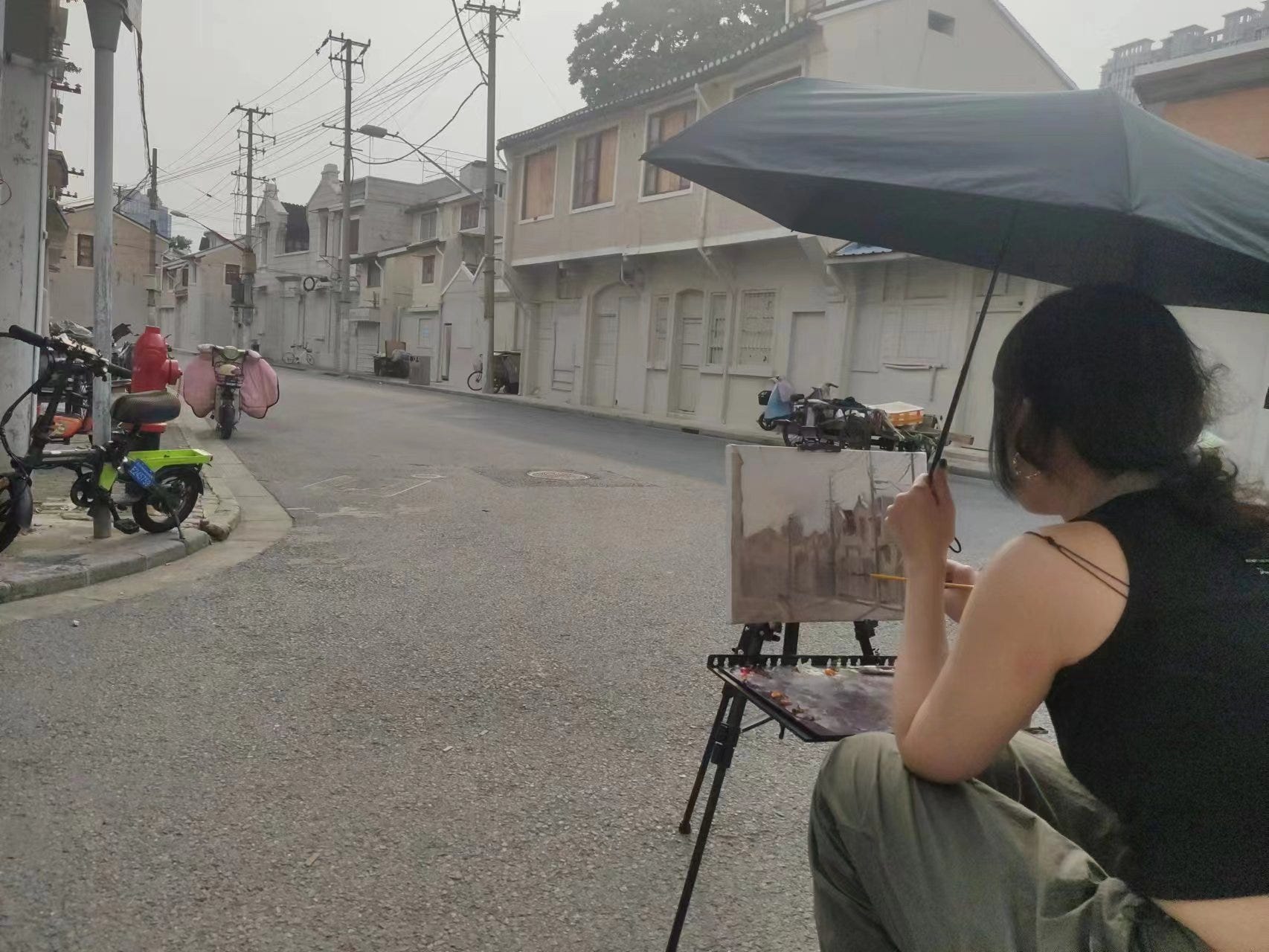
But you won’t find me waxing romantic about the renovation of these neighborhoods. As I’ve said before on here, these weren’t really nice places to live. They were indeed the closest thing to slums you’ll find in downtown Shanghai, and relocation to a new place in the suburbs is usually an upgrade - one usually welcomed by the former residents.
But not always. What happens if the locals don’t want to move?
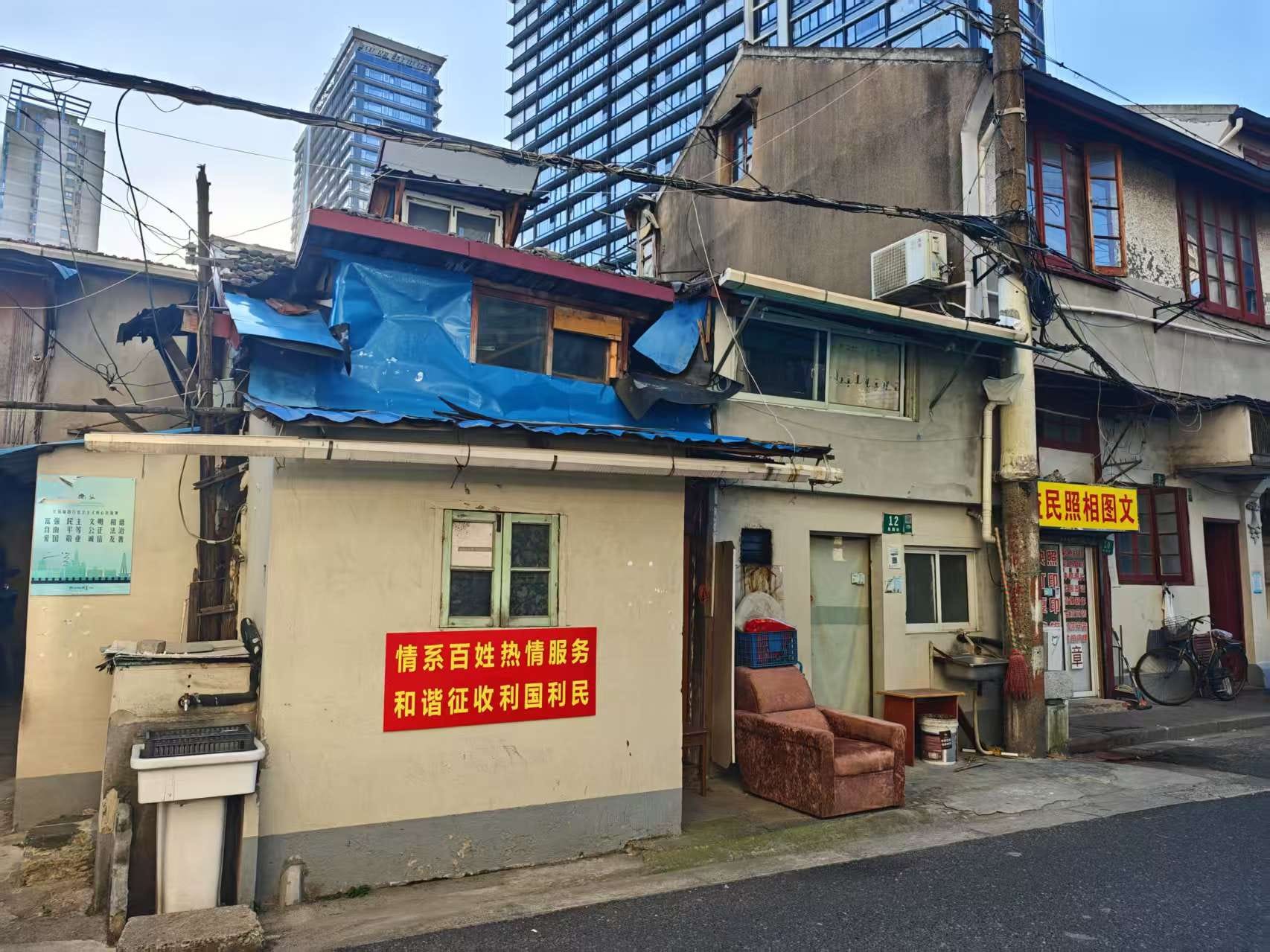
On a recent walk through one of the condemned neighborhoods, I was surprised to find the gates to an apartment community still open, although all the shops and apartment windows were already boarded over/bricked up. I figured I could just walk in and check it out.
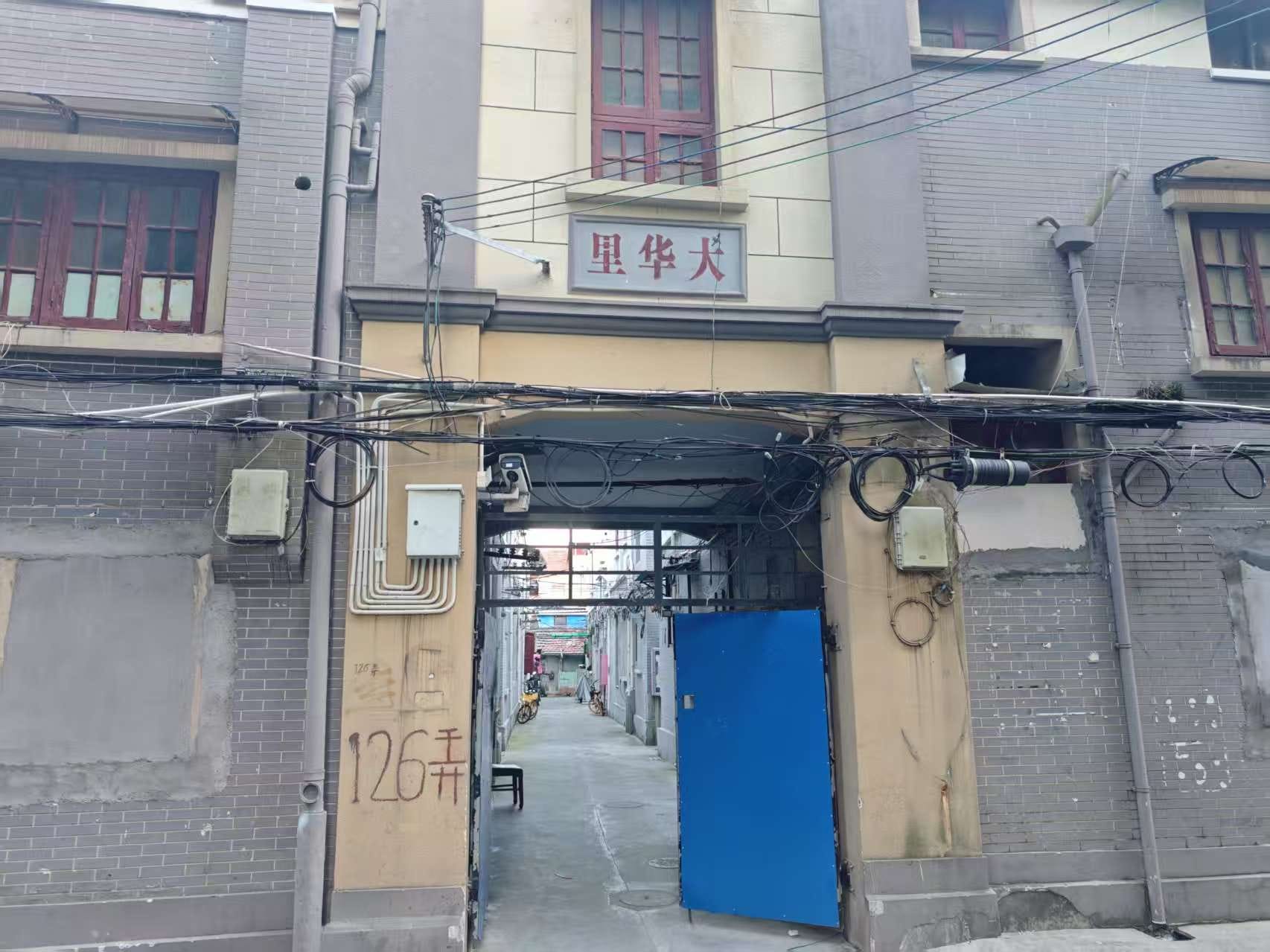
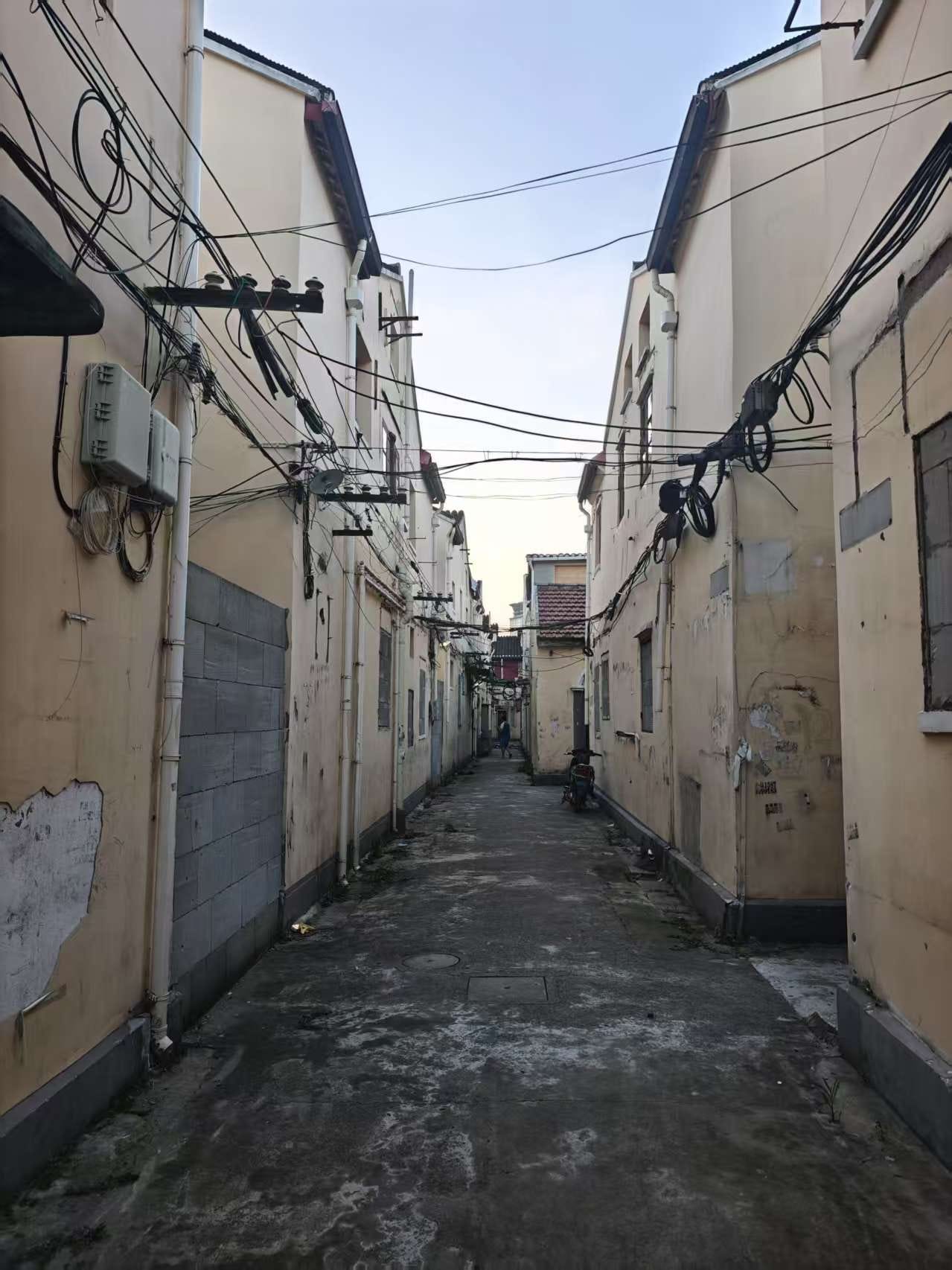
After a minute of wandering around, I realize there are actually still people living in here...a handful of holdouts living down an otherwise eerily quiet, desolate alley where the only apparent movement is the furtive scurrying of a dirty stray cat. From behind a few bricked-up doorways, I hear voices…but saw no people.
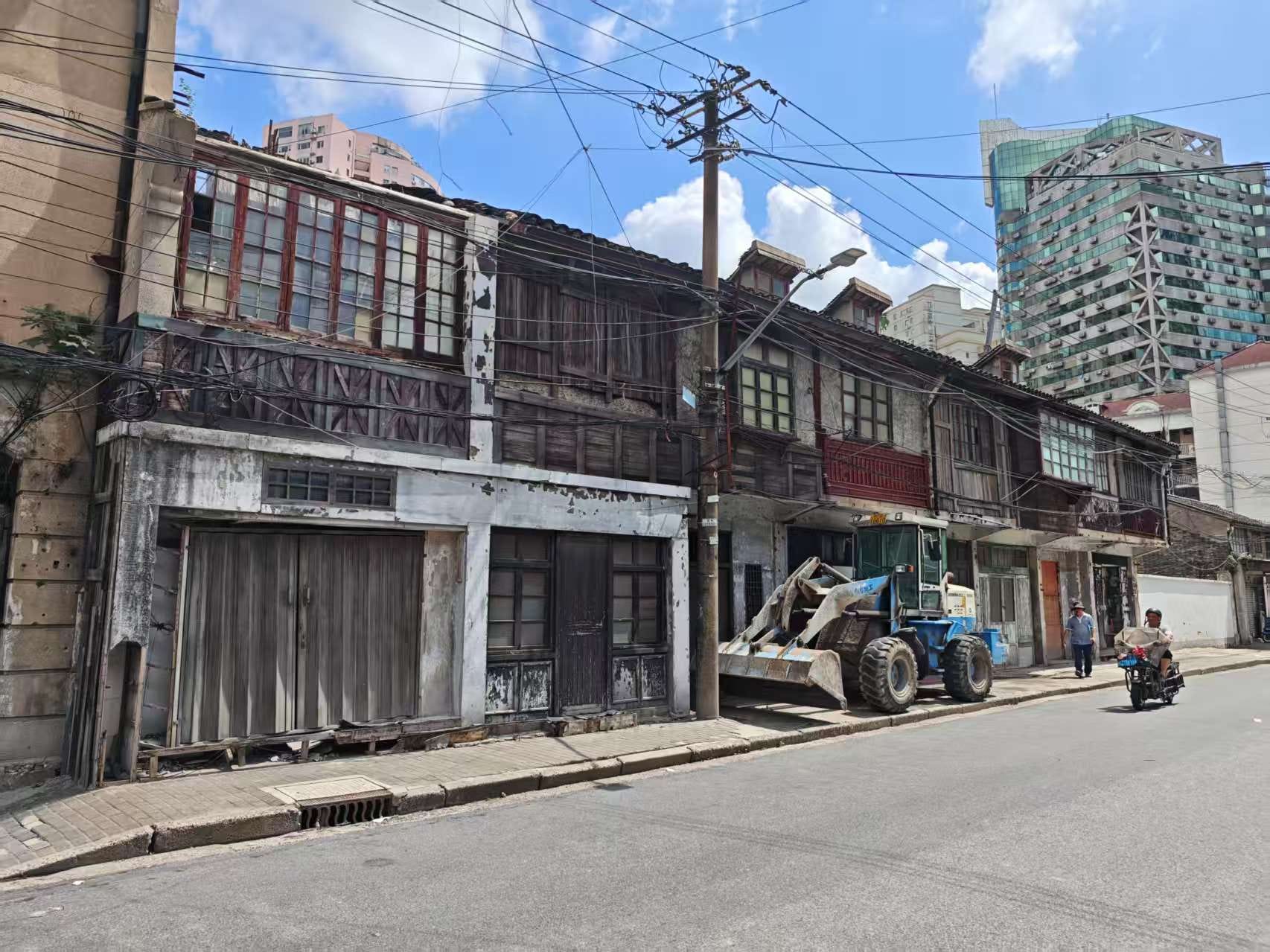
Finally, deep in one of the side alleys, I spot a human being, a guy just seemingly just a few years than I, in flip-flops and a t-shirt, leaning on a building and swiping on his phone.
He nods and smiles as I walk past, so I try to chat with him.
"Hey, what's going on here? Will this all be torn down?"
"Yeah this will all be destroyed"
"When?"
"I don't know...still a while I guess. No rush."
"Where is everyone else?"
"They already left...they moved away"
"But you're still here? How many people are still here?"
"Ah there are still a few. Here...2 households. There, 3." He points to the next alley.
"There are also some people living here secretly. They moved out, at first but then they came back here to live after a while when they say that the demolition hadn’t started. It's not legal, but no one minds."
"Yes, I heard some voices from apartments that I thought were sealed. So they're inside? Do they have power and water?"
"No, those are disconnected when they move out. It's mostly elderly people, who miss their old home."
"I guess more than 90% of people have left already? So why haven't you left? Nostalgia?"
"No, the developer did not give me a suitable offer"
"Right, they have to compensate you. Give you a new apartment...in the suburbs somewhere like Songjiang. Or give you cash. Right?"
"Yes. But if it's an apartment in the suburbs, it should be in a reasonable place. Not too far. And not smaller than my current home. And if it's cash, it should also be reasonable."
"So you're still here...I guess you don't think it's reasonable?"
"No, not reasonable."
"Almost everyone else left already. So they got some offer that they think is reasonable, but you haven't? Are you hoping for more compensation?"
"At the beginning, the developer promised everyone would get a good compensation, but they didn't define how it would be calculated."
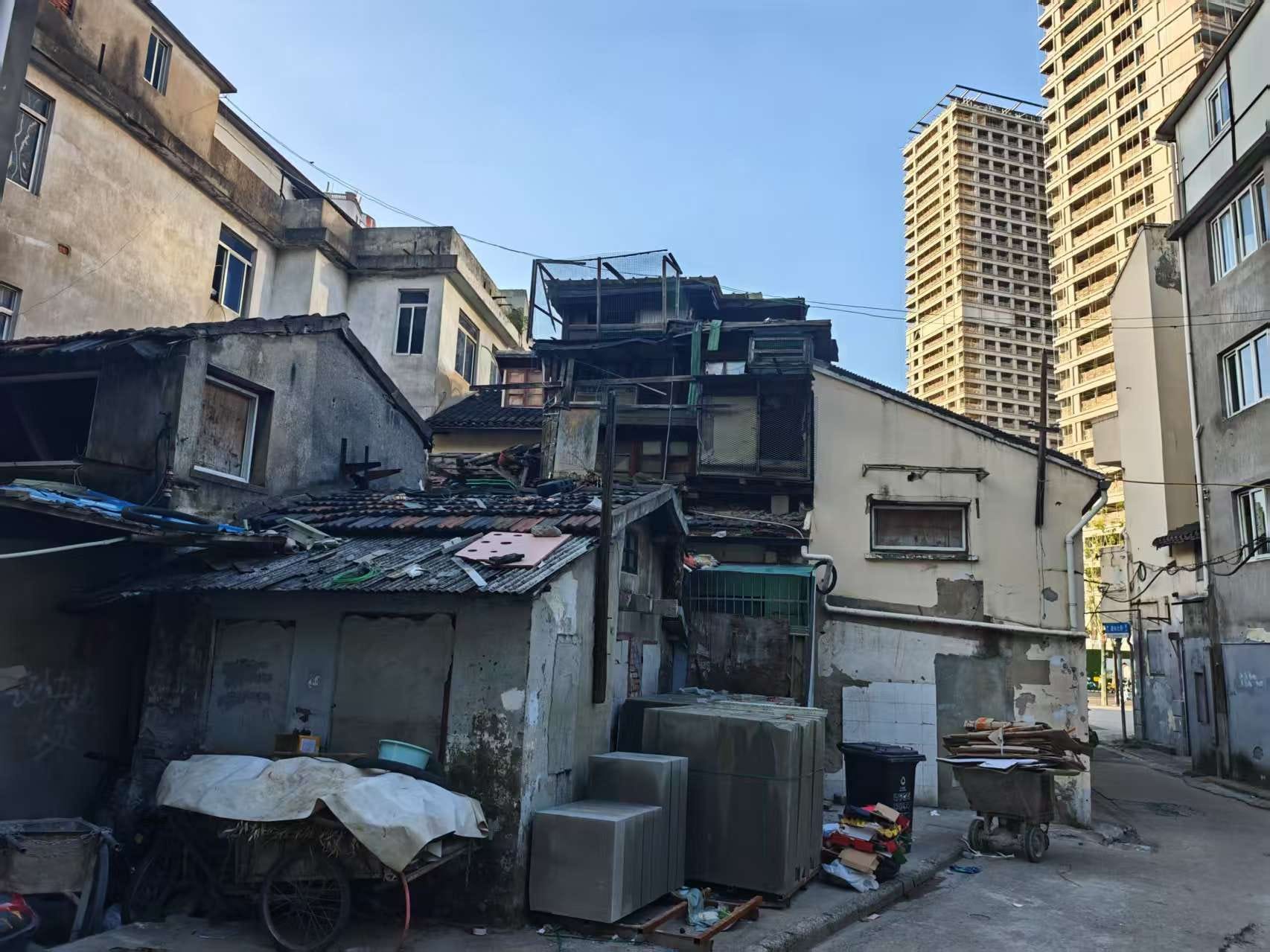
“Yes it’s true that the Communist Party gave me this house, but now they say I should give it up. I’m not against it in principle, but it must be reasonable.”
“Oh, your family was allocated this house back during the property distribution in the 1950s?”
“Yes, it was taken from the landlord and given to my family. The landlords owned many houses. You can still see their big houses around here too.”
“Where I live over in Jingan District, we have many old mansions that used to be owned by wealthy people, industrialists, that have been divided up into multiple apartments that still have many units today.”
“Yes, some of the landlord houses around here are also divided into multiple apartments”
"So why do you think the developer's offer is unreasonable?
"They are only offering 60,000 per square meter. That seems too low...if they build apartments here, they will surely be worth at least 200,000 per square meter. But worse than that, they aren't even calculating the area of my home correctly"
"They say your house is smaller than you think it is?"
"Exactly. We've lived here 70 years. My family made many upgrades to the house over time, expanded its size. But they only acknowledge the original design drawings"
"The original blueprints...? Like from 1950?"
"Yes, basically like the original blueprints. 60k per square meter perhaps is ok if you credit my entire house. But you can't just offer me something based on old drawings...that isn't even what my house looks like!"
[I want to soberly point out the renovations performed on his house over the decades were probably illegal or non-permitted construction activities, else the drawings on file WOULD reflect his home's current layout and this exact issue wouldn't exist].
"So what will you do? Do they send some people to threaten you?"
"Ha, kind of. The developer doesn't dare to do it directly. They hire a subcontractor who hires a subcontractor who will hire some guys who will come and harass you, push you to accept the offer and move."
"So they're thugs? Are they violent?"
"No, not anymore. In the old days, they would be violent. But now there are cameras everywhere, even here" (he points). 'So they are just annoying to me. They knock on your door, ask you to come out and talk, even at night."
"What about the local government? What do they say?"
"Hah. The officials can't do anything. You know unless they are high level in Beijing, or in the Shanghai city committee, the local officials are basically just regular people, laobaixing like you and me. They come here to try mediate the problem...well actually they can only say some useless things like 'Ah...you are all reasonable people. Discuss this well! Discuss it well!* I'm sure you can find a way.' And then they leave. They are helpless."
(*”好好谈一谈, 好好谈一谈, 肯定有办法”)
He continues. "The government used to have more money. The property developers had more money too. If they needed to destroy your house, you could get rich...buy 2 or 3 houses. Now they have no money...so they’ve become stingy."
"So it's impossible to resolve? You need more money. They don't have it."
"Yes"
"Do you know what they plan to do with this area? It's actually a really good location...close to the Confucius Temple...good tourist value. Also...isn't this a shikumen community? I thought those were protected in Shanghai."
"Yes...it's shikumen. But it's not protected like the ones in Tianzifang or Xintiandi. It's just a regular community. However, the Confucius Temple is just across the street...it just finished its refurbishment. I should visit...I haven't yet."
"I would think they would choose to refurbish it, instead of destroy it. But I guess this area is indeed going to be destroyed? It's 拆迁, not 旧改, right?"
"Yes this is 动迁. Destroy the house and move the people. If it is 旧改, they will refurbish and the people move back later."
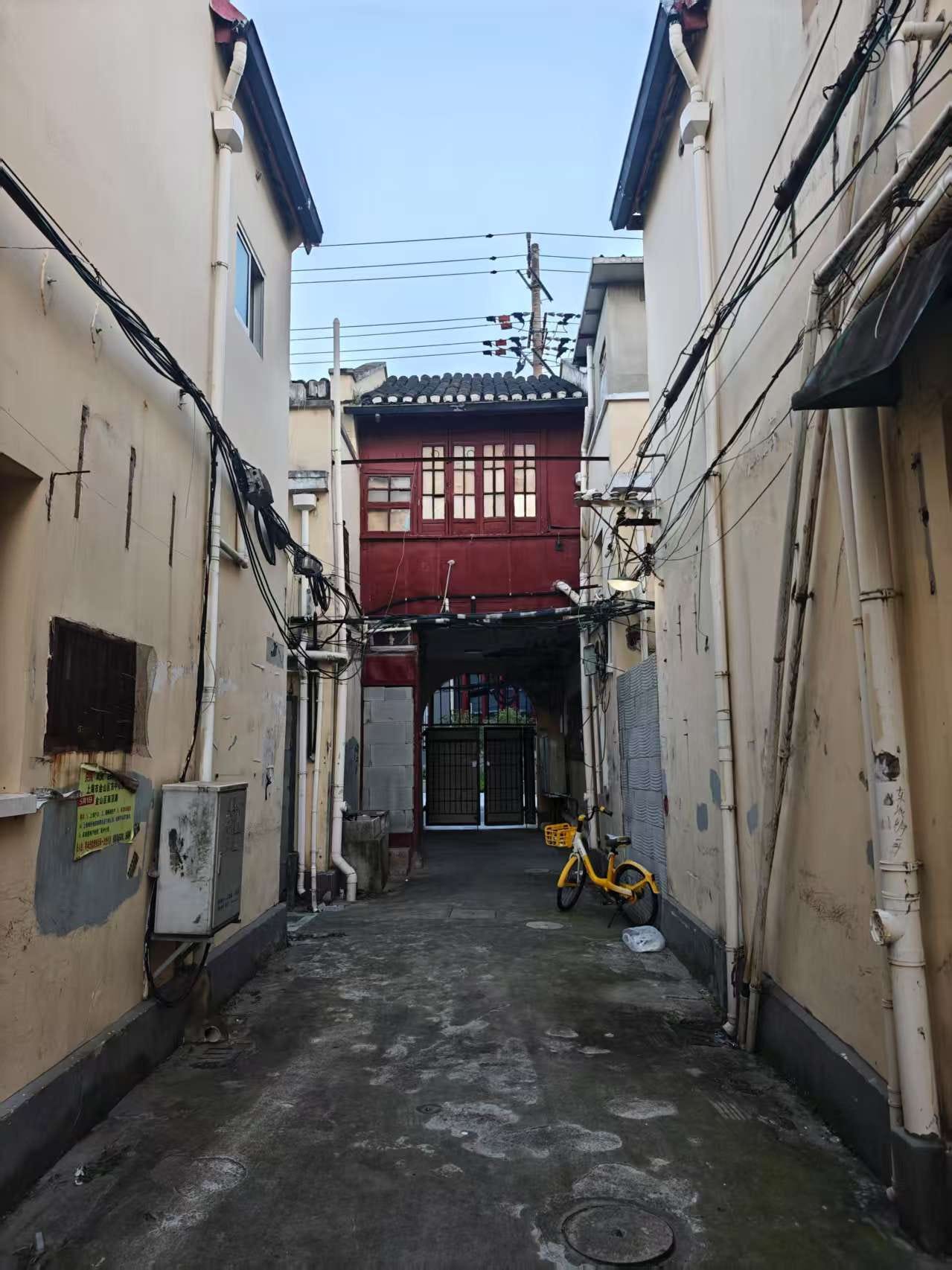
“Well...good luck I guess. I’ll keep walking around now”
“Okay, good to meet you friend. Can I add your WeChat?”
“Uhm…sure.”
He unexpectedly switches to English, reminding me that I’m not in a random tier 4 city in central China…this is Shanghai, where English is common.
“My name is Jarvis. Nice to meet you.”
[Fascinatingly, Jarvis has a slight stutter in Chinese that disappears when he speaks English]
“Oh you speak English! Nice to meet you Jarvis. Uh... Jarvis, huh? Like in that movie...uhh...”
“Yes, like in Iron Man. But I choose this name a long time ago, when I was a student. Before the movie came out.”
“Hah, okay. Well, nice to you meet you Jarvis. Stay in touch”
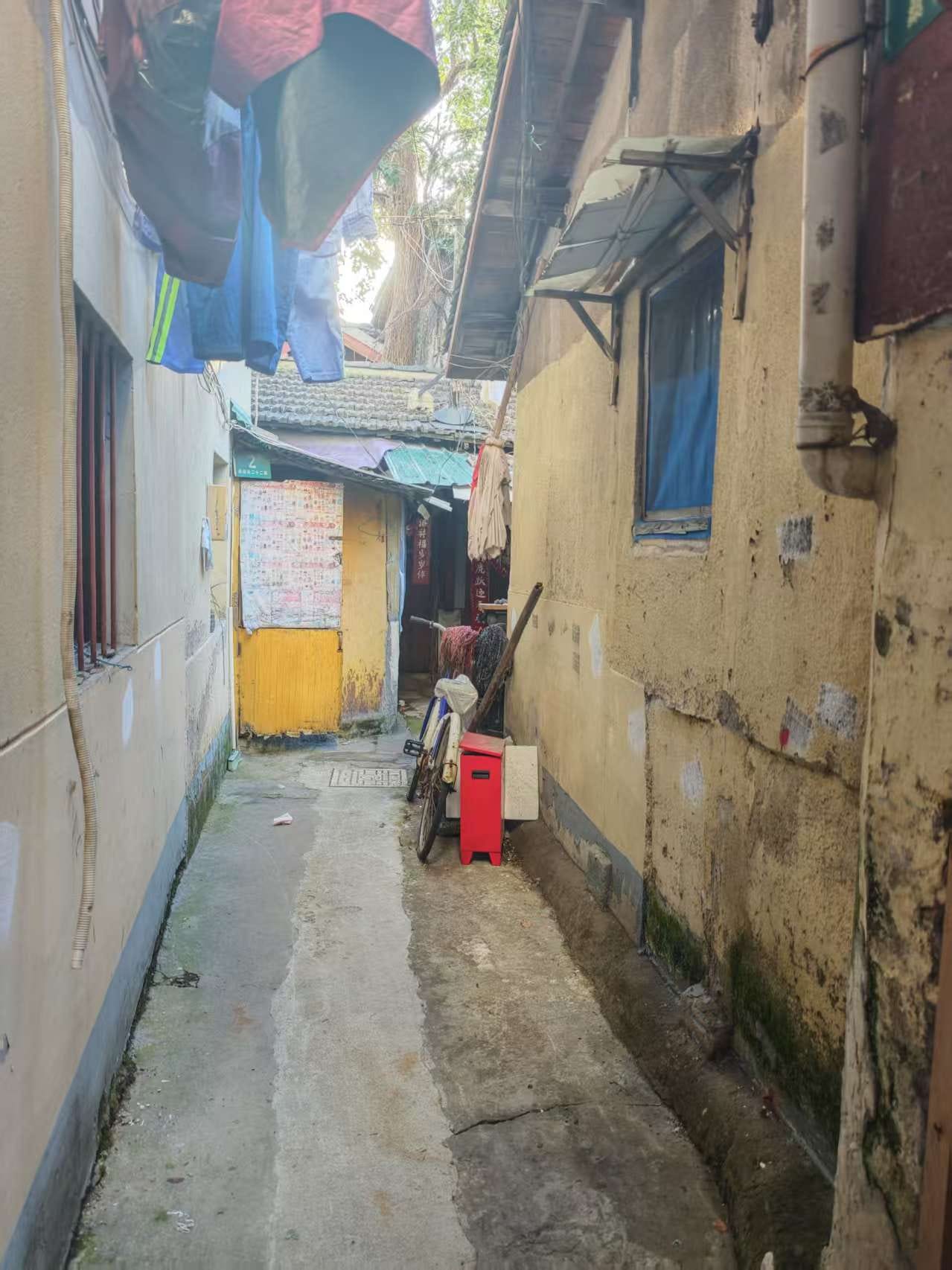
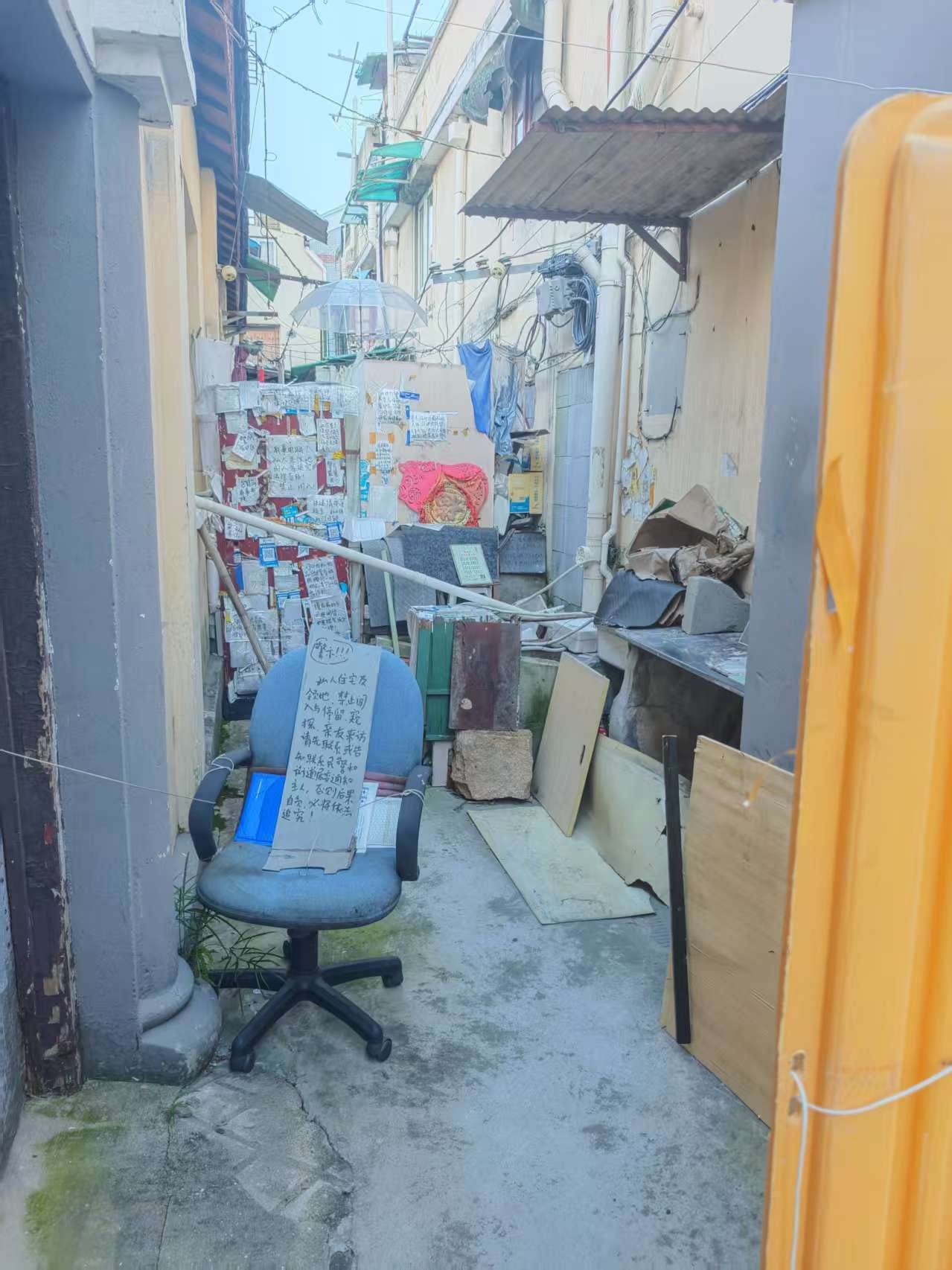
I took the picture below just in front of Jarvis's apartment. The signs on the wall and chair warn that this is private property, not to touch anything, not to knock on his door, and to basically leave him alone. I guess they're for the benefit of the annoying people who come by to harass him about moving.
A few reflections
The overall disruptive power of nail house holdouts in Shanghai is surely more impactful than in rural areas, but with the property market in its current state, I suppose the real estate developer is no in particular rush to find a resolution to people like Jarvis. Actually, there doesn’t seem to be any obvious legal channel to “fix” an issue like this in a way that everyone will deem fair. When discussing the issue of the excessively low compensation, Jarvis speaks with the confidence that comes from truly believing justice is on his side; as far as he’s concerned, his house IS larger than what is shown on the official drawings, and it’s simply improper to withhold compensation for square meters of his home that he can clearly point to the physical existence thereof, regardless of what it says on some dusty blueprints from the early Mao era.
And yet, he is only in this situation because the weaker institutions of a bygone era allowed his family (likely his parents’ generation) to get away with making construction modifications to their home without a permit, or without formally filing new construction blueprints. Maybe the process didn’t exceed at the time. Maybe it was too complicated. Maybe they thought it was just too much trouble. For whatever reason, Shanghai’s stronger civic institutions of 2025 now explicitly mandate his compensation match whatever square meterage is documented on the blueprints, making those illicit modifications performed in the “old China” of just a few decades ago (a China characterized by much flimsier institutions than today) a detriment rather than a boon.
Institutions are expected to get stronger as the country itself develops. Property compensation standards are an example of one such institution - one that is working to Jarvis’s disadvantage in this case. However, on the flipside, Jarvis’s legally protected right to squat in his home until the developer offers him a suitable sum is yet another. In that same bygone period when verboten modifications were performed on his home, a frustrated land developer blocked by an unwilling homeowner would likely have chosen to resolve the issue in a very different - and more aggressive - way versus the bureaucratized channels of the modern day. Such contradictions are also the nature of modernizing institutions.
At the time of posting here on Substack in March 2026, this conversation took place nearly a year ago now. Maybe I should go visit Jarvis and see how he’s doing these days. That might be an interesting follow-up someday…
Love the conversation... such an incongruous thing to contrast these very real and not uncommon situations with the assumed idea that the government snaps its fingers and things just "happen".
Ha, it’d indeed be very interesting to see if Jarvis, a typical 上海小市民 portrayed vividly here, still lives there.
Such is the 芸芸众生相 of my beloved hometown! 😊