
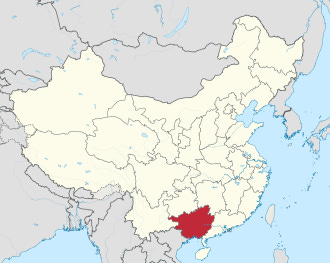
I’m fresh back from a short trip to the Guangxi Zhuang Autonomous Region in southwestern China over the spring festival holiday. My travel was cut shorter than I’d hoped by illness and the general unpleasantness of traveling in China during the national holidays. But I did get a few interesting taxi conversations. Here’s one.
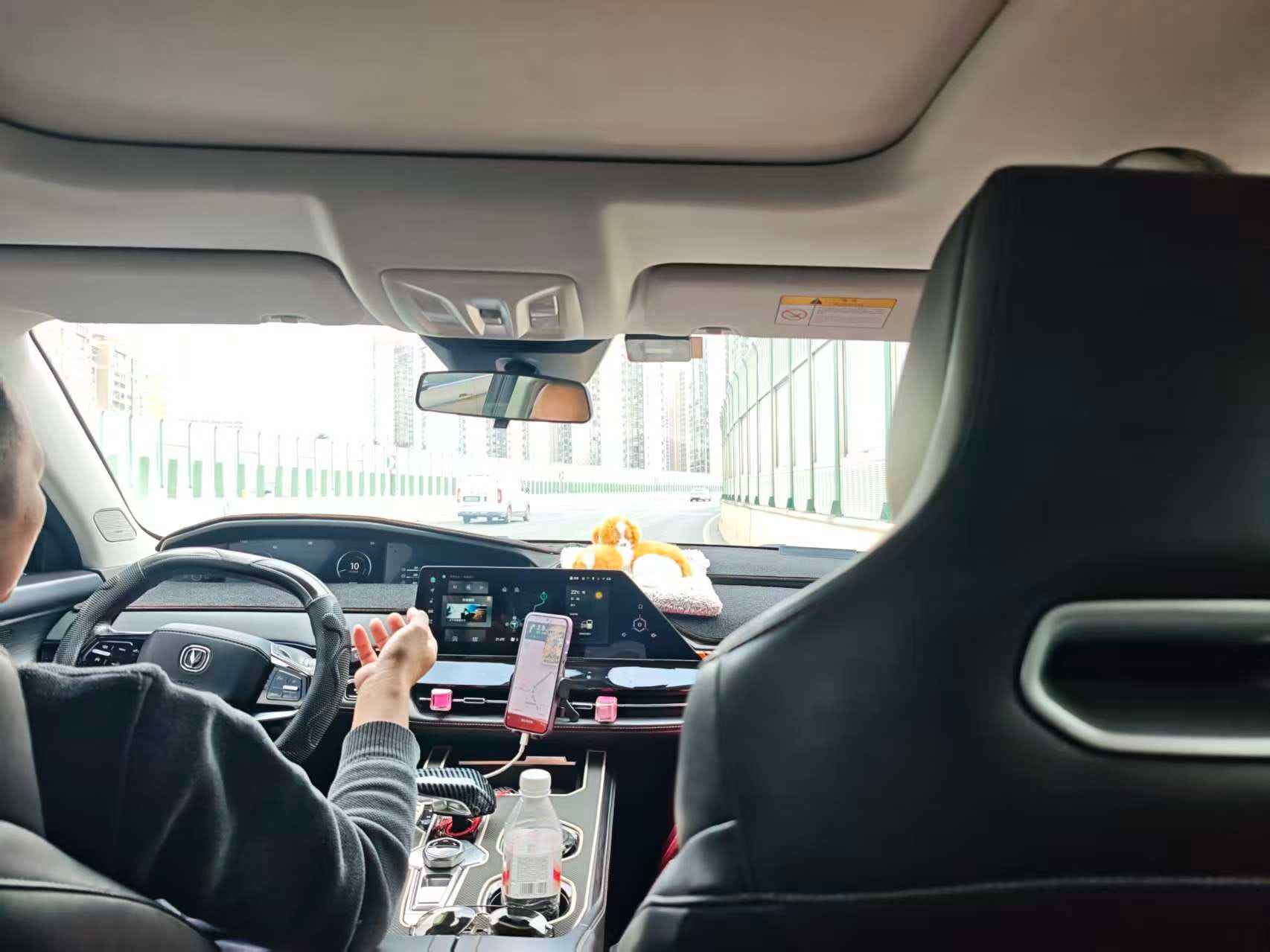
In Nanning, (the capital of Guangxi) I hop in the rideshare car for a quick ride across town. Mr. Huang helps me load my suitcase into the back of his sub-compact EV, where I notice a yellow construction hat and a greyish mass of what looks like melted plastic in the trunk.
"Oh don't worry about that" he chuckles when I ask about it. Mr. Huang is a short, slim man who smiles and laughs easily. He has a close-cropped receding hairline and his Mandarin has the soft, choppy accent of someone whose mother tongue is likely Cantonese. "It's just some adhesive from my work that dripped and then dried. It won't get on your suitcase.
"Oh okay. Why do you have a construction helmet?"
"Because I work in construction." [guess I could have figured that out on my own]
"Huh, really. I've never had a rideshare driver who works in construction. I didn't know you guys had time to drive."
"It's the start of the national holiday, so the all worksites are already on break. I have nothing to do, so I figured I'd drive and make some extra money."
"Are you from Nanning?"
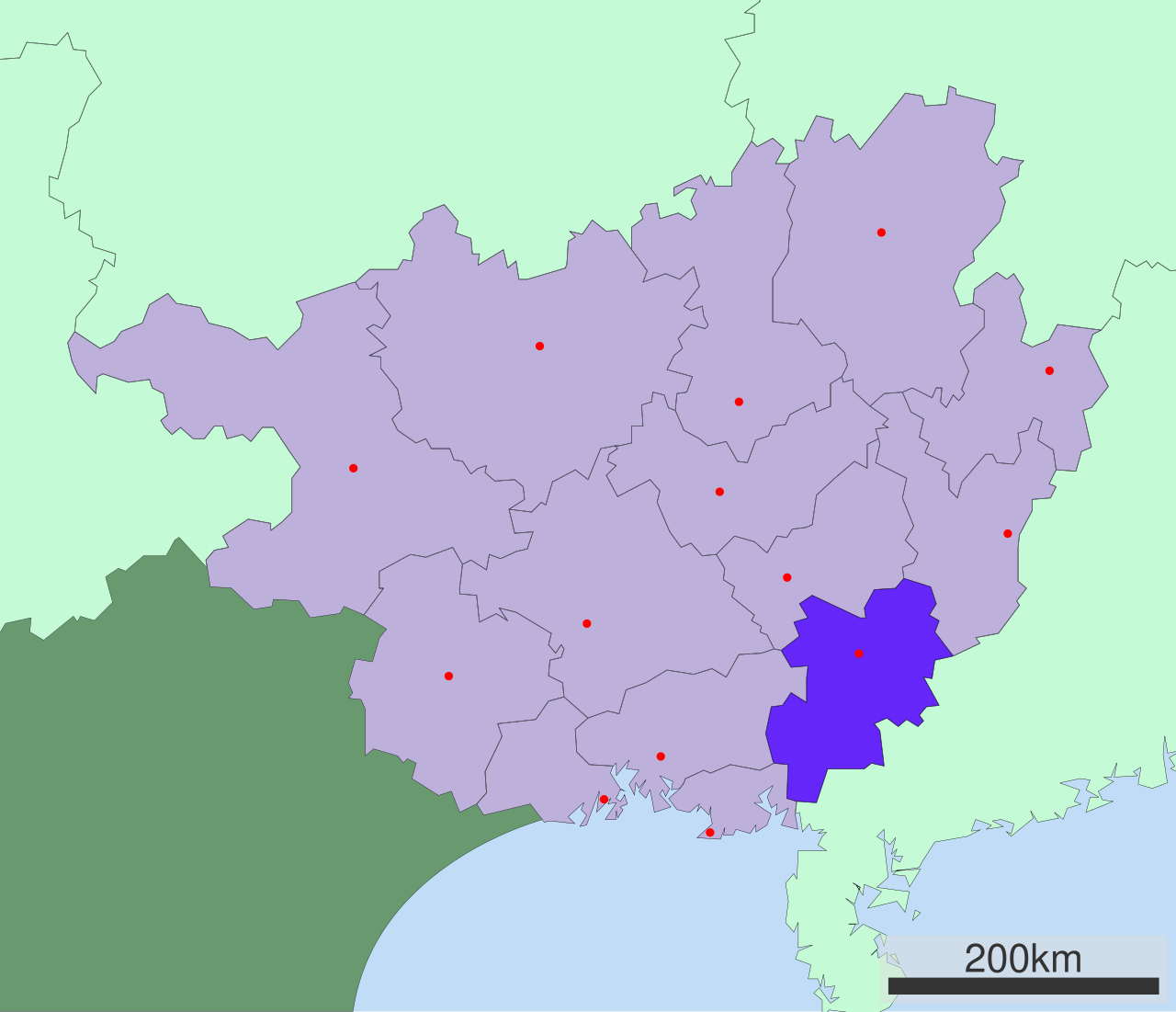
"No...I'm from Yulin." (玉林)
“Oh, Yulin. In eastern Guangxi, close to Guangdong [that explains the accent]. I know of it. Why didn’t you go home for the holiday?”
“My wife is pregnant...due any day now with our second child. We don’t want to use the hospital back there, and she wants to “zuo yuezi”* in Nanning. So we stayed for the holiday.”
[*zuo yuezi - 坐月子, the traditional month-long postnatal recovery and rest period in China]
"Ah, I see. I'm sure your family will accept this reason to not return home for the holiday. But Yulin is a big prefecture-level city too. There must be some good hospitals and yuezi facilities there too, no?"
"Well...I'm not really from Yulin City. It's Bobai County, governed by Yulin. It's a rural place."
"Ah...I see....Bobai County...let me check where it is on the map..."
As is typical for my taxi drivers, my showing interest in his hometown prompts him to volunteer more information about it.
"We eat dog there, you know."
"Uh. Oh. Yes. I know. Yulin has that festival..."
"Yes, the Dog Meat and Lychee Festival. When I was young, they didn't have this festival...it didn't exist. But everyone has heard of it now. Actually most people don't eat dog now. But some still do."
"Do you like to eat dog meat?"
"Sure, I like it. I think it's tasty, and it's not strange if you are used to it. But now people also have dogs as pets."
"Do you think it's contradictory, having dogs for pets and also using them for meat?"
"No contradiction ha. You can have dogs for eating and also dogs for pets."
"Do dog meat restaurants serve meat that was specifically raised for eating?"
"It's hard to tell where it came from. Or what kind it is after it's cooked."
"Many people are critical of Yulin because of the dog meat festival. What do you think of that?"
"Traditions and habits are different everywhere. Some people keep pigs as pets, but pigs are also food. They don't eat cows in India. Some people like to raise parrots as pets and teach them to talk..."
"But do people eat parrots?"
Mr. Huang shrugs and laughs. "Where I come from we would.* In the past, we ate everything. Some people ate cat, snake, wild rodents..."
"Wow I heard the joke before that people in Guangdong eat everything. Actually sounds like it should refer to your hometown instead."
[*I'd like to point out all species of parrot in China are nationally protected and trade/consumption is illegal.]
"In the past, when people were hungry, they would eat anything to fill up their stomach. If you are starving, a snake could be quite lovely. Now they don't have to eat like that anymore. We have chickens and pigs and ducks. But some people miss that old flavor. They prefer it."
"Isn't it illegal to eat wild animals now? Especially since covid, it's become very sensitive?"
"Oh yes, the government bans this. But some people still do it secretly. I guess people don't eat this in Shanghai?"
"Shanghai doesn't have this kind of restaurant. It's illegal to eat wild animals. It's not officially illegal to eat dog in Shanghai actually...but there are no restaurants. At least, none selling it publicly. I checked before. In Shenzhen eating dog is officially illegal. But I think it's the only city."*
"Oh yeah. I heard that, when worked in construction for a while in Shenzhen."
[*Actually, Zhuhai has banned it as well.]
The conversation peters out and we drive along in silence for a minute, and then Mr. Huang volunteers a new piece of information.
"But I really like dogs you know. I owned a dog before. A purebred male Labrador retriever, raised from a puppy. I fed him milk from a bottle and trained him. He was very smart!"
"Um. So you even raised your own dog as a pet, but you also like to eat dog. Wouldn't you feel weird eating your own dog?"
"Of course. I wouldn't eat him. I raised him, and I had a lot of affection for him. He was a very smart dog. I truly like dogs." He points to the two stuffed puppies curled up on his dashboard to prove his point.
"So...do you still have your dog?"
"Aii. No.” his tone suddenly turns sad. "When my wife gave birth to our first child, her parents were very worried that the dog would get something dirty on its paws and touch the baby, or transfer some disease or bugs. Actually, this kind of fear is not reasonable, but old people have their fixed ideas and its very hard to change them. So I had to give up my dog. At first I thought about selling him, and some people offered me a lot of money...a few thousand CNY. But I could bear to say goodbye. So instead I paid my friend 1000 CNY to drive here to Nanning, pick up my dog, and bring him back to Bobai to take care of him."
"Do you still visit your dog?"
Mr. Huang's tone gets even sadder, and also takes on a twinge of hesitating embarrassment.
"No...a few months later, the dog disappeared...My friend called me and told me couldn't find him anymore. I guess he was stolen..."
"Stolen? For what reason?"
"Yes stolen." Huang laughs bitterly. "The reason….well, everyone back home knows what it means when your dog suddenly disappears. He probably was eaten."
We have arrived at my destination, and so I do not get a chance to ask Mr. Huang whether he thinks his appetite for dog meat could have contributed to the market demand that led to the abduction of his pet. But that might have been my next question.
I thank him for the ride. He helps me unload my luggage, wishes me a happy new year, and drives off in his EV, on his way to make a few more yuan before his wife gives birth, together with his hard hat and his stuffed dashboard puppies.
Thanks for reading. Here are some final notes, as I am aware this is a sensitive topic:
Please remember this is one conversation with one driver; it’s not a survey of Yulin or Bobai County, where dog meat is *not* consumed regularly by most of the population. In the future, I would be very interested in doing a trip to Yulin to chat with people about their feelings on the the infamous festival. After all, it is now the unambiguous defining feature of the city, undoubtedly to the great chagrin of the locals, most of whom do not partake (it was started by dog meat traders in the city in an effort to revive flagging sales back in the mid 2000s).
For an actual fieldwork-based survey and interesting sociological assessment of dog meat consumption in Yulin, I suggest checking out this 2023 paper by Zhejiang post-doc researcher Liu Ying: "Wu Masculinities, Traditional Men-Dog Relationships and the Defence of the Dog-Meat Festival in Modernizing Yulin China."
In 2020, national agricultural guidance in China explicitly described dogs as companion animals rather than livestock for the first time, which muddied the legal and administrative basis for commercial breeding and trade.
Some Chinese research or media have described “edible dog” breeding operations, typically framed as small and informal rather than a proper industrial sector. You can find promotional videos for these operations on sites like Rednote. But beyond that, it's difficult from the consumer's perspective to assess the provenance of the meat - and evaluate whether dog meat enjoyers might be consuming someone's stolen pet. As Mr. Huang put it, once it's on the plate, “it’s hard to tell where it came from”.
I lived in Shanghai, and later Dali, for many years. My hobby was street photography, and I spent hours walking the streets of Shanghai, especially in the years prior to the Expo, where the city's $75+ billion in upgrades resulted in the destruction of many unique neighborhoods to give rise to modern, faceless buildings. I lived in the Xuhui District, where many French Concession buildings survived the upgrades.
There was a restaurant on Wanping Lu, near the corner of Huaihai Zhong Lu, among a small cluster of restaurants in the late 1990s and early 2000s. Some of these specialized in yewei (野味), literally "wild flavor," meaning exotic or game meats. These places often offered dishes like wild boar, crocodile, turtle, snake, and other unusual proteins.
Many of these establishments operated somewhat under the radar; after the 2003 SARS outbreak, Shanghai authorities cracked down on wildlife consumption. As a result, most of these restaurants either closed or shifted to more conventional menus.
The current tenant, or perhaps the one next door, is Dongbei Siji Jiaozi Wang, a northeastern dumpling house. However, the space next door or one door down on Wanping Lu was previously occupied by one of those wild game restaurants. There was a wall about 100 meters long in front, below the window, that had hand-painted pictures of the yewei animals served there. I never saw a Westerner in the restaurant during the many times I passed by. I am certain I have a photo in my underdeveloped archive of thousands of images. I hope I live long enough to find it someday. A large portion of my archive is stored in China, though I currently reside in Southeast Asia.
I was surprised by the number of dog meat restaurants I saw when I cycled through south Guangxi recently from Guilin to Nanning. Also luosifen around Liuzhou - no thanks!