
This essay was originally posted to Twitter on June 14, 2025. It has been edited lightly for long-essay format.
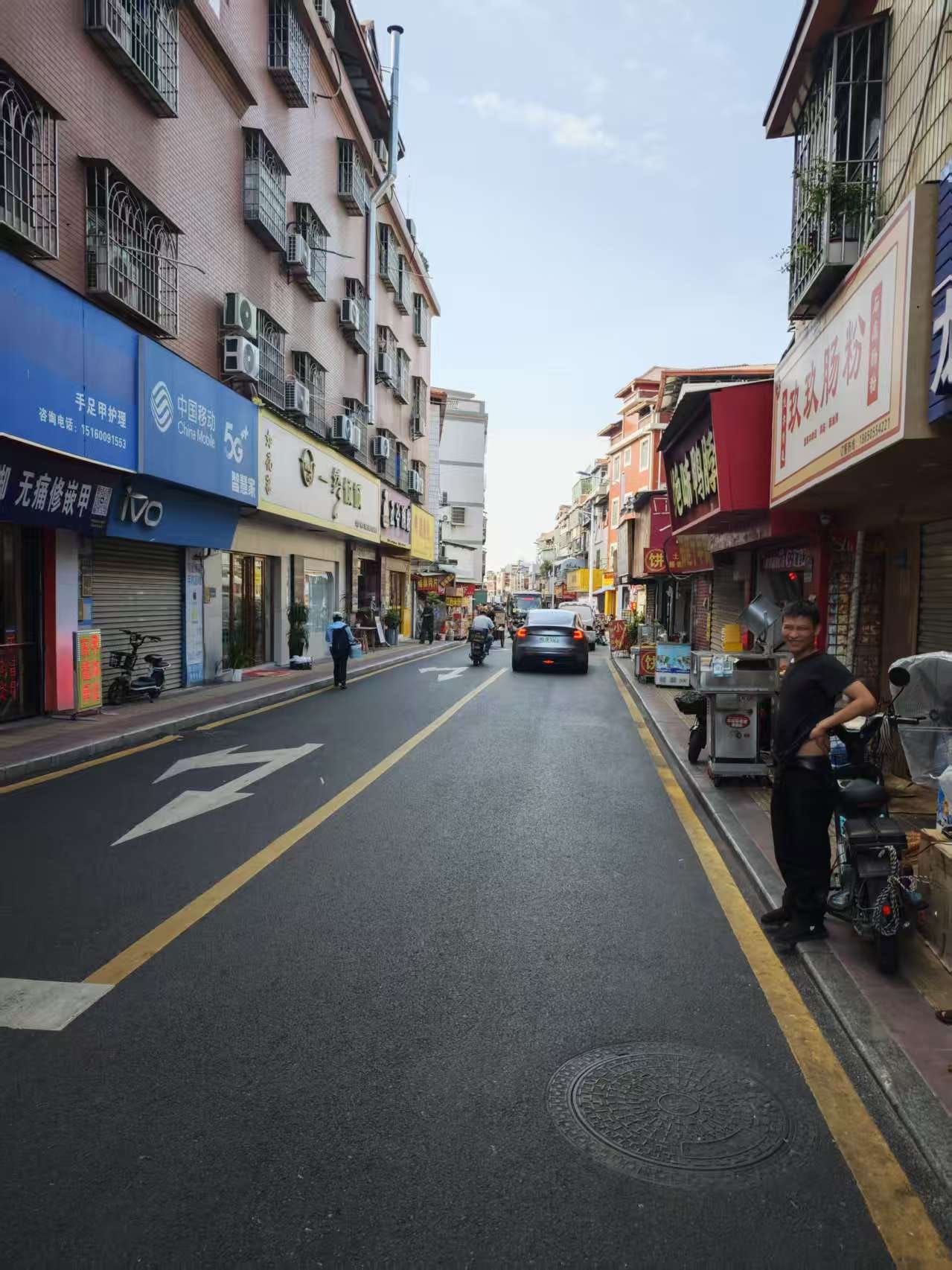
In the north of Xiamen's main island in Huli District, just west of the airport, is Dianqian Community, one of Xiamen's last urban villages (and its largest). Urban villages are called 城中村 (literally: village in a city) or sometimes 村子.
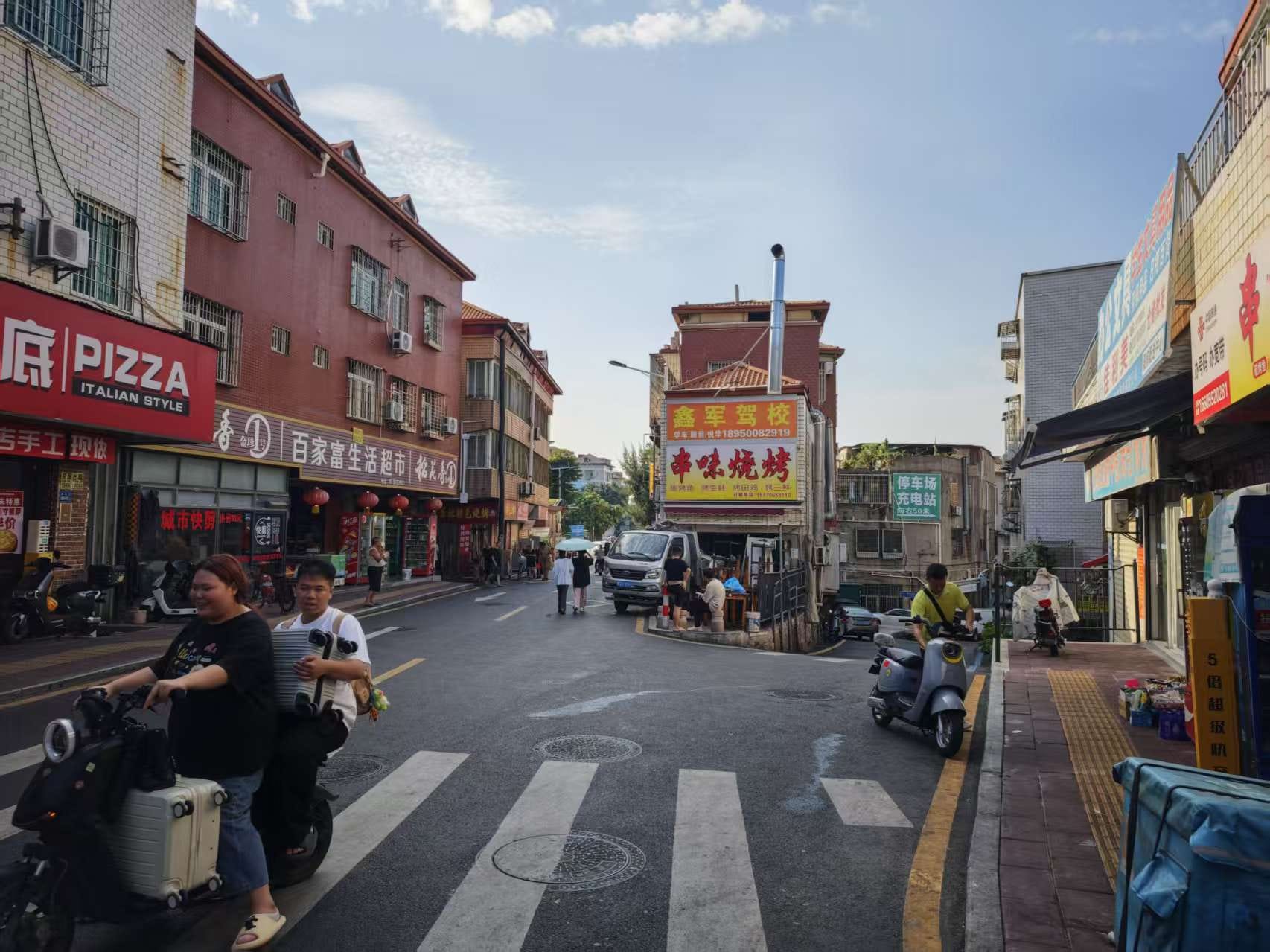
Urban villages can be found in large cities in southern China especially, and are often described as China’s “ghettoes” or “slums”. This is not quite correct in my opinion, and the topic deserves a separate thread. But they are indeed generally home to people with lower incomes.
Dianqian has gained fame in recent years on social media as a place of pilgrimage for aviation enthusiasts visiting Xiamen. It lies immediately beneath the final descent path of airplanes arriving at Xiamen’s Gaoqi Airport, offering unique photography opportunities.
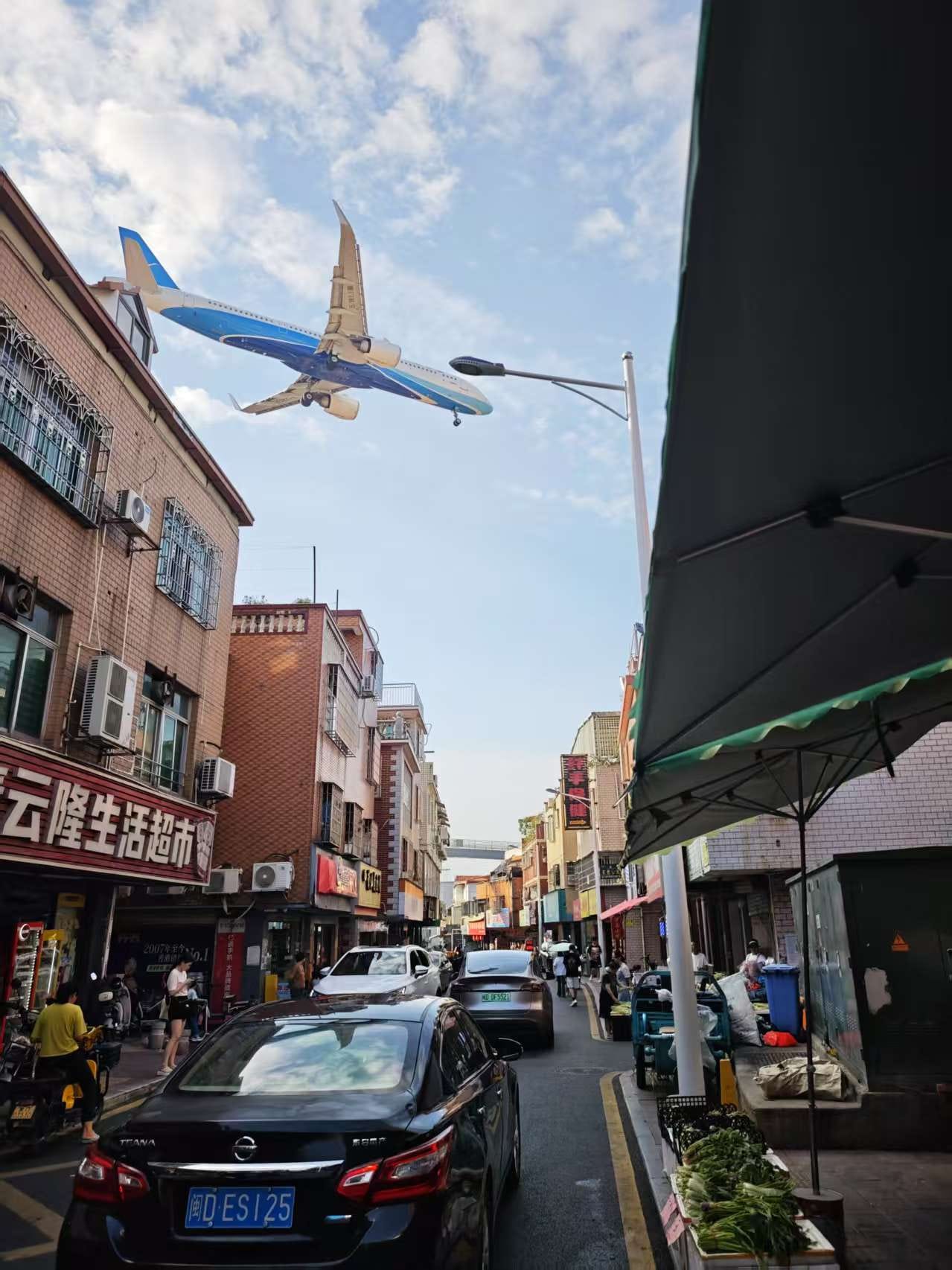
When I visited, Qingshui Temple was a particularly popular spot for photos. An elderly man held down the temple entrance, selling incense and advising tourists when the next plane was about to arrive from a schedule he has on his phone. Throughout the day, planes roared overhead every 5 minutes or so.
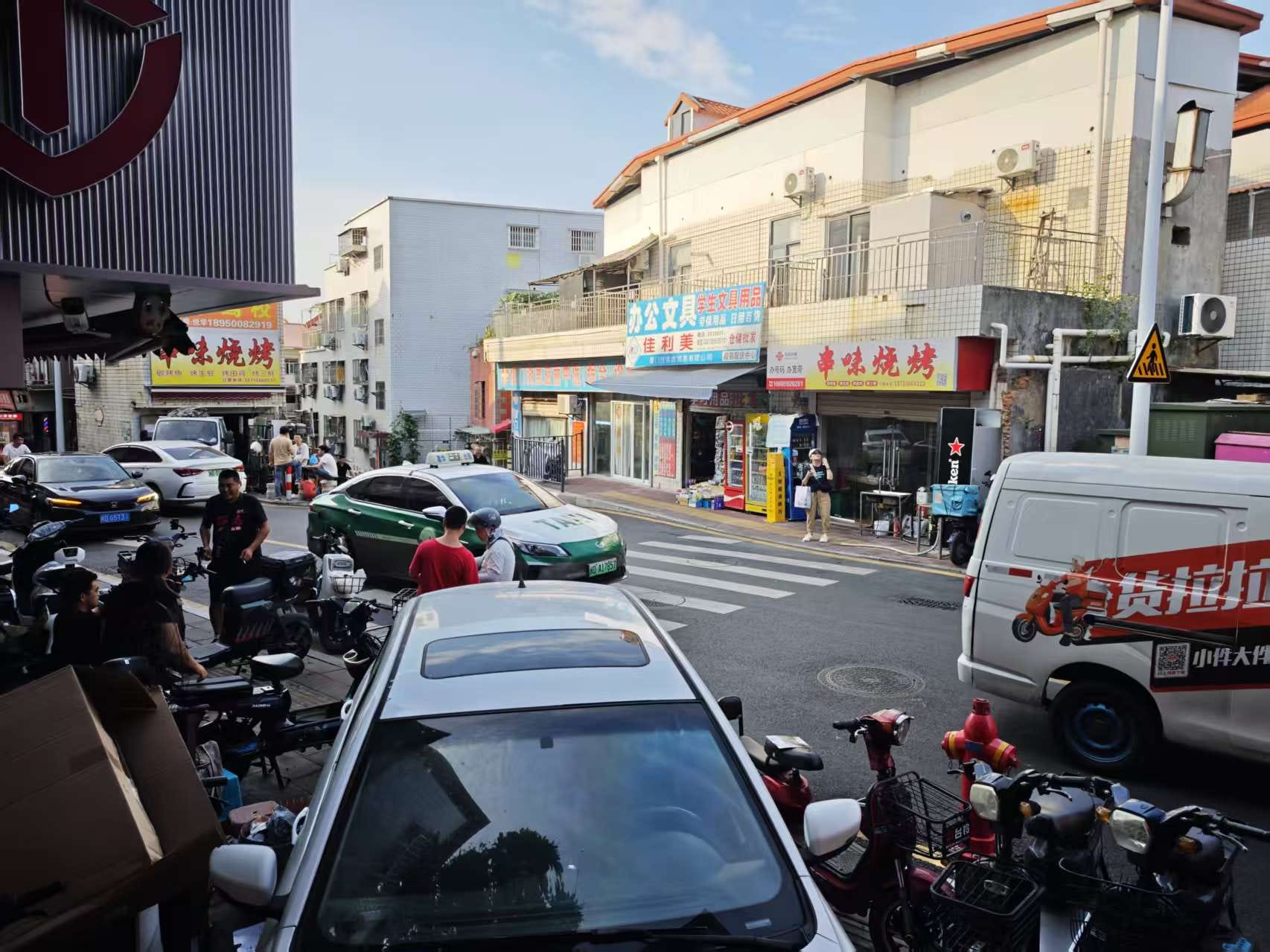
Nearby was the main commercial street of the urban village, choked with motorcycles, full of cheap food and daily goods. Vendors hawked melons and Nikes from trucks. It was crowded and loud. The air was humid and dense with odors of cigarette smoke and overripe fruit.
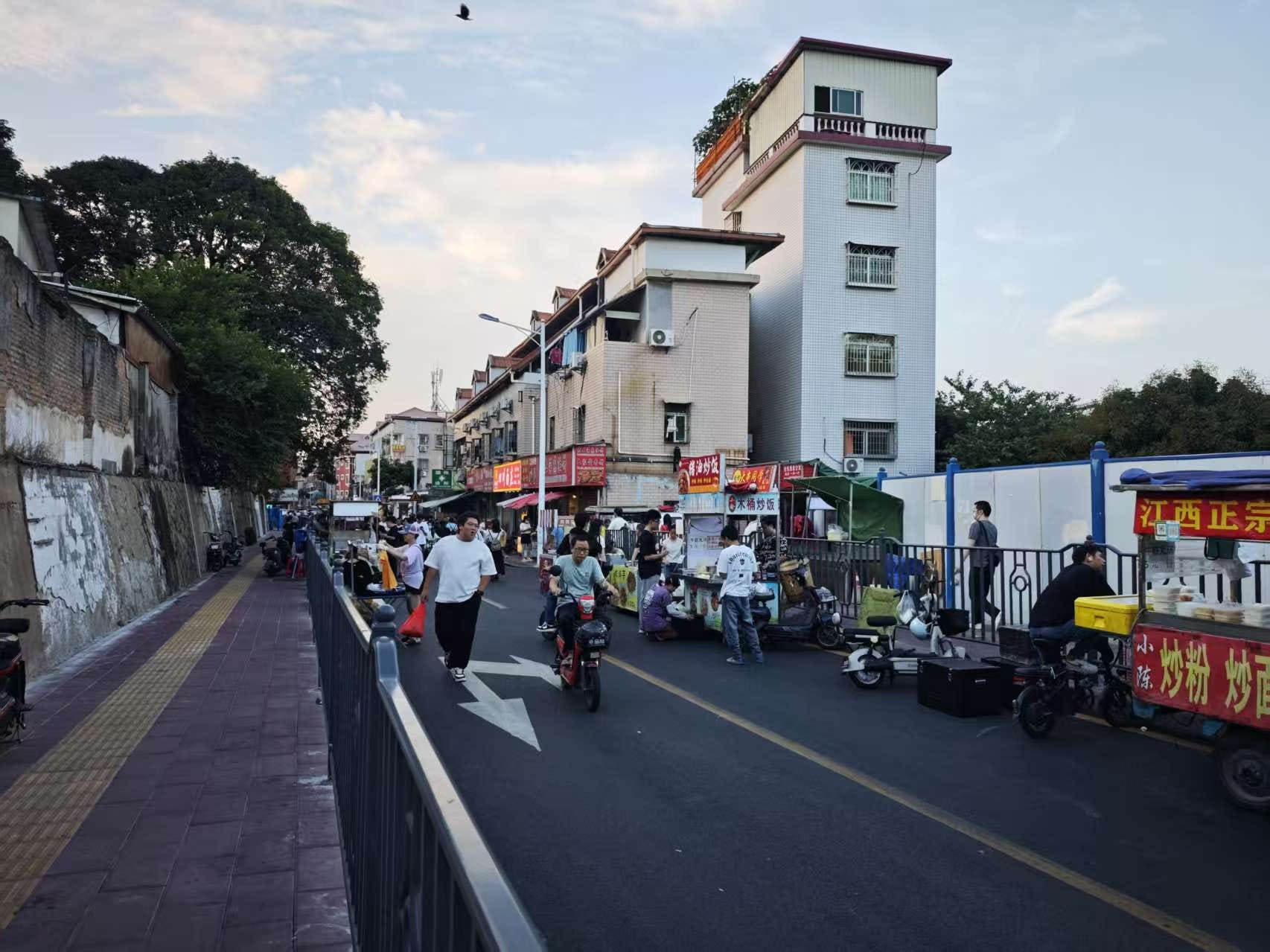
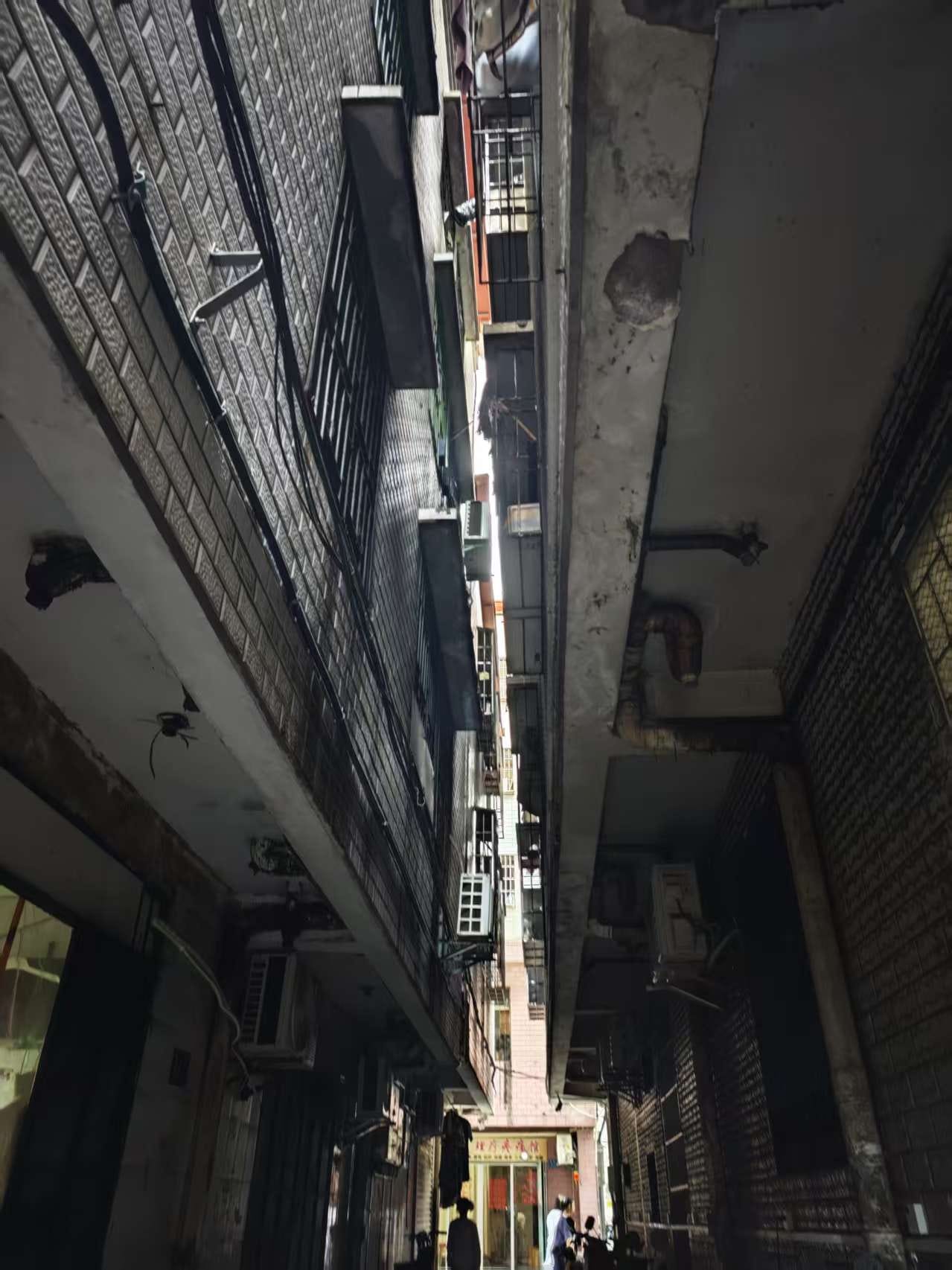
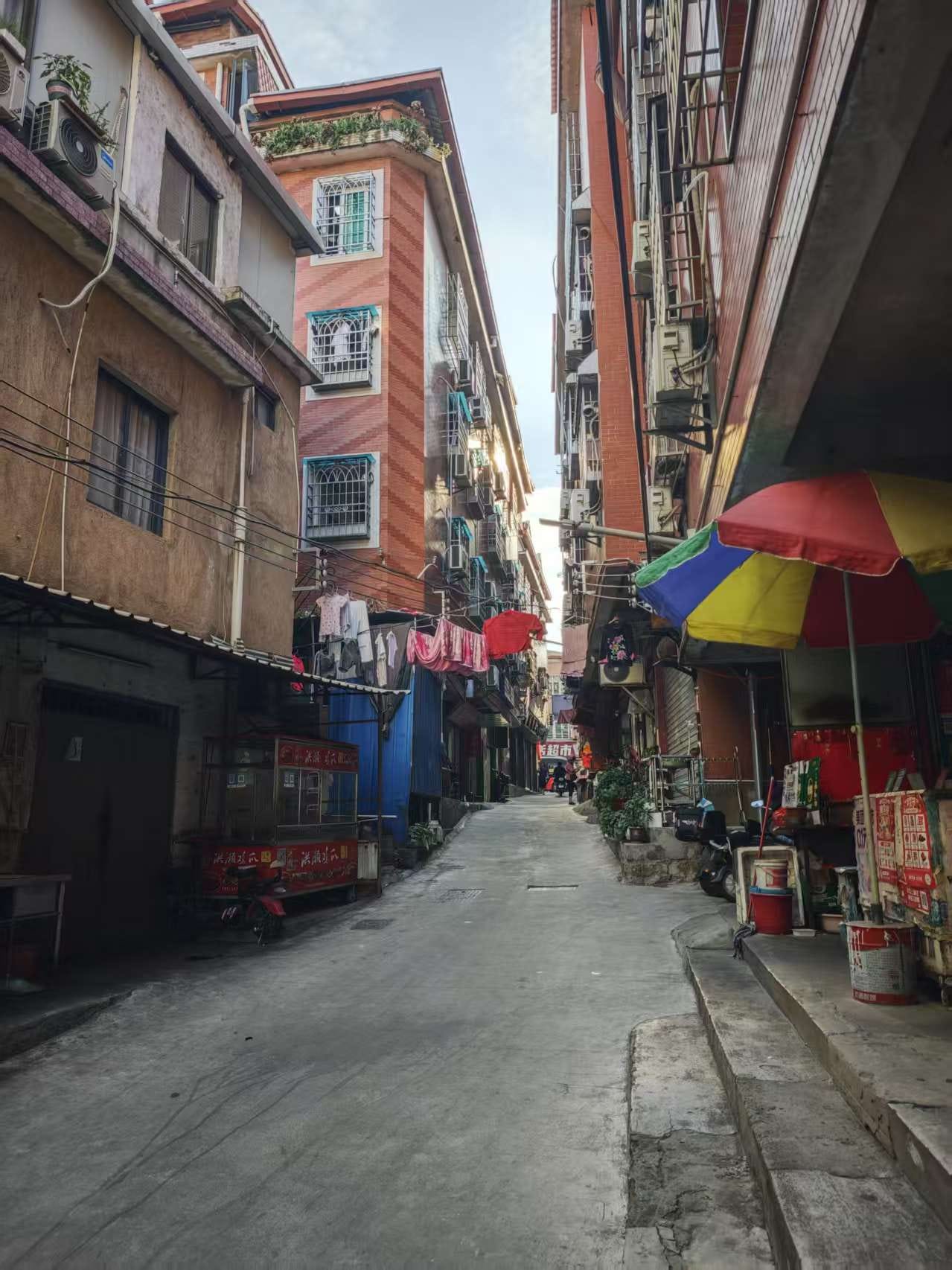
Heading into the side alleys off the commercial street, I found the residential quarter of the urban village. The multi-story apartment buildings are called “handshake buildings”, constructed so densely only a bicycle can pass among them. They are dark and humid and claustrophobic.
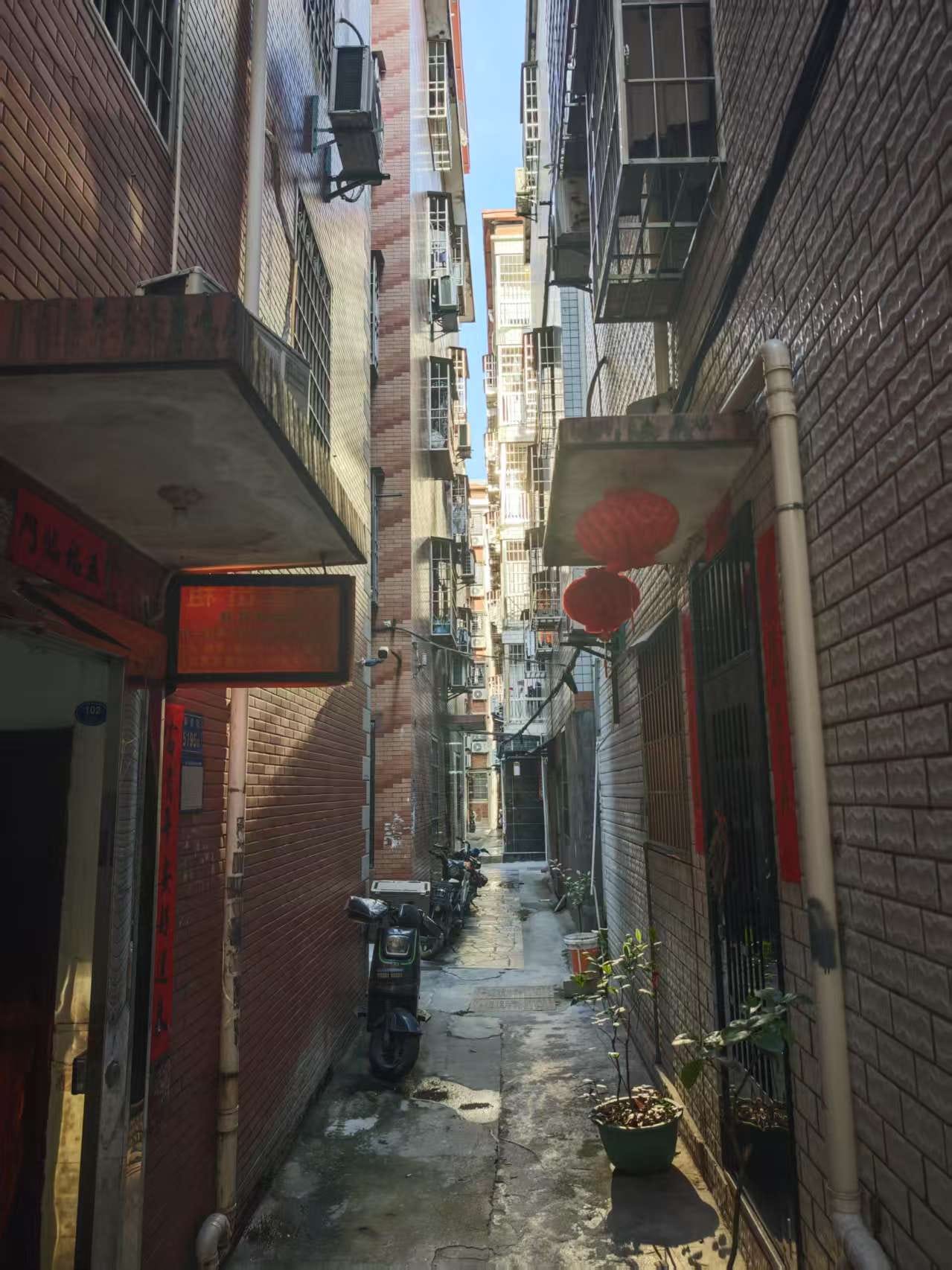
In some sections of the village, only a sliver of daylight is visible looking straight up. The constant dripping of AC units and the lack of sunlight ensures the alleys are permanently damp and mildewy. But the alleys are still buzzing with people, smoking, sitting, walking.
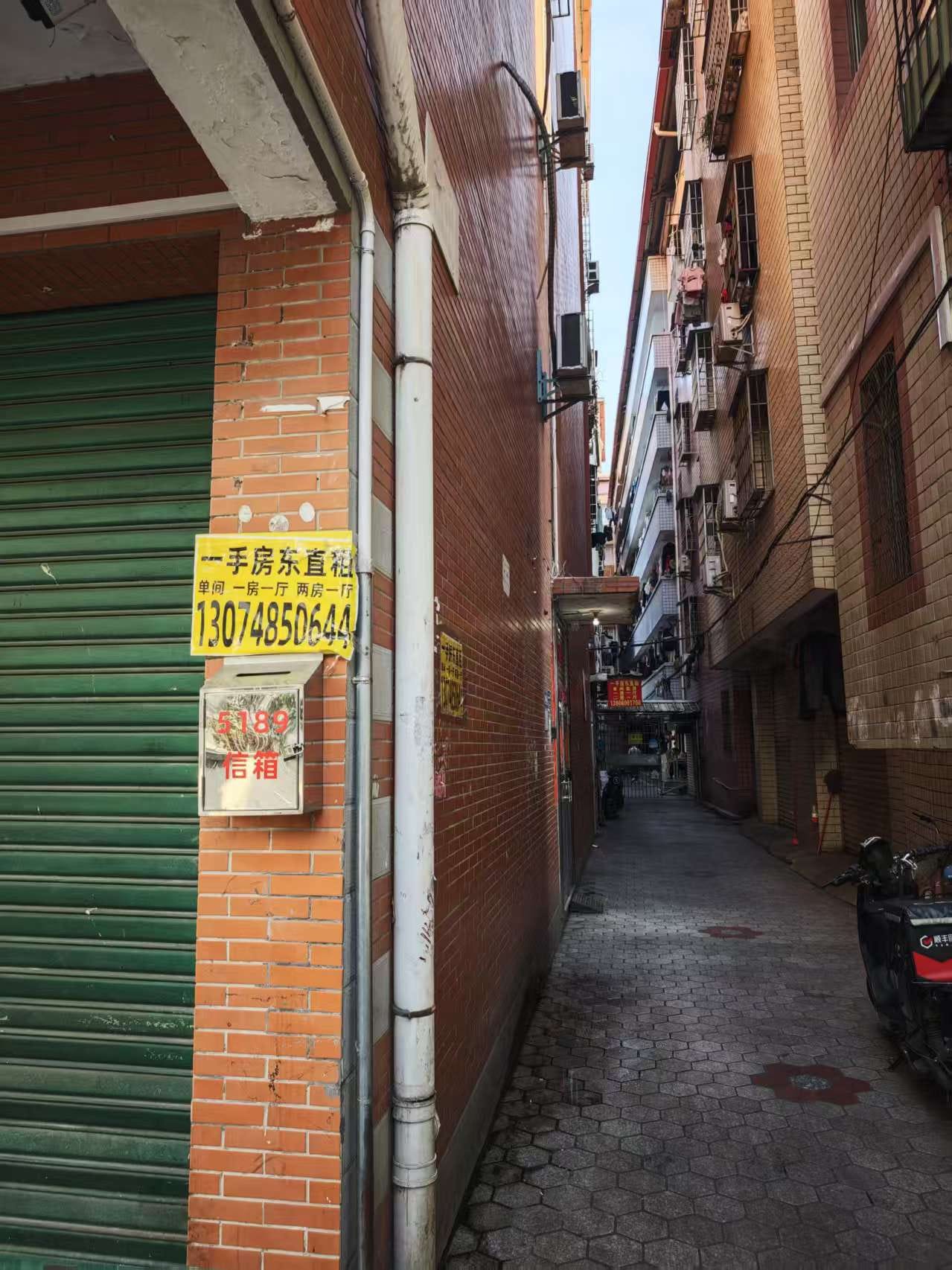
Nearly every building had one or several signs advertising rooms or apartments for rent - youth apartments, worker housing, and cheap hostels. I saw many delivery drivers and construction workers - this is clearly the part of town to live in if you're hoping to save on rent.
I also saw small fabric sweatshops - in the literal sense of the word (I don’t think I saw AC units, just fans).
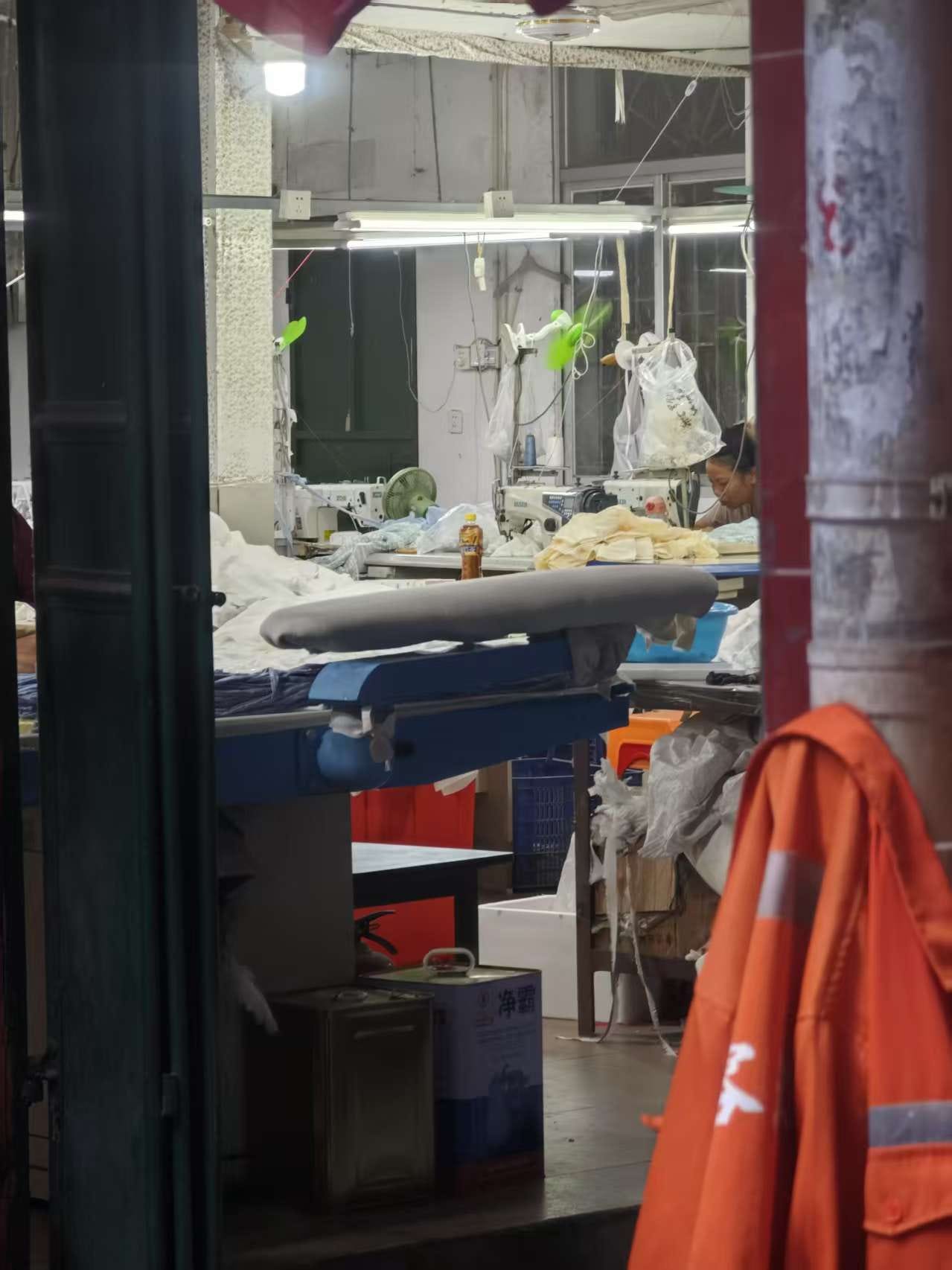
I know this isn’t typical of China’s fabric or sewing industry - it looks like *very* small scale businesses taking advantage of low rent in the village.
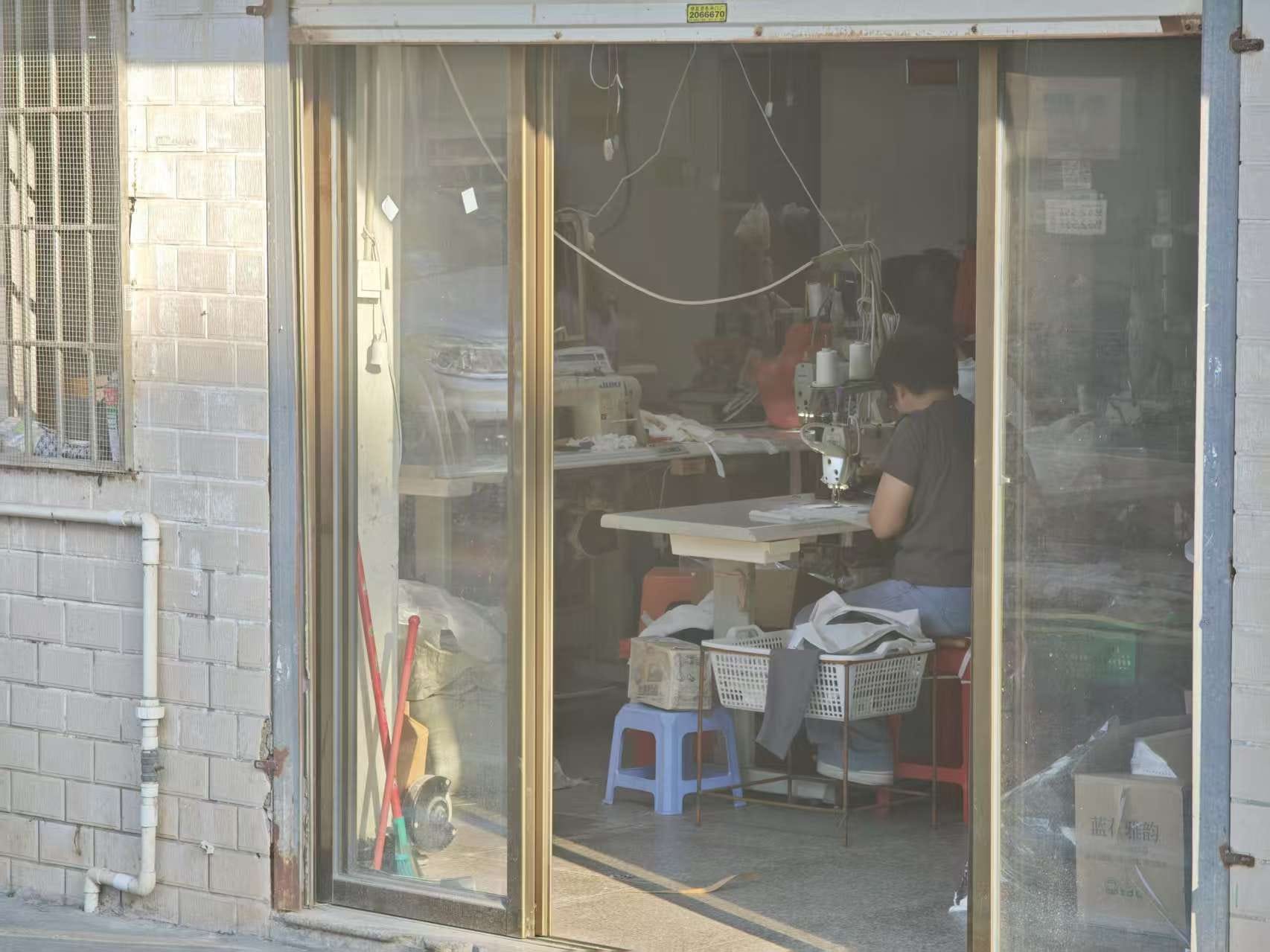
I’d really wanted to chat with someone about their life in the urban village, but it seemed most people were busy with somewhere to be...
There were a few elderly people sitting around I could try to talk to, but so far I’ve had very limited success chatting with older people in Xiamen because of the language barrier...I can barely understand their heavily Minnan-accented Mandarin. So, I decided to use one of my typical plays to find someone to talk to: I stopped in a small grocery store, bought an ice cream, and complained a bit about how hot it is and how tired I am (it was 35 degrees out and a million percent humidity, so this was real enough).
After accepting the seat and the invitation to “rest for a while” that was promptly and courteously offered to me, I now got to chat with the shop owner for at least for the duration of one ice cream. Never fails.
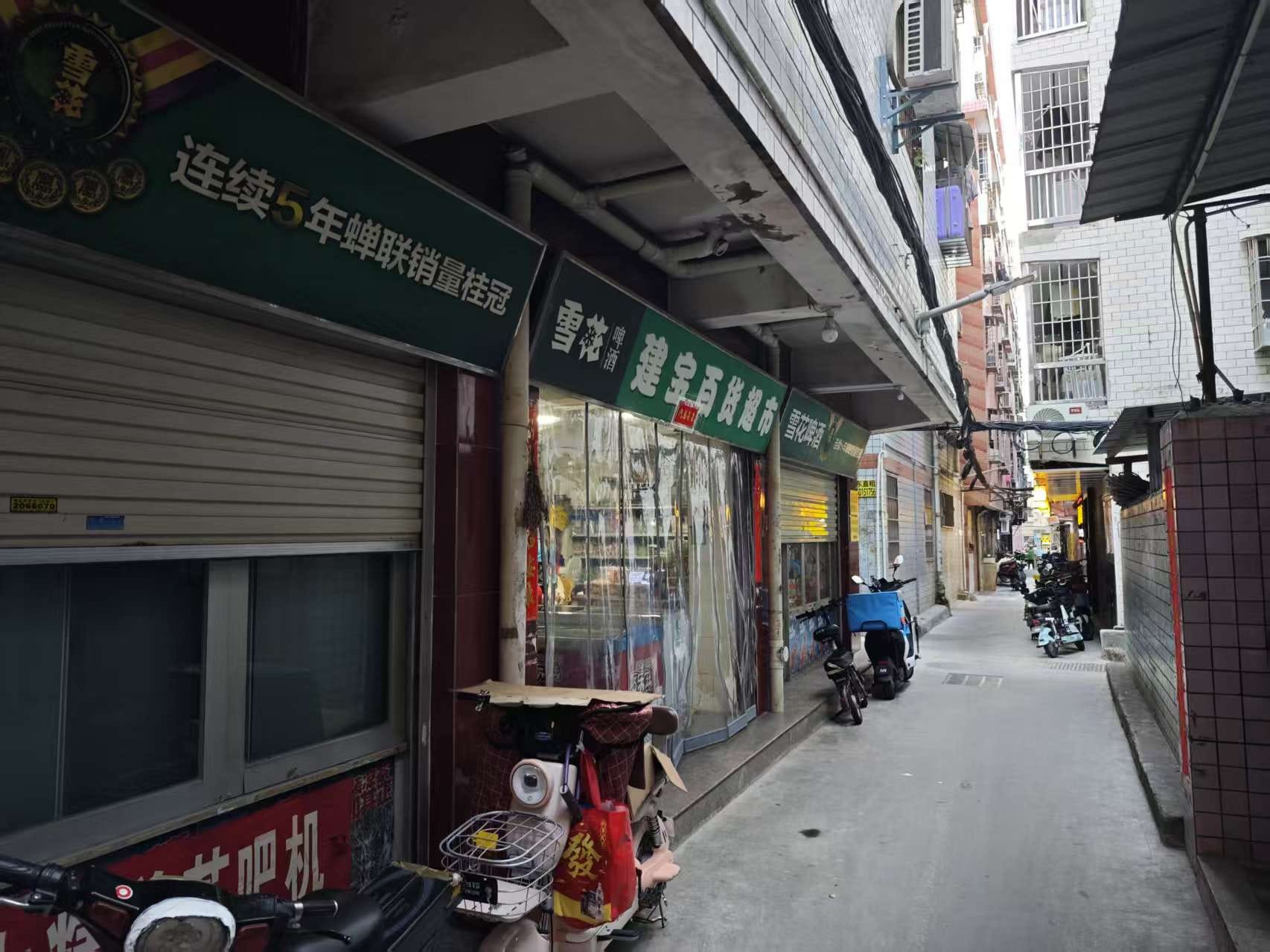
It’s a family-owned business. There’s a wife and husband proprietor duo, along with their daughter who looks to be in her 20s, bouncing a baby on her lap.
“So you live here, right? You don’t rent?”
The wife answers
“Yes, we’re residents”
“Is it cheap to rent here?”
“There are cheap places...and more expensive places. Why...do you want to rent?”
“No, I’m just visiting. I’m just curious about the price. I guess it should be cheaper than other parts of the city”.
“Yes, it’s relatively cheap to rent a small room. It can be very cheap, if you don’t have a lot of requirements.”
“You mean like...single room, without AC?”
“Ah...most apartments should have AC...”
An airplane roars overhead.
"How can you sleep or rest with the noise of the airplanes? I came to take pictures of the airplanes, and that's fun, but I don't think I could live here"
The daughter smiles. "I'm used to it...I grew up here. It feels comfortable to me. I can't sleep in other places...it's too quiet..."
"Do you think Dianqian could be demolished in the future? I saw online many of the old urban villages in Xiamen are being demolished or renovated."
"Yes, that's true, but not here yet."
"Do you know why? Is it because it's too close to the airport, so it's less attractive for redevelopment."
"I don't know..."
"Or maybe it's intentional, to ensure there is a place for low-income workers in Xiamen have a place to live? I saw a lot of delivery drivers in the alleys outside."
"Yes, maybe. It's very cheap and convenient to live here, even though it is a little loud."
A small boy emerges from the back room and sits at the counter. He looks about 5, eating something, and playing a game on an iPad. He glances up at me, back down at his game, and then does a double take to stare at me.
“Hey, is he learning English already in school?” I ask.
"Yes" his grandmother answers. "Children learn English in primary school now. His English is better than his mother's already."
Her daughter laughs self-consciously.
"Hey" I call out to the boy in English. "How old are you?"
He looks up at me, then smiles nervously back into his iPad, avoiding eye contact.
"I'm six...years...old."
"Wow, six years old! What's your name?"
He continues smiling shyly, pausing for a long moment as he carefully gathers his thoughts and stammers them out, almost whispering.
"My...name...is...Adam..."
"Nice to meet you Adam! My name is David."
"Nice to...meet you..."
His mother and grandmother beam proudly.
"How old are your children?" the mother asks, continue to bounce her second child on her lap.
"Oh...I don't have kids yet."
"Really!?" She seems surprised. "Are you married?"
"Yes, married. But no kids. Are you surprised?"
"I mean...how old are you?"
"I'm 35."
"Oh, not too late. That's okay then."
"Ahh, I know why you were surprised. You think I look old! And you are surprised to hear I'm only 35!"
"Ohh no noo. That's not what I meant. I mean...we get married and have children relatively young here in Fujian. I was born in 1998. But you are not too old."
"Oh come on, I know Chinese people think foreigners look older than we really are. It's okay, I'm used to it."
"Haha well...foreigners do tend to look...mature. But I don't think you look old."
A delivery order of drinks arrived, and they got busy, plus I'd finished my ice cream, so I decided it was time to leave. I thanked them for the time, and the ice cream, and headed back into the alleys. I was 10 minutes back to the metro station, and then 45 minutes back to downtown.
I previously lived in Shenzhen, which also has urban villages, but Dianqian felt quite different. In Shenzhen, the urban villages may be right in downtown, and although they're also messy and crowded and full of low-income tenants, the real estate is also extremely valuable. By contrast, Dianqian is located far from Xiamen’s downtown, next to an airport that limits land value and redevelopment potential. At the end of the day, it's still basically working class, so not really a "slum", but it's perhaps the closest you'll get in urban China.
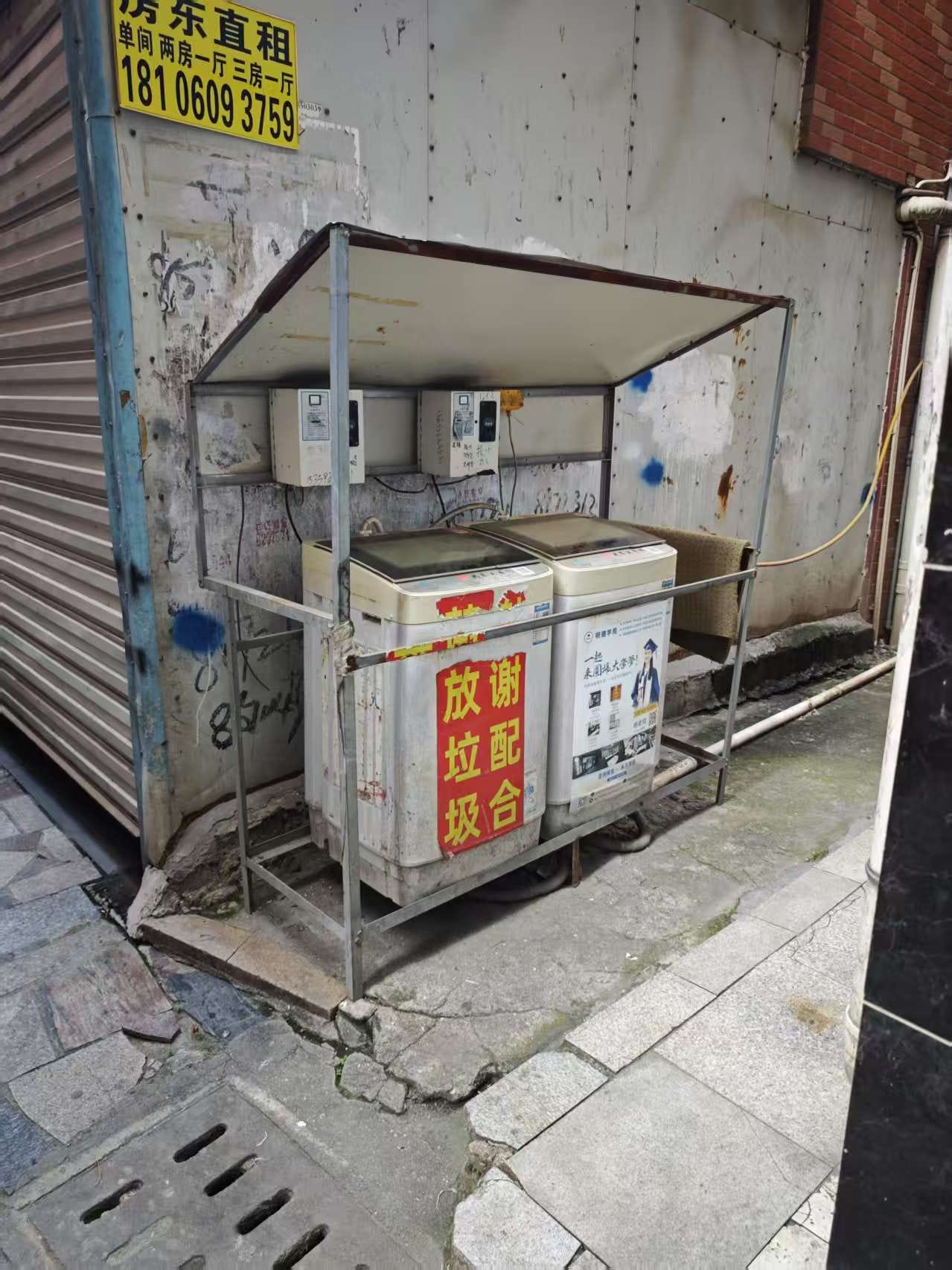
Checking online, I found single room rentals in Dianqian go as low as 600 CNY/month (and 300 for the first month) which could be attractive if you're a migrant worker arriving in Xiamen with nothing in your pocket, looking to minimize expenses and maximize what you can save. You'll pay 2x more just one subway stop away.

And if you go online and look up discussion of urban villages, commentary on their destruction is often quite negative. People don't like the disappearance of super-affordable housing, even with its drawbacks, and worry what happens to the locals. A topic worthy of nuance.

Thanks for reading!
I always really lliked these urban village and their down-to-earth people. I lived next to such a village when I was a volunteer in Xi'an and used to go have lunch at one of the small restaurants.
I was sad to see it go ... now, it is a xiao qu with modern apartment flats ... and a Hema.
https://www.chinatalk.nl/swallowed-by-the-city-chinas-disappearing-urban-villages/
- Ed Sander
Really enjoyed that, thanks. I've been to Xiamen a number of times but always business, and Quanzhou recently for sightseeing. Recognize that Minnan look and atmosphere they have. And yes, what a dialect! Did you see any Shi Gandeng?